
Drought-Resistant Gardening Tips for California Homeowners
A drought-resistant garden in California is not just a smaller version of a traditional lawn and shrub yard. It is a different way of thinking about water, slope, plant behavior, and maintenance. That shift matters especially for homeowners in places like the San Gabriel Valley, where hillside conditions, strong sun, seasonal dryness, and wildfire concerns all shape what a landscape can reasonably do.
The best results usually come from a careful sequence of decisions rather than a single plant swap. First, understand how water moves through the property. Then look at soil, exposure, and slope. After that, choose plants that fit the site, not just the look you have in mind. Once those pieces are in place, hardscaping, irrigation, and long-term maintenance start to make sense. Skipping that order is where many water-wise gardens go wrong. A property can be full of drought-tolerant plants and still waste water if the irrigation is mismatched, the soil is compacted, or runoff is left to race down a hillside.
Start with the site, not the plant palette
The California water agency’s guidance is clear enough to be practical: before removing turf or reworking a landscape, assess irrigation, soil, sun exposure, and plant selection. That advice sounds simple, but it is where good landscape design begins. A south-facing slope in full afternoon sun has a very different water profile than a shaded courtyard. A flat front yard that gathers runoff behaves differently from a hillside that sheds water quickly. Those differences matter more than trendy plant lists.
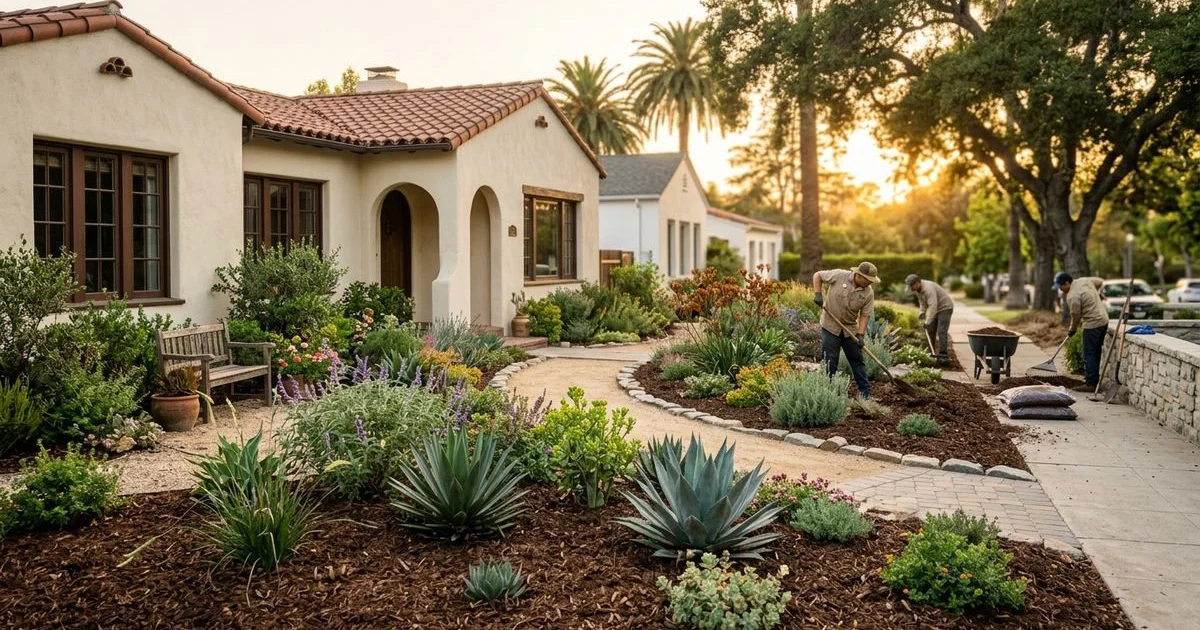
I often see homeowners focus first on replacing grass, which is understandable. Turf feels like the obvious thing to remove when water bills climb or the garden looks tired in summer. But turf removal without a plan can create new problems. If the irrigation stays set for lawn conditions, nearby shrubs may get too much water while the new native plants sit in saturated soil. If the slope is ignored, rain and irrigation water can run straight downhill before roots have a chance to absorb it. And if the soil has never been improved or loosened, even drought resilient plants can struggle to establish.
A useful habit is to spend time in the yard at different hours. Notice where the sun hits hard in the morning, where it lingers into the afternoon, and where reflected heat from walls, paving, or driveways makes conditions harsher. In hillside landscaping, those microclimates become even more important because one section of a slope may be dry and exposed while another stays slightly cooler near a retaining wall or under the edge of tree canopy. Choosing plants by microclimate instead of by one broad “sun” label leads to better survival and less replanting.
Water-wise design begins with irrigation discipline
Drought-resistant landscaping is not only about plant selection. The irrigation system often determines whether a landscape actually performs as intended. California’s water guidance emphasizes efficient irrigation, and that matters because most water loss in residential landscapes comes from poorly matched watering schedules, broken emitters, overwatering, or spray patterns that hit pavement instead of roots.
A retrofit does not have to be dramatic to be effective. In many yards, simply matching irrigation zones more carefully makes a noticeable difference. Plants with shallow, frequent water needs should not be grouped with deep-rooted species that prefer longer intervals. Shrubs on a slope should not be watered the same way as plants in a basin where water collects. If a former lawn zone gets converted to drought resistant landscaping but the old sprinkler layout remains unchanged, the garden often ends up either thirsty or overwatered.
Drip irrigation is often the most sensible tool for shrub beds and mixed plantings because it places water closer to the root zone and reduces overspray. That said, drip is not automatically perfect. On steep ground, it can still deliver water faster than the soil can absorb it if the runtime is too long. In those cases, shorter cycles with soak time between them help reduce runoff. This is one reason slope, soil texture, and irrigation design need to be considered together rather than separately.
The other quiet problem is plant establishment. Even drought-tolerant plants need regular water while their roots are developing. A garden that is dry once mature may still need a supportive first season, sometimes longer on hot slopes or in very sandy soil. That transition period is where patience pays off. Water too sparingly too soon, and the plant never develops the root system that would make it resilient later.
Native and climate-appropriate plants do the heavy lifting
The state’s landscape guidance points homeowners toward WUCOLS, which helps match award-worthy outdoor spaces plants to region-appropriate water needs. That is a sensible approach because a plant can be called drought tolerant and still be a poor fit for a particular exposure, soil, or elevation. California native plants are often strong candidates because they are already adapted to local climate patterns, especially when the goal is to reduce irrigation demand and create a more resilient garden.
For the San Gabriel Valley and nearby foothill areas, locally suitable plants include California buckwheat, California sagebrush, manzanita, ceanothus, monkeyflower, foothill penstemon, bunchgrasses, and San Gabriel oak. Those plants bring more than water savings. They can create structure, seasonal texture, and a stronger sense of place. A landscape built around those species tends to look integrated rather than forced, especially when the design acknowledges slope and drainage instead of fighting them.
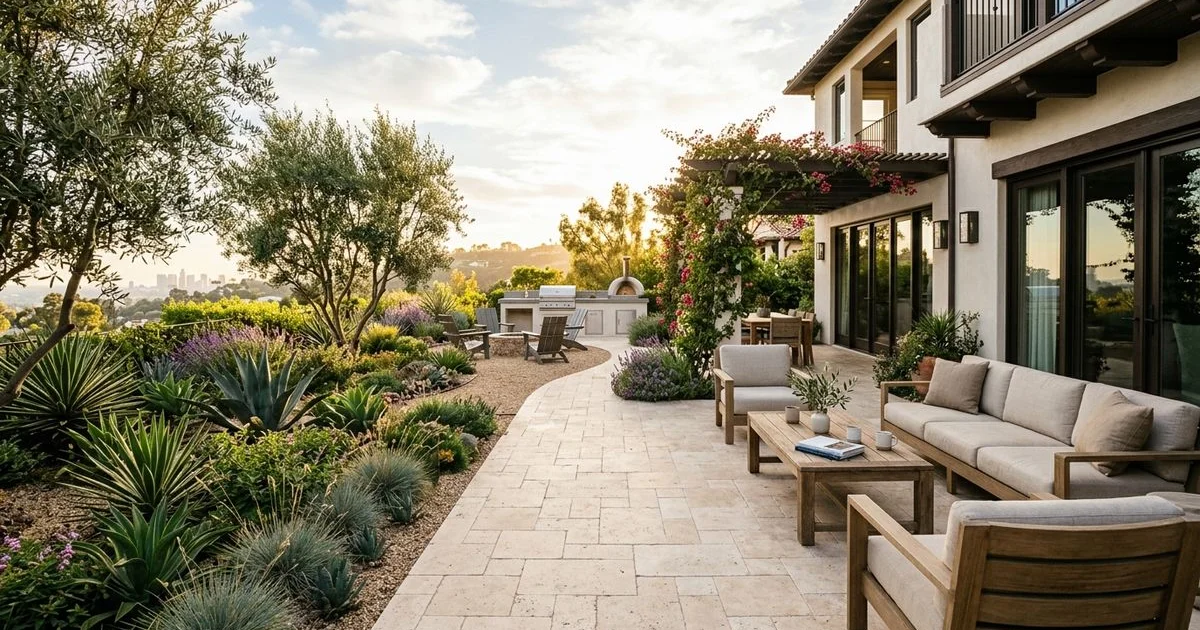
There is a trade-off worth respecting here. Native plants are not always tidy in the way a formal suburban planting can be. Some are more open in habit, some respond to pruning in limited ways, and some evolve with the seasons rather than holding the same look year-round. That is not a flaw. It is part of what makes them effective in drought resistant landscaping. A homeowner who expects a clipped, uniform appearance may need to add more structure through spacing, massing, or hardscaping so the garden feels intentional.
The best planting plans usually mix forms. Bunchgrasses can hold space and help with erosion. Shrubby species like ceanothus and manzanita add backbone. Smaller flowering plants such as monkeyflower and foothill penstemon provide movement and seasonal color. California buckwheat and California sagebrush bring a more naturalistic frame that fits hillside settings well. On a strong slope, that blend also helps with stability because different root systems cover the ground in different ways.
Hillside landscaping needs more than drought tolerance
Hillside landscaping in California comes with a narrow margin for error. Slopes need erosion control, drought tolerance, and firewise planting, especially in foothill properties where runoff, heat, and wind can all work against the garden. A hillside is not a flat canvas. It behaves more like a moving system. Water wants to travel downhill. Soil wants to loosen if roots are sparse. Wind can dry out exposed areas faster than expected.
That is why plant spacing matters. A slope planted too sparsely can leave bare soil exposed to erosion. One planted too densely may trap water in pockets or create maintenance headaches later. The goal is a layered canopy that slows water movement, protects the soil surface, and still allows air and light through. Ground-hugging plants, shrubs, and bunchgrasses can work together to cover the slope without making it feel heavy.
Hardscaping also earns its place here. On steep sites, carefully placed paths, retaining elements, or terraced areas can reduce erosion and make maintenance safer. Hardscaping is not an aesthetic afterthought in hillside landscaping. It is often part of the structural solution. The trick is to use it sparingly and purposefully so the property still feels planted rather than paved. A well-placed path can divide a slope into manageable zones and create access for irrigation checks, pruning, and seasonal cleanup. That access matters more than many homeowners expect, because a beautiful hillside that cannot be maintained becomes a liability within a few seasons.
Drainage deserves the same attention. If stormwater is left to rush unchecked, it can carry soil away and undermine planting beds. If it pools in the wrong place, roots may suffer even in a drought-tolerant garden. The smart move is to observe where water collects during rain or after irrigation and then adjust grade, plant placement, or surface materials to guide it more carefully. That practical kind of design is what separates a decorative hillside from a stable one.
Firewise choices fit water-wise gardens better than many people realize
Many homeowners assume fire-resistant planting and drought-resistant landscaping are competing goals. In practice, they often align. California native and climate-appropriate plants, when used thoughtfully, can support both water conservation and defensible-space planning. The San Gabriel Mountains region makes that point sharply, because hillside properties often sit near ecosystems where ember exposure, dry vegetation, and seasonal fire risk deserve serious attention.
The idea is not to strip a yard bare. It is to make plant selection and placement more deliberate. Plants that hold less volatile structure, spacing that avoids continuous fuel, and maintenance that keeps dead material from accumulating all contribute to a safer landscape. Native plants suitable for local gardens can play a strong role here when they are selected and maintained with firewise principles in mind.
This is one place where homeowners sometimes overcorrect. They may replace a living, well-rooted slope with rock and very little planting, thinking it is safer. But bare or minimally covered soil can increase heat, increase runoff, and create a harsher microclimate for the remaining plant material. The better answer is usually balance. Use plants that fit the site and maintain defensible-space priorities, but keep enough living cover to stabilize soil and moderate temperature. A garden that serves both water conservation and firewise goals often looks more natural than a landscape that tries to eliminate all complexity.
Turf removal should be strategic, not emotional
Turf removal is a common part of California water-wise design, but it works best when tied to a broader plan. A lawn is not automatically bad, yet it is often the least efficient use of water in a hot, dry setting, especially where little of it is used functionally. Still, removing turf without redesigning the space can leave a yard looking unfinished and performing poorly.
The better question is what the space needs to do after the turf is gone. If it is a front approach, maybe the job is to create curb appeal with a mix of low-water shrubs, grasses, and a few clear circulation paths. If it is a sloped back yard, maybe the goal is erosion control and safe access. If it is a family gathering area, hardscaping may define a usable seating zone while planting softens the edges. Turf replacement works best when the replacement has a job.
A thoughtful turf conversion also takes the existing conditions seriously. Soil compaction, shade from mature trees, and irrigation legacy issues can all affect what comes next. In some yards, it is wiser to reduce turf gradually rather than remove everything at once. That allows for testing what survives in different microclimates and limits the risk of a large, expensive failure. It also gives homeowners time to watch how the site responds to real summer heat and occasional rain.
HOA rules and local water restrictions are not the final word
California homeowners often assume an HOA can veto water-efficient changes, but state guidance says homeowners’ associations cannot prohibit certain water-efficient landscaping choices during drought-related restrictions. That matters for anyone considering drought resistant landscaping, turf removal, or native plant conversions in a community with layered rules. It does not mean a homeowner can ignore architectural standards or local codes, but it does provide protection for sensible conservation choices.
That protection is especially useful when a landscape is being redesigned around water savings rather than ornament alone. If an association prefers a uniform look, the conversation may need to focus on design quality rather than water use alone. A well-composed native planting scheme, clean hardscaping lines, and disciplined irrigation usually go much farther toward approval than a patchwork of mismatched replacements. In practical terms, a landscape can be both water-wise and visually orderly. That combination often wins over skeptics.
What a practical California drought-resistant garden actually looks like
A successful water-wise yard in California rarely announces itself through a single dramatic move. It tends to feel balanced and site-specific. The slope is stabilized. Irrigation is tuned to the plants, not the old lawn. The sunniest edges hold species that tolerate heat and exposure. The shadier pockets support plants that need a little more protection. Paths, retaining elements, or stone edges provide structure where needed. There is enough plant cover to cool the site and protect the soil, but not so much that water and maintenance become wasteful.
In the San Gabriel Valley, that often means working with the hillside character of the property instead of trying to flatten it aesthetically. The region’s visual identity is tied to its slopes and foothill setting, and new construction or renovation looks stronger when it acknowledges that reality. A drought-wise design here should feel rooted in place. California buckwheat, sagebrush, manzanita, ceanothus, monkeyflower, foothill penstemon, bunchgrasses, and San Gabriel oak can all help create that effect when used according to the site conditions they actually need.
It also helps to remember that water-wise gardening is not a one-time purchase. It is a practice. The first year teaches you where heat is strongest, where runoff runs faster than expected, and which plants settle in with less fuss than others. The second year often reveals whether irrigation needs to be reduced, shifted, or divided into smaller zones. By the third year, the property begins to show its real character. That is usually when homeowners realize that the garden feels less like a compromise and more like a better fit for California living.
For homeowners weighing where to begin, the sequence is straightforward. Study the site carefully, especially irrigation, soil, sun exposure, and slope. Choose plants from water-wise and climate-appropriate options, with local natives where they fit best. Use hardscaping and drainage solutions to manage runoff and access. Keep firewise needs in view, especially on hillsides and near open exposure. Then give the landscape time to establish before judging it by summer alone.
That approach creates gardens that use less water, survive heat more gracefully, and feel more honest about where they are planted. In a state where every gallon counts and every slope tells a story, that is a practical kind of beauty.