
Drought-Resistant Landscaping Ideas for Hot, Sunny Sites
Hot, sunny sites ask more of a landscape than a mild front yard ever will. In places like the San Gabriel Valley, where slopes, strong sun, seasonal dryness, and wildfire concerns all sit close together, good landscape design is less about decorating the ground and more about solving a set of practical problems at once. The best drought resistant landscaping does not just survive on less water. It handles heat, sheds stormwater in a controlled way, protects soil from erosion, and still looks intentional from the street.
That is where many projects begin to separate themselves. A lawn-heavy plan can feel familiar, but it is often the least responsive choice for a site that gets long hours of sun and minimal shade. A well-built landscape, by contrast, starts with what the site is already telling you. How fast does water disappear into the soil? Where does runoff collect after rain? Which areas bake in the afternoon and which stay a little cooler? Which slopes are exposed enough to need extra stabilization? Those details shape every real-world decision, from plant selection to hardscaping to irrigation retrofits.
Start with the site, not the plant list
The most common mistake in drought-resistant landscaping is shopping for plants before understanding the yard. California’s water conservation guidance puts the order of operations in the right place: assess irrigation, soil, sun exposure, and plant needs before removing turf or changing the layout. That may sound simple, but it is the difference between a landscape that settles in and one that constantly needs work.
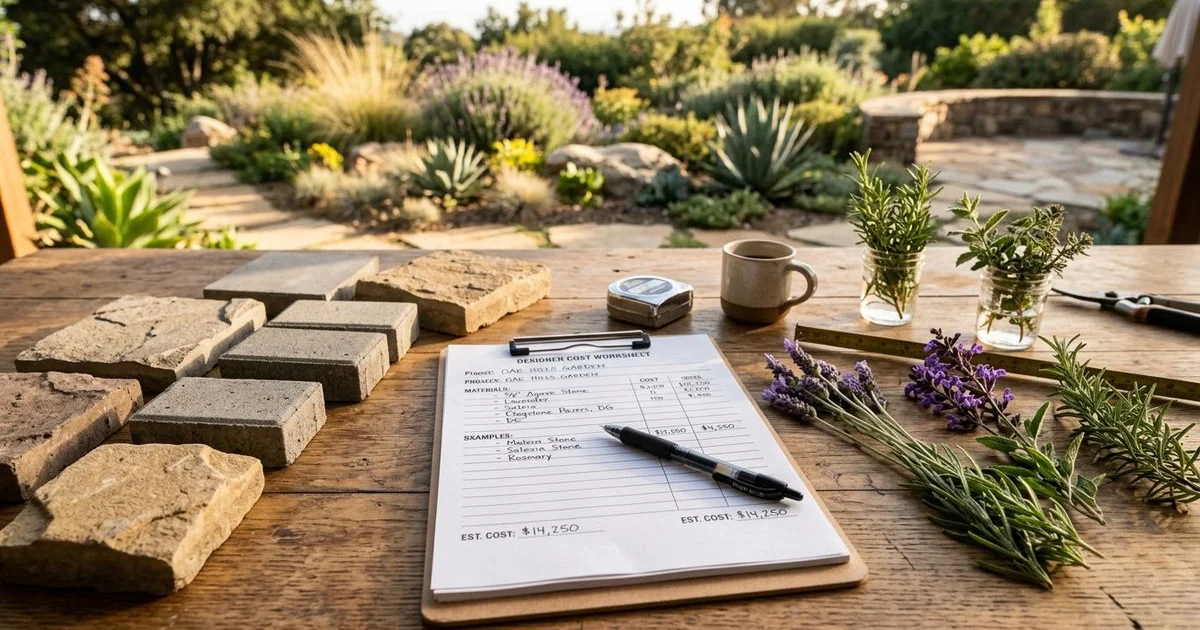
On a hot, sunny property, microclimates matter more than many homeowners expect. A planting bed against a south-facing wall behaves differently from an open side yard. A slope with reflected heat from masonry will dry faster than a flat lawn panel. Even within a single front yard, the edge near a driveway can be hotter and drier than the strip near the house. If you plant as if every corner has the same exposure, you usually end up overwatering the weak spots and underperforming the tough ones.
A careful site read also helps with irrigation retrofits. Drip irrigation is often a strong fit for drought resistant landscaping, but it only works well when it is matched to the planting zones instead of being treated as a one-size-fits-all fix. A mature shrub bed, a line of native groundcovers, and a slope planted for erosion control may need different emitter placement and different run times. If the irrigation is left unchanged after turf removal, the new landscape may still waste water or leave some plants stressed while others stay too wet.
Why hot, sunny landscapes need a different design approach
A landscape in full sun has three pressures at once: heat, evaporation, and soil drying. On a hillside landscaping site, those pressures can be amplified by runoff and erosion. Water tends to leave before it soaks in, which means even a modest rain can do less for the soil than expected. That is one reason the California Native Plant Society places such a strong emphasis on slopes, drought tolerance, erosion control, and firewise planting together. These are not separate design issues. They are linked.
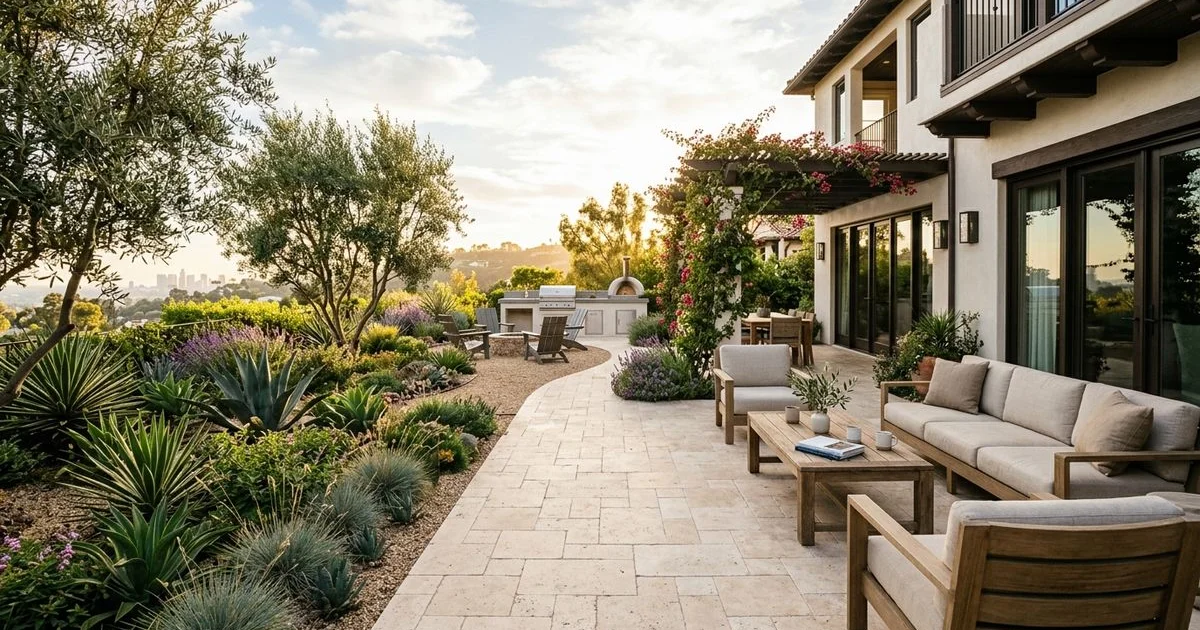
The San Gabriel Valley makes that connection especially visible. The foothill character of the region, along with the visual pattern of hillside properties, calls for water-efficient landscapes that still feel appropriate to the land. In practical terms, that usually means less turf, more layered planting, and a stronger role for hardscaping where circulation, drainage, or slope management requires it. When a site is hot and exposed, hardscaping can be part of the solution rather than an ornament. Retaining walls, decomposed granite paths, gravel bands, stone steps, and defined edges can reduce water demand and help manage movement across grade changes.
The goal is not to replace every soft surface with paving. Too much hardscape can make a yard hotter and less comfortable. The better approach is selective use. Place hardscape where people walk, where water needs to be directed, or where grade changes make planting difficult. Then use plants to cool and soften the remaining space.
Turf removal works best when it is planned, not rushed
Turf removal is often the first visible step in drought resistant landscaping, but it should not be the first design decision. If you simply pull grass and fill the void with random shrubs, you may lose the structure that made the yard usable in the first place. The smarter move is to decide what the turf was doing. Was it a visual plane, a play area, a circulation zone, or just leftover default landscaping?
When the answer is clear, replacement becomes much more practical. A former lawn strip along the sidewalk, for example, might become a band of low-water groundcovers with a few accent shrubs and a simple gravel edge. A larger front lawn might be broken into smaller planting rooms with stepping stones, drought-tolerant planting, and a central path that keeps the space functional. On a slope, turf often offers little value and a lot of maintenance burden, so replacing it with erosion-conscious planting is usually the better long-term choice.
California’s Model Water Efficient Landscape Ordinance matters here because it reinforces what responsible designers already know. New and renovated landscapes are expected to use water efficiently, and the rules encourage climate-appropriate and native plant choices as well as efficient irrigation and alternative water sources. In other words, lawn replacement is not just an aesthetic trend. It is part of the larger direction of landscape design in the state.
Plants that earn their place in full sun
For hot, sunny sites, plant selection should favor species that tolerate heat without looking battered by midsummer. In Southern California, California native plants are often excellent candidates because they are adapted to the climate and, when matched carefully to the site, can reduce water demand without sacrificing character. The California Water Code guidance points homeowners toward region-appropriate plant water needs, and WUCOLS is one of the tools used to understand those differences.
Several plants are especially relevant to the San Gabriel Valley and similar foothill settings. California buckwheat brings a dry, textured look and performs well in sunny conditions. California sagebrush has a loose, airy habit that works beautifully in layered native plantings. Manzanita and ceanothus add structure and seasonal interest, while monkeyflower and foothill penstemon can bring color into lower, tougher beds. Bunchgrasses are useful for motion and erosion control, especially where a slope needs roots that help hold soil in place. San Gabriel oak is another locally named native species that connects the planting palette to the region itself.
What matters most is not simply that these plants are native, but that they are matched to the right conditions. A native plant put into poor drainage, excessive shade, or a reflected-heat pocket can struggle just as quickly as a thirsty nonnative. Good landscape design is selective. It respects the plant’s needs and the site’s limits at the same time.
Think in layers, not isolated specimens
A successful drought-resistant yard rarely looks like a row of unrelated plants. It has layers. Groundcovers knit the soil together. Shrubs provide structure. Larger accent plants anchor the composition and create shade for more delicate species where that is appropriate. On hot, sunny sites, this layered approach also serves a practical function. It reduces bare soil exposure, slows evaporation, and gives the landscape a more stable appearance through the dry season.
This is especially useful near slopes and retaining areas, where hillside landscaping has to do more than look neat. The soil surface should be covered as much as possible, because exposed earth is vulnerable to both drying and erosion. In these areas, a mix of low, spreading plants and deeper-rooted shrubs often works better than a sparse arrangement of isolated specimens. A plant community is more resilient than a collection of individual showpieces.
There is also a visual benefit. Dense, well-chosen layers create a finished look even when water use stays modest. That matters in a region where landscapes are often seen from the street or from a higher elevation. The San Gabriel Valley’s hillside character makes those views part of the design conversation. A water-efficient yard should still feel considered from a distance, not just from the front door.
Hardscaping has a real role, but it should stay disciplined
Hardscaping can make a drought-conscious landscape much more livable, especially on hot, sunny properties. Paths, patios, steps, seating walls, and edge treatments can organize the site and reduce the area that needs irrigation. They also help with drainage by giving stormwater a predictable path and by protecting vulnerable slopes from foot traffic.
The key is restraint. Too much hardscape can increase heat buildup, which is the opposite of what you want on a hot site. Light-colored, permeable, or minimally expansive surfaces are often better than large sealed planes, especially where reflected heat would stress nearby plants. A gravel path or decomposed granite walkway can be useful when it is well detailed, but only if the base, grading, and drainage are handled carefully. Otherwise, the space can wash out or become difficult to maintain.
In hillside landscaping, hardscaping often does some of best landscapers in Pasadena the work that flat terrain can leave to planting alone. Short retaining walls can slow runoff. Stepping paths can reduce erosion from repeated foot traffic. Stone or masonry elements can define the space around a slope while allowing the planted areas to do the ecological work. This balance is where landscape design becomes both practical and site-specific.
Firewise planting belongs in the same conversation
For many properties in and around the San Gabriel Mountains, drought resistance and firewise design go hand in hand. CNPS guidance for hot, sunny slopes emphasizes firewise planting, and local chapter resources underscore the importance of ember-resistant zone rules and native plants suitable for area gardens. That is a serious consideration, not a decorative add-on.
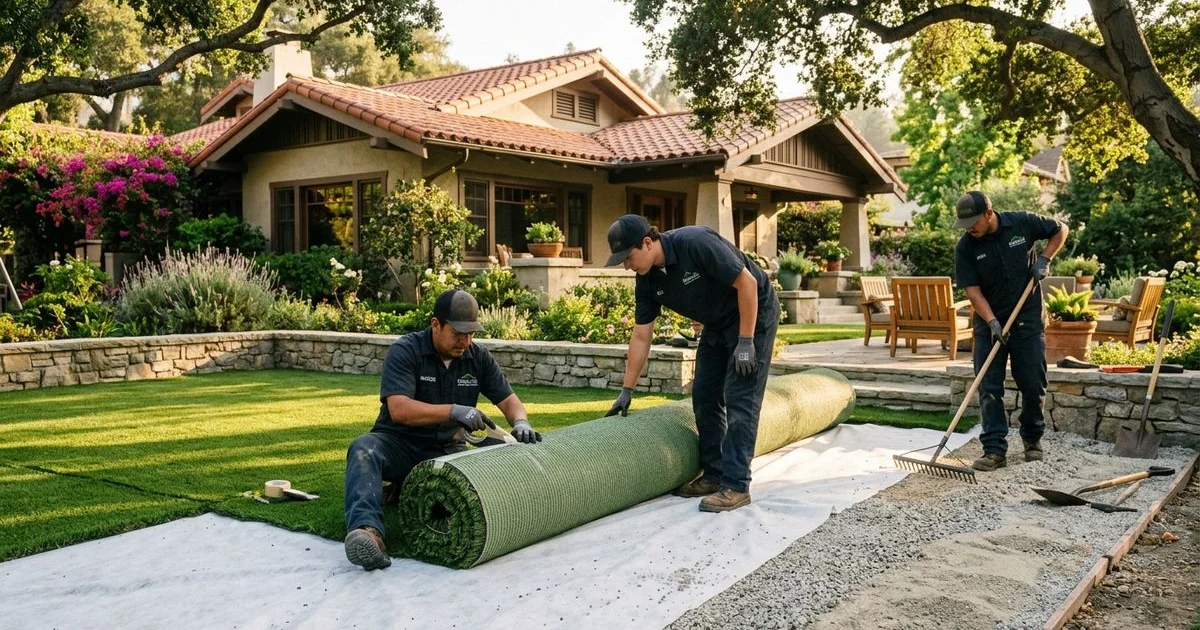
Firewise landscaping does not mean planting a barren yard. It means choosing plants thoughtfully, maintaining spacing, and avoiding overly dense or combustible buildup near structures. It also means paying attention to the transition zones around the house. The area closest to the building should be clean, manageable, and planned with more care than a remote back slope. The goal is to reduce the chance that embers find easy fuel while still keeping the landscape attractive and functional.
Native plants can fit this approach well when they are used intelligently. A landscape built around California sagebrush, manzanita, ceanothus, buckwheat, or bunchgrasses can feel natural to the region and still support defensible-space goals. The plant palette does the work, but only when maintenance stays consistent and the design respects the realities of spacing and placement.
Drainage and stormwater runoff deserve early attention
Drought-resistant landscaping can fail if drainage is ignored. On a dry site, it is easy to assume water issues only show up during rare rains, but those storms can reveal weak points quickly. Low spots collect runoff. Downspouts dump water where roots cannot absorb it fast enough. Slopes shed water before it soaks in. Hard surfaces send water in directions that the original yard never had to handle.
This is where landscape design becomes more technical. The grade has to move water away from structures and toward areas that can accept it. Planting beds should not become accidental basins unless they are intentionally designed that way. Turf removal can help because it often creates an opportunity to rebuild the drainage pattern from the ground up instead of working around an outdated lawn system.
A good drought-resistant landscape does not just use less water. It manages the water it does receive with care. That includes rainwater, irrigation, and runoff from hardscape. In many projects, a small adjustment in grading or irrigation zoning can make a larger difference than adding more plants ever would.
HOA rules are not always the barrier people expect
Homeowners’ association concerns often come up when people consider turf removal or native planting, especially during periods of drought restriction. California water-restriction guidance makes an important point here: HOAs cannot prohibit certain water-efficient landscaping choices during drought-related restrictions. That does not erase every community rule, but it does change the conversation.
In practice, this means a homeowner should not assume a water-wise redesign is off limits just because the neighborhood has a traditional look. A carefully designed native planting bed, a reduced-turf front yard, or a more efficient irrigation layout may be both allowed and sensible. The better strategy is to present the plan as an improvement in function, appearance, and water stewardship rather than as a shortcut. A well-drawn landscape plan tends to calm more concerns than a vague promise to “use less water.”
What usually makes a hot-site project succeed
If there is a pattern in the most effective drought resistant landscaping projects, it is this: they are built from the site outward. They begin with sun exposure, slope, soil behavior, irrigation condition, and the way people actually use the space. From there, plant selection, hardscaping, and drainage each take their proper place. Nothing is forced to carry the whole project alone.
For a hot, sunny property in the San Gabriel Valley, the strongest results usually come from a combination of native and climate-appropriate plants, efficient irrigation, restrained hardscaping, and slope-aware planning. Turf is reduced where it has little value. Erosion-prone areas get rooted and covered. Firewise considerations are treated as part of the design, not as an afterthought. And the finished landscape still feels local, because it reflects the visual character of the hills and the ecology of the region.
A yard like that does more than conserve water. It works with the climate rather than arguing with it. It stays legible through the dry season, handles heat more gracefully, and asks less of both the homeowner and the irrigation system. On a site that gets hammered by sun, that is not a luxury. It is the mark of good design.