
Erosion Control Strategies for Hillside Landscaping Projects
Hillside properties ask more of a landscape than level ground ever will. Water moves faster, soil can loosen under stress, and a planting plan that looks tidy on paper can fail quickly if it ignores slope, runoff, and exposure. In the San Gabriel Valley, that reality is hard to miss. The region’s hillside character is part of what gives it so much appeal, but it also means every design decision has to work with gravity instead of against it.
Good erosion control on a slope is never just one tactic. It is a layered approach built from drainage, soil preparation, plant selection, and construction details that actually hold together through heat, wind, and seasonal rain. The best hillside landscaping projects do not fight the site. They read it carefully, then shape it with restraint. That usually means less turf, more drought-resistant landscaping, and a stronger reliance on native and climate-appropriate plants that can root deeply and stabilize the ground over time.
Start with the slope, not the plant palette
A common mistake in hillside landscaping is to begin with a look in mind and treat the slope as a styling problem. In practice, the slope tells you almost everything you need to know. Grade, sun exposure, soil texture, and drainage patterns all influence whether erosion will be mild or severe. A steep, compacted slope with full afternoon sun behaves very differently from a gentler north-facing hillside with heavier soil and scattered shade.
California water guidance makes this point plainly by encouraging property owners to assess irrigation, soil, sun exposure, and plant selection before removing turf or changing a landscape. That sequence matters. If the slope sheds water too quickly, young plants may never establish. If the soil is too compacted, roots will struggle to spread. If the hillside gets blasted by sun and reflected heat, even drought-tolerant plants can dry out faster than expected.
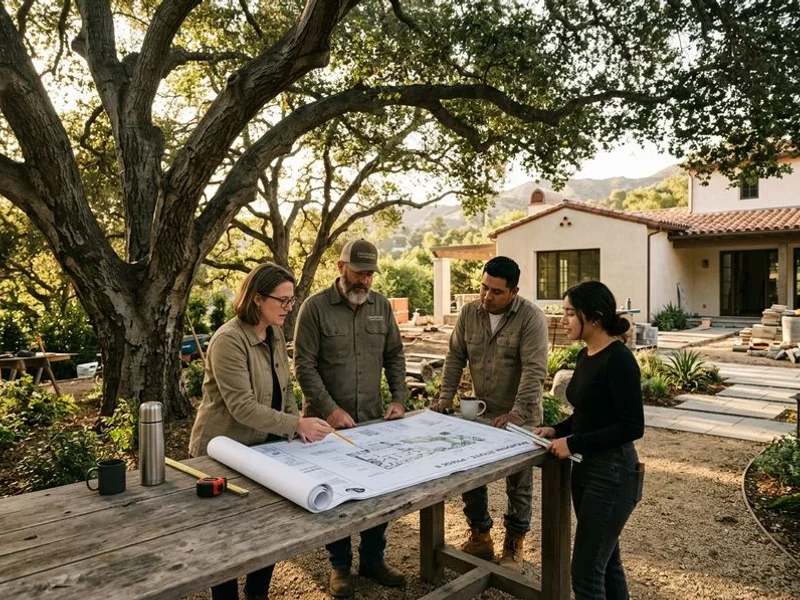
On real projects, the initial walk-through often reveals clues that are easy to overlook. Bare runoff lines show where water is already cutting channels. Patchy grass indicates hot, dry pockets. Crusted soil suggests poor infiltration. These details help determine whether the site needs grading adjustments, soil improvement, or simply a better irrigation strategy before any planting begins.
Drainage has to be designed before erosion becomes visible
When erosion shows up, it often means water is moving in ways the landscape never controlled. On a hillside, that can happen through sheet flow, where a thin layer of water moves across the surface and quietly strips away fine soil, or through concentrated runoff that carves channels after heavier rain. The fix is rarely cosmetic. It begins with directing water intentionally.
That can mean shaping the slope so water slows down instead of accelerating downhill. It can mean capturing runoff at intervals, rather than letting it gain speed from the top of the hill to the bottom. It can also mean protecting vulnerable areas near paths, planting pockets, or hardscape edges where water tends to collect and spill.
Hardscaping plays a useful role here, but only if it is designed as infrastructure rather than decoration. Small retaining elements, terracing, stepping paths, and properly built edges can interrupt flow and reduce the force of moving water. On a steep property, a sequence of modest terrace levels often performs better than one oversized intervention because it breaks the hillside into manageable zones. Each zone can then support different soil conditions and plant needs.
Drainage also affects neighboring properties, which is why runoff control is more than a cosmetic or maintenance issue. A hillside landscape that sends water downhill unchecked can create problems beyond the lot line. For that reason, a strong plan treats water as something to guide, slow, and absorb where possible.
Soil preparation makes the difference between rooting and sliding
Erosion control depends as much on soil condition as on plant choice. Loose, healthy soil encourages roots to spread and anchor. Overworked or compacted soil does the opposite. It runs off faster, dries unevenly, and resists infiltration, which puts added stress on young plantings.
Before planting, the soil on a slope should be evaluated for texture and structure. Clay-heavy soil can hold water well but may also compact and shed runoff if the surface seals over. Sandy soil drains quickly but may need more organic support to help roots establish. In many hillside projects, the goal is not to turn the entire slope into rich garden loam. That can create instability if done poorly. The better approach is usually measured improvement where plants will actually go, combined with surface protection that reduces direct impact from rain and irrigation.
Mulch deserves careful mention here. It is one of the simplest and most effective erosion-control tools, provided it is applied properly. A mulch layer softens rainfall impact, reduces evaporation, and helps keep soil in place while plants are filling in. On slopes, it needs to be chosen and installed with enough weight and texture to stay put. Light material that blows away or washes downhill quickly becomes a nuisance rather than a benefit.
This is where lived experience matters. I have seen slopes that looked finished after installation, only to lose half their mulch in the first strong runoff because the soil had no roughness and the irrigation pattern was too aggressive. A little patience at the soil stage usually saves a great deal of repair work later.
Plant roots are part of the structural system
In hillside landscaping, plants are not just aesthetic cover. They are living stabilizers. Their roots help bind soil, reduce surface exposure, and slow erosion over time. That does not mean every attractive plant belongs on a slope. It means selection has to account for growth habit, rooting depth, water demand, and how the plant behaves during establishment.
California native plants are especially useful in this role because they are adapted to local conditions and can support a more resilient hillside garden. In San Gabriel Valley settings, species such as California buckwheat, California sagebrush, manzanita, ceanothus, monkeyflower, foothill penstemon, and bunchgrasses are often well suited to slopes when matched correctly to the site. These plants do more than survive. They help create a plant community that can handle sun, heat, and seasonal changes with less artificial support.
That said, native does not automatically mean right for every slope. Microclimate still matters. A south-facing incline with reflected heat and little shade will demand different choices than a cooler or partially protected hillside. California’s water guidance also points growers toward WUCOLS as a way to understand region-appropriate plant water needs. That is important because even drought resistant landscaping has to be matched to the actual site, not just the label.
The early years matter most. A plant that eventually becomes drought adapted still needs irrigation support while roots are establishing. The trick is to water deeply and less often, so roots are encouraged to move downward rather than stay near the surface. Shallow, frequent irrigation can make erosion worse by keeping the upper layer loose and vulnerable while training roots to stay shallow.
Firewise planting and erosion control often work together
On hillside properties in the foothill zone, erosion control and firewise planning should not be treated as separate conversations. They overlap in useful ways. A planting scheme that reduces continuous fine fuels, keeps space around structures, and favors appropriate native and climate-compatible species can also help stabilize soil and reduce maintenance pressure.
The San Gabriel Mountains area and its neighboring communities make this especially relevant. Local native plant communities are part of the region’s identity, and many properties sit close to terrain where firewise planning matters. Choosing plants for a slope cannot be based on color alone. It should account for how the landscape will age, whether it will stay open enough for maintenance, and how well it can resist stress without becoming brittle and overgrown.
Some plants create better structure on a slope because they knit the soil together without forming a dense, flammable mat. Others may look lush but demand too much water, frequent trimming, or replacement after heat stress. The strongest designs often use a combination of shrubs, low mounding plants, and bunchgrasses to create texture while preserving airflow and access. That balance is one reason hardscaping and planting should be planned together. Paths, walls, and steps can help define usable areas without turning the hillside into an overbuilt surface.
Irrigation retrofits are often the hidden key
A slope can be beautifully planted and still fail if irrigation is wrong. Water that is applied too quickly runs off before it can soak in. Water that lands unevenly creates dry pockets and soggy pockets. Either condition can weaken plant establishment and encourage erosion.
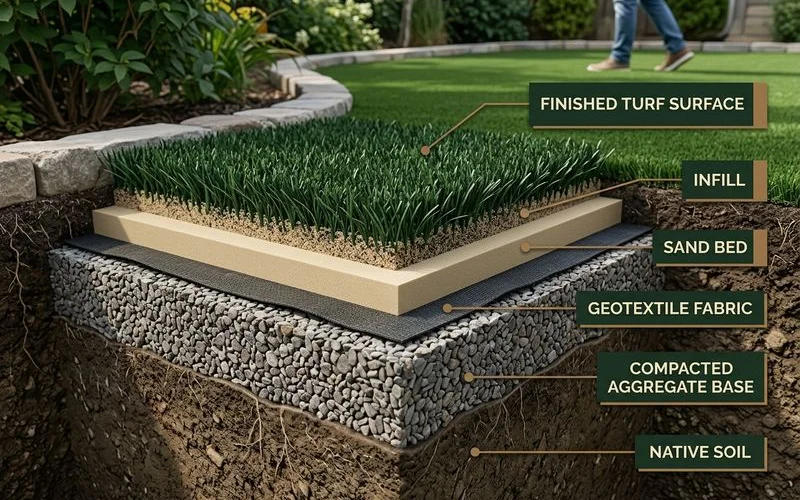
This is why irrigation retrofits are such a practical part of hillside landscaping. Drip systems, properly zoned emitters, and careful scheduling can reduce waste while supporting root development. The point is not to keep the whole slope damp. It is to deliver water where roots need it, in amounts the soil can absorb.
California’s statewide Model Water Efficient Landscape Ordinance reinforces this direction by encouraging water-efficient landscapes, native and climate-appropriate plants, alternative water sources, and efficient irrigation in new and renovated landscapes. For hillside work, that framework aligns naturally with erosion control. Efficient irrigation is not only about conservation. It also helps prevent runoff that strips soil and undermines newly installed planting.
There is a practical sequence that usually works well on slopes. First, make sure water is reaching the right zones. Second, confirm that the soil can absorb it without sheeting off. Third, adjust plant groupings so water needs are not fought against each other. Grouping plants with similar water demand is especially useful in hillside landscaping because it reduces overwatering of dry-adapted species and underwatering of more vulnerable establishment zones.
Hardscaping should support the slope, not dominate it
Hardscaping has an obvious role in hillside landscaping projects, but the best results come from restraint and purpose. Retaining walls, terraces, steps, and pathways can all help stabilize grade and reduce erosion, yet too much hard surface can worsen runoff if it is not carefully detailed.
A well-placed terrace can catch water and give planting pockets a chance to establish. A properly built path can provide access for maintenance without compacting the entire hillside. Small walls can help divide a steep area into sections that are easier to irrigate and plant. The key is to think about how each hardscape element changes water movement. If a wall sheds water directly onto bare soil below, it creates a new erosion problem. If a path concentrates runoff at its edge, that edge must be protected with planting or drainage detail.
The most successful hillside landscapes often combine hardscaping and planting in a way that looks understated but performs hard work. You see this in projects where the hardscape provides the skeleton and the planting fills in the structure transform your backyard over time. That approach is especially effective in drought resistant landscaping because it allows the site to rely less on thirsty ground cover and more on durable, site-appropriate plant communities.
Turf removal should be planned, not rushed
Turf has its place, but on many hillside properties it is one of the least practical surfaces to keep. It requires steady irrigation, offers limited erosion control on steeper grades, and can become difficult to maintain as slopes become more complex. Still, removing turf without a replacement plan can leave soil exposed and vulnerable.
California guidance recommends assessing irrigation, soil, sun exposure, and plant selection before removing turf. That advice is especially important on hillsides. A bare slope after turf removal can erode quickly if the next layer of landscape is not ready. Replacement should be staged so that soil is protected immediately, whether by mulch, temporary cover, or direct installation of shrubs and ground-hugging plants suited to the site.
The best turf conversions I have seen on slopes are patient. They begin with a clear understanding of where people actually need access and where the hillside can be allowed to become a planted, low-water system. Often, the result is a more interesting landscape than turf ever provided. Texture improves, maintenance drops, and the slope begins to function as part of the property rather than as a difficult patch of grass to keep alive.
HOA rules, local expectations, and the reality of compliance
Homeowners in HOA communities sometimes assume that association rules will override water-efficient choices. California water restriction guidance says otherwise in important ways, because homeowners’ associations cannot prohibit certain water-efficient landscaping choices during drought-related restrictions. That matters in hillside communities where landscape expectations can be strict and visual character is often tightly managed.
The practical takeaway is that compliance and design should be discussed early. If a hillside project is going to lean on drought resistant landscaping, native plantings, or reduced turf, those decisions should be mapped into the plan from the start. Waiting until installation to discover that the planting palette or irrigation approach conflicts with community expectations creates unnecessary friction.
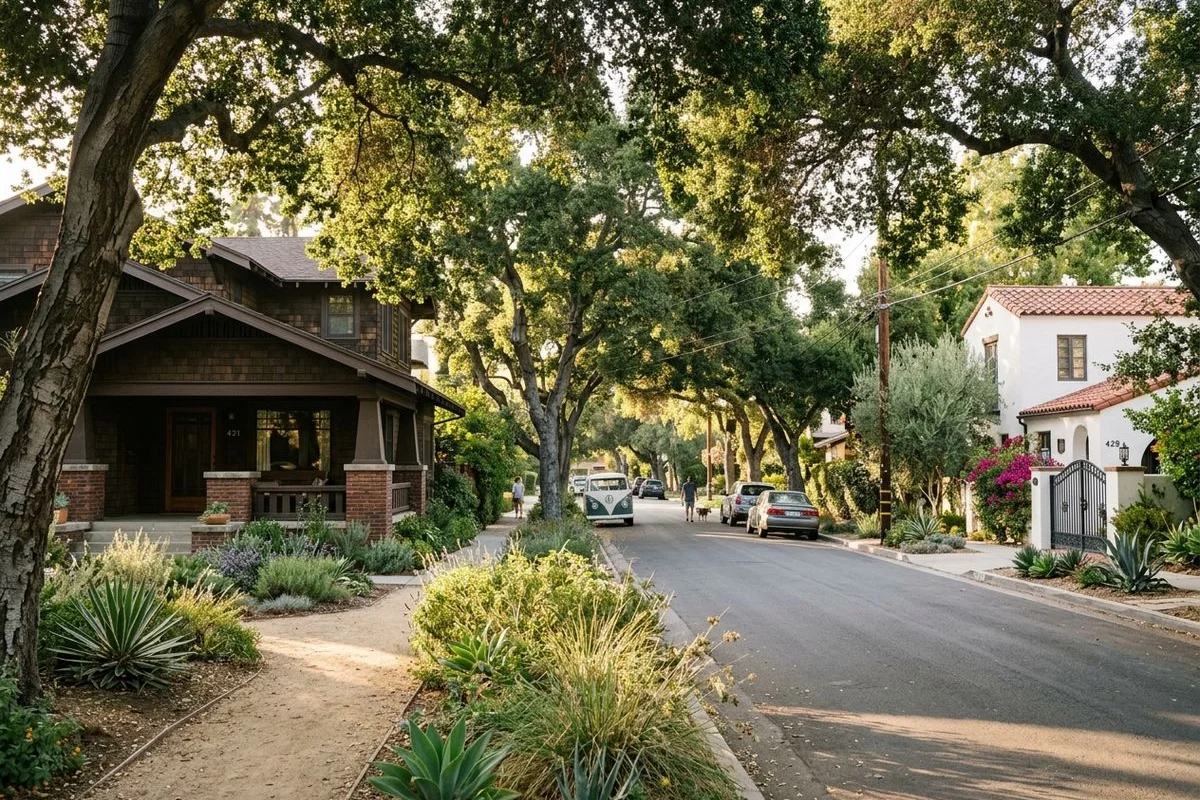
This is also where clear landscape design helps. A slope that is thoughtfully planted, visually ordered, and tied together with hardscaping often reads as intentional and polished, even if it uses far less water than a conventional landscape. In areas like the San Gabriel Valley, where hillside properties contribute strongly to neighborhood character, that sense of order matters.
What a strong hillside plan usually includes
A good erosion-control plan on a slope rarely depends on a single hero material. It combines grading, drainage, soil improvement, irrigation, and planting into one system. If any one part is ignored, the others have to work harder. The most durable projects usually include five practical commitments: a drainage strategy that slows and directs water, soil preparation that improves rooting without creating instability, erosion-resistant mulch or ground cover, plant selection matched to microclimate and water needs, and hardscaping that manages access and runoff rather than adding to it.
Those pieces are not glamorous, but they are what keep a hillside from unraveling after the first hard rain or the first long, dry stretch. They also support the broader goals that matter in this region: water conservation, firewise planning, and landscapes that fit the San Gabriel Valley’s hillside setting instead of flattening it into something generic.
A landscape that works with the hill
Hillside landscaping works best when it accepts the site’s limits and uses them well. Erosion control is not about covering every inch as quickly as possible. It is about shaping water movement, helping roots establish, and choosing plants and hardscape details that can live with slope, heat, and seasonal change. California native plants, careful irrigation retrofits, and thoughtful hardscaping can turn a difficult hillside into a stable, water-wise landscape that feels rooted in place.
The strongest projects are rarely the most elaborate ones. They are the ones that read the land accurately, respect microclimate, and make room for plants to mature into their role as living infrastructure. On a hillside, that approach is not just practical. It is the difference between a landscape that washes away and one that settles in, holds fast, and grows better with time.