
Hardscaping Features That Work Well on Slopes
Sloped properties ask more of a landscape than flat ground ever will. Water moves faster, soil shifts more easily, and every design choice has to pull double duty. A terrace is not just a visual element. A retaining wall is not just a boundary. On a hillside, hardscaping becomes the framework that keeps the whole site usable, stable, and easier to maintain over time.
That is especially true in places like the San Gabriel Valley, where hillside landscaping has to answer to a dry climate, an exposed terrain, and the practical realities of water use. The best slopes do not fight the land. They work with it. They slow runoff, hold soil in place, create flat areas where people can actually use the yard, and support drought resistant landscaping that looks appropriate in a foothill setting. When hardscaping is planned well, the slope stops feeling like a limitation and starts acting like an asset.
What slopes need before they need style
The first mistake people make on a sloped site is jumping straight to finishes. They picture stone steps, a patio, maybe a fire feature, and skip the less glamorous work that determines whether the project will hold up. On a slope, drainage and erosion control come first. If water is not managed correctly, even the most attractive hardscaping can fail early. Soil softens, edges shift, and runoff cuts channels where there were none before.
A sensible landscape design begins with the site itself. Sun exposure matters because a south-facing slope can be much hotter and drier than a shaded one. Soil matters because some slopes shed water quickly while others hold it too long. Existing irrigation matters because a tired or poorly placed system can make problems worse instead of better. That is why water-wise planning in California often starts with a hard look at irrigation, soil, sun exposure, and plant selection before anyone removes turf or commits to a new layout.
That sequence matters on hillsides more than most homeowners realize. If the site has been watered like a lawn for years, the soil profile may already be telling a story. If drainage has been ignored, water may be moving where it should not. The right hardscaping responds to those conditions instead of pretending they do not exist.
Terracing changes everything
Terracing is one of the most useful hardscaping strategies for sloped ground because it breaks a steep grade into manageable sections. Instead of forcing a single unusable incline to do all the work, terraces create a series of level or nearly level spaces. Those spaces can hold seating areas, planting beds, paths, or simply stable ground that does not wash away every time a storm rolls through.
In practical terms, terracing can make a steep lot feel larger and more functional. A slope that once offered little except maintenance headaches can gain distinct outdoor rooms. One level might hold a dining area. Another can become a planting terrace with native shrubs and bunchgrasses. A lower section can help collect and redirect runoff safely. The visual result is often cleaner, too. Terraces give a hillside structure, which helps soften the sense of a raw incline.
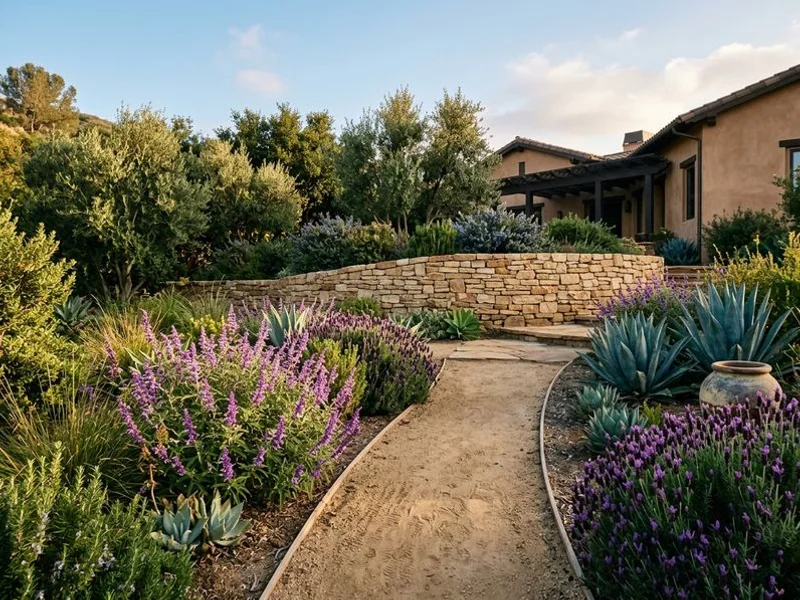
Material choice matters here. A terrace wall has to suit the character of the house and the land. Natural stone can feel especially at home in foothill landscapes, while concrete block or poured elements may suit a more contemporary design. The key is not to pick the most decorative option, but the one that fits the load, the drainage needs, and the maintenance tolerance of the property. On a slope, a beautiful wall that traps water is not beautiful for long.
Retaining walls do more than hold dirt
Retaining walls are often the backbone of hillside landscaping. They hold back soil, create usable flat spaces, and help control the way water travels down a grade. But a retaining wall is only as good as its drainage. Without it, hydrostatic pressure builds behind the wall and creates a costly problem. Good hardscaping respects that reality from the start.
The best retaining walls on slopes tend to be purposeful rather than oversized. They are placed where they actually solve a grade problem, not where they merely add drama. A low wall can define a planting bed and subtly step down a hillside. A taller wall might support a terrace or a driveway edge. In either case, the details behind the face of the wall matter at least as much as the finish in front of it.
On properties with drought resistant landscaping, retaining walls can also help reduce unnecessary irrigation. They create contained planting zones, which makes it easier to water only what needs it and avoid sending excess water downhill. That is useful in California, where water-efficient design is not just a preference. In many cases, it is part of the regulatory conversation for new and renovated landscapes. Hardscaping that helps reduce irrigation demand gives the whole property a more responsible footprint.
Steps and paths need to feel deliberate
One of the easiest ways to make a slope usable is to give it a safe, comfortable way to move through it. Stairs and paths sound simple, but on a hillside they deserve careful attention. A steep run of awkward steps can be worse than no steps at all. The best stair systems feel deliberate and calm. They match the grade, they are easy to read, and they do not leave people guessing where to place a foot.
Wide treads and consistent risers matter because hillside movement is already more demanding than flat-ground walking. Curved or segmented paths can also help reduce the feeling of steepness by following the land more naturally. On some sites, a switchback path is better than trying to force a direct climb. It gives the eye a rest and makes the route more manageable.
Materials should be chosen with the climate in mind. On hot, sunny slopes, a surface that absorbs too much heat can become unpleasant underfoot. Textured finishes usually perform better than slick ones, especially where runoff may pass across the surface during storms. This is one place where restraint often beats drama. A path that quietly does its job for years is worth more than one that photographs well but becomes slippery or unstable after a few seasons.
Drainage features deserve a visible role
A hillside should never look as though the water problem was hidden and forgotten. In a well-planned landscape, drainage features are integrated so they work with the design instead of undermining it. Swales, graded channels, stepping stones that interrupt flow, and carefully positioned hardscape edges can all help guide stormwater where it belongs. The goal is not to trap every drop. The goal is to slow it, spread it, and keep it from causing erosion.
This is where hardscaping and landscape design meet most clearly. A path edge might subtly redirect runoff toward a planting area that can absorb it. A terrace might be shaped to prevent water from running unchecked between levels. Even a simple change in grade can make a big difference if it prevents a concentrated rush of water from carving a groove down the slope.
In San Gabriel Valley hillside landscaping, drainage is often tied to wildfire awareness as well. Water management, erosion control, and firewise planting all intersect. A slope that is well-organized and not overgrown with the wrong material is easier to maintain and often easier to defend in the broader sense of property planning. That does not mean stripping a hillside bare. It means using the land more intelligently.
Fire features can work on slopes when they are placed thoughtfully
Fire features are not automatically a bad fit for a hillside. In fact, they can become one of the most inviting elements in a sloped outdoor space if the layout is handled with care. A fire bowl, fire pit, or linear fire feature often works best on a level terrace or a carefully leveled pad where people can gather comfortably. On a slope, that gathering space needs to be intentional. It should not feel perched or precarious.
The broader context matters here as well. Fire-resistant planting and defensible-space planning are especially relevant in foothill areas. Hardscaping can help by creating clearer zones around gathering areas and by reducing the amount of flammable material immediately adjacent to the feature. In native-oriented gardens, this often means pairing the fire feature with California climate-appropriate materials and plants rather than dense, thirsty planting schemes.
The best fire features on a slope tend to be modest in scale and integrated into the site rather than imposed on it. A well-set seat wall around a fire area can hold a terrace together visually and functionally. It gives people a place to sit, it creates a defined edge, and it avoids the cluttered look that can happen when separate elements are added without a plan. When done well, the fire area feels like a natural pause in the landscape, not an afterthought.
The right hardscape can support native planting
Hardscaping does not compete with planting. On slopes, it often makes better planting possible. Contained beds, terraces, and stepped landings create places where native species and other climate-appropriate plants can establish more reliably. That matters because the San Gabriel Valley has a strong case for water-wise, habitat-friendly landscape design.
California buckwheat, California sagebrush, manzanita, ceanothus, monkeyflower, foothill penstemon, bunchgrasses, and locally named native plants such as San Gabriel oak all fit naturally into this kind of setting when they are matched to the site. These plants are not just attractive. They help create the visual character that belongs in the foothills and hillside neighborhoods of the region. They also align well with drought resistant landscaping goals, especially when paired with efficient irrigation and the kind of site planning that respects microclimate.
Hardscaping makes that planting easier to manage. A stepped bed lets you give one group of plants a little more sun and another group a little more shelter. A stone edge keeps mulch and soil where they belong. A terrace can separate plants with similar water needs so irrigation is not wasted. On a slope, that kind of organization goes a long way.
Turf removal is often the moment a slope starts working
Many homeowners reach the same turning point. They look at a sloped lawn and realize it is asking for more water, more mowing, and more frustration than the space is worth. Turf removal often becomes the opening for a more functional design. Once the grass is gone, the property can be reimagined with hardscaping, native planting, and irrigation that matches the real conditions on site.
That transition should not be rushed. California’s water guidance is clear that the best results come from assessing irrigation, soil, sun exposure, and plant selection before making changes. If the existing turf has been masking drainage problems, those need to be addressed first. If the slope bakes in full afternoon sun, planting and material choices need to account for that. Removing turf without a plan can leave a bare slope vulnerable landscape consultation to erosion. Removing turf with hardscaping in mind opens up real possibilities.
In many cases, a combination of low walls, narrow paths, and planted terraces delivers a cleaner result than a broad expanse of lawn ever could. The land becomes easier to read and simpler to maintain. Water use drops. The slope starts to feel intentional.
Water efficiency and regulation are part of the design brief
For California landscapes, water efficiency is not a side note. The state’s Model Water Efficient Landscape Ordinance shapes how new and renovated landscapes approach irrigation and plant selection. That does not mean every slope must look the same. It means the design has to respect water use as part of the planning process, not as an afterthought.
On sloped sites, efficient irrigation becomes even more important because water tends to move quickly across uneven ground. Hardscaping can support better irrigation by dividing a property into smaller, more manageable zones. It can also make it easier to use alternative water sources where appropriate and to avoid overwatering areas that do not need much moisture in the first place.
Homeowners’ associations add another layer of reality. During drought-related restrictions, California guidance says HOAs cannot prohibit certain water-efficient landscaping choices. That matters for homeowners who want to replace turf, install native plantings, or use a more water-conscious design on a slope. The point is not to ignore community standards. The point is to recognize that water-wise landscaping has a legitimate place in the region’s residential fabric.
The visual character of a hillside matters too
In the San Gabriel Valley, hillside landscapes are part of the region’s identity. People notice them. They shape the way neighborhoods feel from the street and the way individual homes sit in relation to the land. A slope with thoughtful hardscaping can reinforce that character instead of flattening it out. Terraces can echo the natural steps in the terrain. Stone can feel grounded against the hillside. Native plantings can connect the home to the broader foothill ecology.
That visual fit matters because the goal is not just erosion control or compliance or lower water use, though those are important. The goal is to create a property that feels like it belongs there. The San Gabriel Mountains are known habitat for many rare, threatened, and endangered species, and that ecological context influences how local landscape design should be approached. A hillside yard does not need to mimic wild habitat, but it should respect the setting.
This is where hardscaping, hillside landscaping, and native planting come together most successfully. A slope that has been stabilized and shaped with restraint can look calm rather than engineered. It can hold a patio, a pathway, a fire area, and a series of planted terraces without looking busy. The best projects never feel like they are trying too hard. They feel inevitable, as if the site had been waiting for the right structure all along.
A slope works best when every element earns its place
Hardscaping on slopes is not about adding as much as possible. It is about placing the right features where they do the most good. A retaining wall should solve a grade issue. A path should make movement safer and easier. A terrace should create usable space and help control runoff. A fire feature should sit comfortably within a stable gathering area. The plants around it should be chosen for sun, soil, water needs, and the broader character of the site.
That level of judgment is what separates a hillside landscape that merely looks finished from one that actually performs well. In a dry region, the most successful properties often combine hardscaping with water-wise planting and carefully tuned irrigation. They reduce waste, manage erosion, and turn difficult ground into a place people can use without fighting the land every season.
When those pieces are aligned, a slope stops being a problem to solve and becomes a landscape worth inhabiting.