
Hillside Landscaping Strategies for Steep Residential Lots
Steep residential lots can be some of the most rewarding properties to design, and some of the most demanding. A hillside gives a home presence. It opens views, creates opportunities for layered planting, and can turn an awkward grade into a landscape with real character. It also brings real constraints that flat yards do not. Water runs fast, soil can move, irrigation can waste more than it delivers, and a planting scheme that looks generous in a nursery can become expensive maintenance on a slope.
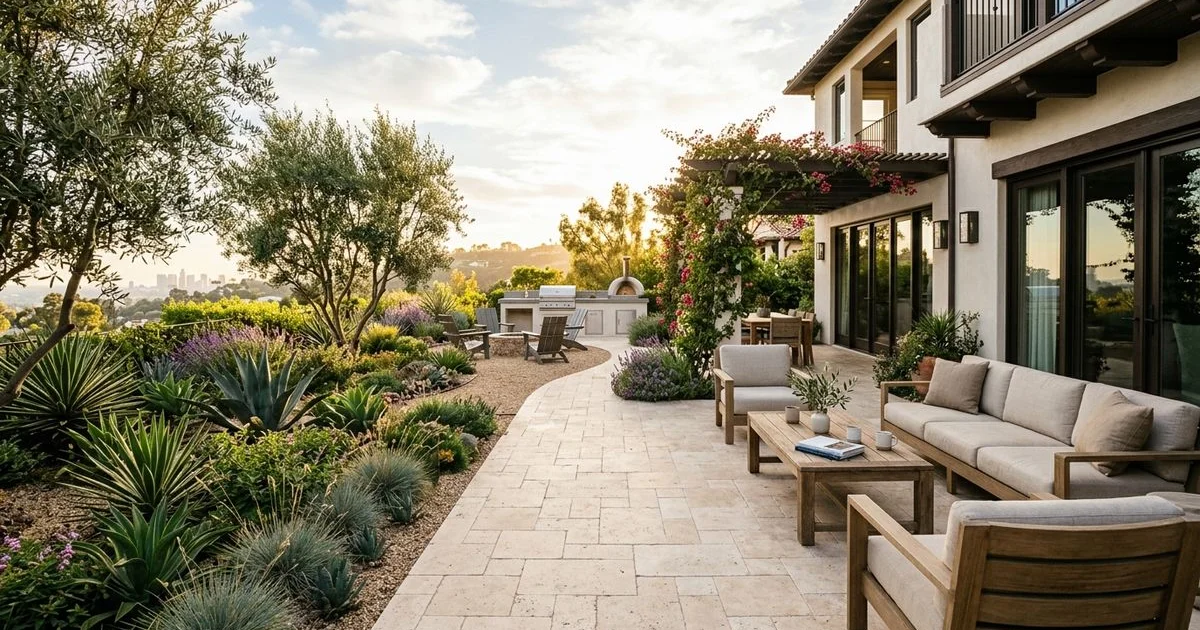
In the San Gabriel Valley, those constraints matter even more because the landscape itself shapes what works. Hillside properties sit within a region where drought-tolerant planting, water-efficient landscapes, and firewise planning are not side notes, they are the foundation of good design. When a slope is treated as a problem to be hidden, the result is often more maintenance, more runoff, and a landscape that never settles in. When it is treated as a system, with soil, drainage, irrigation, plant selection, and hardscaping working together, the site becomes much more resilient.
Start with the slope, not the plant palette
One of the most common mistakes on a hillside lot is to start by choosing plants before understanding how the site behaves. On steep ground, that almost always leads to frustration. The slope itself controls how much water stays in place, how quickly soil dries, and where runoff gathers after irrigation or rain.
California’s water conservation guidance points to a practical sequence that is especially useful here, assess irrigation, soil, sun exposure, and plant selection before removing turf. That order matters. A hillside may have multiple microclimates on one property. A south-facing slope can be far hotter and drier than a shaded side yard. The upper part of a slope often loses moisture faster than the lower portion, where water may collect. Even a few feet of elevation change can alter what survives without constant attention.
This is why hillside landscaping has to be site-specific. A successful landscape design for a steep lot is never a copy-and-paste plan. It is built from observation. Where does water move after a hard irrigation cycle? Where does soil seem thin or compacted? Which areas receive full sun for most of the day, and which get afternoon shade? Those questions are more useful than any trend list.
Hardscaping does more than organize space
On steep residential lots, hardscaping is not decorative trim. It is part of the structure of the landscape. A properly placed retaining wall, stair run, terrace, or path can control grade changes, reduce erosion pressure, and create access for maintenance. Without those elements, even good planting can struggle because workers cannot safely reach the slope, and irrigation tends to overshoot or wash soil downhill.
The key is restraint. Hardscaping should solve a real site problem, not cover every inch of the slope. Too much paved surface can create more runoff and make the landscape feel rigid. Too little can leave the grade difficult to manage. The right balance usually comes from breaking the hillside into usable planes, then letting planting soften the transitions.
On residential lots, I have seen simple terrace bands outperform elaborate solutions that looked impressive on paper but were hard to maintain. A few well-sized landings, properly drained, with durable steps and clear circulation often do more for the homeowner than a broad, ornamental retaining system that is expensive to build and awkward to service. Good hardscaping gives the landscape a spine. It should make the slope easier to live with, not just easier to photograph.
Drainage is the quiet system that keeps everything else alive
Drainage is where hillside landscaping is won or lost. On steep ground, stormwater runoff can strip away topsoil before roots have time to anchor it. Irrigation can do similar damage if water is applied too quickly or too often. The answer is not more water. It is better control.
That usually means slowing water down, spreading it out, and giving it a path that does not cut through planting beds or underneath hardscape. Gentle grading, permeable soil where possible, and irrigation design that matches the slope all help. The goal is not to flood a hillside with moisture. The goal is to keep the root zone hydrated without creating surface flow.
This is also where turf removal has to be handled carefully. Replacing turf on a hillside with drought resistant landscaping can save water and reduce maintenance, but only if the slope is prepared correctly. Removing grass without rethinking drainage, soil, and irrigation often creates a fragile surface that dries out fast and erodes even faster. California water guidance is explicit on this point, the condition of the site comes first. Plant choice comes after.
Choose plants that hold the slope and fit the climate
For steep lots in the San Gabriel Valley, plant selection should do more than provide color. Plants should help stabilize soil, match local conditions, and reduce the need for frequent irrigation. That is where native and climate-appropriate planting becomes especially valuable.
California native plants often fit hillside conditions well because they are adapted to local sun, heat, and seasonal water patterns. They also support a more resilient, water-wise planting scheme. Regionally appropriate examples include California buckwheat, California sagebrush, manzanita, ceanothus, monkeyflower, foothill penstemon, bunchgrasses, and San Gabriel oak. These are not filler plants. Used well, they create structure, seasonal texture, and a rooted sense of place.
The important detail is placement. Not every native belongs everywhere. Ceanothus can be excellent on the right slope, but needs space and the right exposure. Bunchgrasses can help knit soil together on banks. California sagebrush can give dry slopes movement and color, while monkeyflower can soften transitions and bring seasonal interest. A hillside with mixed microclimates benefits from a mixed planting plan, not a single theme repeated across the entire grade.
Practical plant qualities that matter most on a slope
On steep residential lots, the best plants tend to share a few traits. They establish without constant intervention, tolerate drought once mature, and work in combination with neighboring plants rather than fighting them for space. Deep or fibrous roots are often helpful. Low, spreading forms can reduce bare soil exposure. Shrubs with natural structure can hold visual mass on a slope without requiring constant shearing.
In fire-prone areas, plant selection should also reflect firewise principles. The San Gabriel Mountains region is particularly sensitive in this regard, and local guidance emphasizes ember-resistant zone rules and plant choices that support safer landscapes. A hillside planting plan should never ignore that reality. Fire-resistant planting is not just about avoiding a certain species list. It is about how the garden is arranged, irrigated, and maintained.
Erosion control is a planting strategy, not a separate task
Erosion control and plant selection should be treated as one conversation. On a steep lot, bare soil is temporary at best and risky at worst. Every uncovered section of slope becomes vulnerable to rainfall impact, runoff, and drying. The first planting cycles matter a great deal, because roots need time to establish before the hillside has true stability.
Groundcover, shrubs, and grasses should be arranged to reduce open gaps. Mulch can help, but it is not a cure-all on its own. On steep ground, mulch can move if it is applied too heavily or without enough plant structure to hold it in place. That is another reason to think in layers. A hillside works best when there is a matrix of planting, not isolated specimens floating in exposed soil.
In practice, erosion control often comes down to consistency. Plant densities should be sufficient to cover the ground over time. Irrigation should support establishment without oversaturation. Hard edges should be used where water needs direction. These are small choices, but they add up quickly on a slope.
Water-wise irrigation needs a different mindset on hillsides
Irrigation retrofits are one of the most valuable investments on steep residential lots. Hillsides punish inefficiency. Water that would soak into a flat bed can run off a slope before roots take advantage of it. That means even a landscape with drought tolerant plants can waste water if the irrigation is poorly designed.
Efficient irrigation on a hillside usually means matching delivery to the site, not forcing the site to adapt to a generic schedule. Some areas may need slower, more measured watering. Other areas may need separate zones because their sun exposure or soil conditions are different. California’s landscape guidance also points homeowners toward understanding irrigation before reworking the planting plan, and that advice is sound. A slope with old spray heads or uneven coverage can undermine a well-chosen plant palette.
The point is not to water less at all costs. The point is to water intelligently. Establishment periods matter. New plantings need consistent attention, especially on hot, exposed slopes. After that, the goal is a system that supports long-term health without encouraging shallow roots or excess runoff.
Firewise and drought resistant can work together
There is a false assumption that drought resistant landscaping and firewise landscaping are competing goals. On steep residential lots in the San Gabriel Valley, they often overlap. Native and climate-appropriate plants can reduce irrigation demand. A thoughtful layout can also support defensible space and ember-resistant design principles. The landscape does not need to be barren to be responsible.
What matters is how the planting is arranged and maintained. Dense, unmanaged growth near structures is a different issue from a well-planned hillside planting in the broader property. A firewise approach gives special attention to what happens close to the house, especially in ember-prone zones, while allowing the rest of the hillside to carry more natural texture and habitat value.
That balance is particularly useful in neighborhoods where the hillside visual character is part of the property’s identity. The San Gabriel Valley has many steep lots where homeowners want the landscape to feel native to the region, not stripped down to gravel and hard edges. That is achievable. It just requires discipline in plant choice, spacing, and maintenance.
A simple working sequence for steep lots
On a hillside, sequence matters as much as materials. A good project usually moves from analysis to structure to planting, not the other way around. A sensible order is to study irrigation and drainage first, understand soil and sun exposure next, then shape the grade with hardscaping where needed, and only then finalize planting. Turf removal, if it is part of the plan, should happen with those pieces in mind.
This is also where plant selection by microclimate saves time and money. A shaded pocket may support different species than a hot upper slope. A terrace near the house may need a more formal look, while a lower bank can carry more naturalistic planting. expert landscape craftsmanship The best hillside landscapes acknowledge that variation instead of flattening it out.
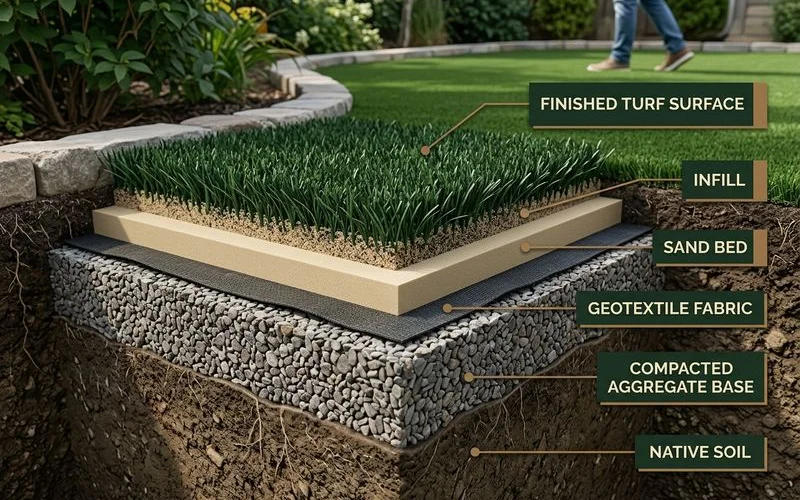
Here is a concise planning sequence that tends to hold up well on steep residential lots:
That sequence is simple, but it prevents a lot of expensive mistakes.
What homeowners often underestimate
The hardest part of hillside landscaping is not always the slope itself. It is the maintenance pattern that follows. A steep lot can make basic upkeep more complicated, which means every design choice matters more. If a shrub grows into a hard-to-reach pocket, pruning gets neglected. If a planting bed lacks access, irrigation repairs become expensive. If a terrace edge does not drain well, problems can appear slowly and become visible only after damage is done.
Homeowners also underestimate how much regional policy and HOA rules matter. In California, homeowners’ associations cannot prohibit certain water-efficient landscaping choices during drought-related restrictions. That matters when a homeowner wants to replace turf with a landscape better suited to local conditions. The bigger point is that water-wise design is not a fringe preference. It is part of the operating reality for many properties now, especially on steep lots where irrigation inefficiency is easier to see and harder to justify.
Designing for beauty, not just survival
A hillside landscape should do more than hold soil in place. It should feel intentional. The best steep-lot gardens in the San Gabriel Valley are layered, resilient, and visually coherent. They use hardscaping to organize movement, drought resistant landscaping to reduce demand, and native planting to create a sense of continuity with the surrounding foothills. When those pieces work together, the result is not merely practical. It is distinctive.
I have always found that steep lots reward patience. They rarely look finished quickly, and they should not. Hillside landscaping settles over time. Plants knit together. Terraces soften. Irrigation gets tuned. Small adjustments make a large difference. The landscape becomes stronger because it was built to respond to its terrain instead of resisting it.
That is the real test on a steep residential lot. Not whether the design looks good the day it is installed, but whether it still makes sense after the first dry season, after a storm, and after the homeowner has lived with it long enough to know what truly works. On a hillside, that standard is worth aiming for.