
How to Choose Irrigation for a Water-Efficient Landscape
A water-efficient landscape starts long before the first valve opens. The real decisions happen in the planning stage, when you match irrigation to soil, slope, sun exposure, and plant selection instead of assuming every part of the yard needs the same treatment. That matters everywhere, but it matters especially in the San Gabriel Valley, where landscape design often has to balance drought resistant landscaping, hillside landscaping, firewise planting, and the visual character of neighborhoods shaped by foothills and slopes.
I have seen too many projects where the irrigation system was treated like an afterthought. The plants looked good on paper, the turf was removed, and then the wrong spray pattern, poor scheduling, or a mismatch between plant needs and water delivery turned a promising landscape into a maintenance problem. A smarter approach is more practical and more durable. You begin with the site itself, then decide how water should move through it, and only then choose the hardware.
Start with the site, not the sprinkler
The biggest mistake in landscape design is choosing irrigation before understanding the ground it has to serve. A flat front yard with amended soil, full morning sun, and grouped plants behaves very differently from a steep hillside facing afternoon heat. If you treat them the same, you usually waste water in one area and starve another.
California’s water conservation guidance puts the emphasis in the right place: assess irrigation, soil, sun exposure, and plant selection before removing turf. That sequence is sound because each factor changes how much water the landscape actually uses. Soil that drains quickly will not hold moisture the way clayier ground does. A shaded corner may need less frequent watering than a bright slope. Native and climate-appropriate plants do not all share the same appetite either, even when they are grouped under the broad label of drought tolerant.
This is where many people underestimate the value of observation. A property can have several microclimates in a single backyard. The area near a wall may reflect heat. A lower pocket may stay damp longer after irrigation or rainfall. A hillside may shed water so quickly that runoff appears before roots absorb much of it. Good irrigation design responds to those differences rather than flattening them into a single schedule.
Match irrigation to plant zones
Water-efficient landscapes work best when plants with similar water needs are grouped together. That is true whether the landscape is built around California native plants, drought-tolerant ornamentals, or a mix of both. In practical terms, the irrigation system should follow the planting design, not the other way around.
For most homeowners, this means separating the landscape into zones based on plant water use, sun exposure, and slope. A compact group of low-water native shrubs does not belong on the same line as a bed with higher-demand accent plantings. If the system waters both equally, one of them will always be wrong. Either the drought-tolerant planting gets more water than it needs, or the more demanding area never quite thrives.
The Water Use Classification of Landscape Species, or WUCOLS, is a useful reference for this kind of planning because it helps identify region-appropriate plant water needs. That is especially important in California, where local climate, heat, and seasonal dryness can vary sharply from one neighborhood to the next. In the San Gabriel Valley, a plant that looks comfortable on a cool, sheltered lot may need a different irrigation approach on an exposed hillside.
The point is not to micromanage every drip. It is to avoid broad assumptions. When water delivery matches plant grouping, the whole system becomes simpler to manage and more efficient over time.
Drip irrigation is often the right starting point
For drought resistant landscaping and native plant gardens, drip irrigation is often the most sensible choice. It delivers water near the root zone instead of broadcasting it across paths, hardscape, or bare soil. That makes it especially useful in planting beds, around shrubs, and in landscapes where hardscaping occupies a meaningful share of the site.
Drip systems are not magic. They still require thoughtful design, clean installation, and regular checking. Emitters can clog. Pressure can vary. A line that worked well during installation can later be buried, kinked, or damaged by maintenance. But when a drip system is laid out correctly, it usually wastes less water than spray in places where broad coverage is unnecessary.
There is also a design advantage that gets overlooked. Drip allows you to irrigate in tighter, more intentional patterns, which fits the look and logic of water-wise landscape design. Instead of flooding an entire bed, you can keep moisture where the plants actually need it. That leaves mulch, soil surface, and adjacent hardscaping less exposed to overspray and runoff.
For many hillside landscaping projects, drip is more than convenient. It is a practical response to erosion control. On slopes, the goal is not to saturate the ground all at once. The goal is to apply water in a way the soil can absorb without shedding it downhill. Slow delivery usually beats aggressive spray in those conditions.
Spray has a place, but use it carefully
There are still cases where spray irrigation makes sense. Small turf areas, certain groundcovers, and some geometric planting beds may need uniform surface coverage. The problem is not spray itself. The problem is using it where it does not belong.
Spray systems can be inefficient when they hit hardscaping, walls, fences, or mulch that does not need direct watering. They can also perform poorly on windy, hot, or sloped sites, where water drifts or runs off before soaking in. In a region where water efficiency matters and slopes are common, spray should be selected with restraint.
If you do use spray, pay close attention to head placement and overlap. A poorly laid out spray zone can create dry patches and soggy corners at the same time. I have seen landscapes where the lawn near the driveway stayed green while the outer edge browned, not because the landscape needed more water, but because the system was fighting the site.
A good irrigation choice is not always the most elaborate one. Sometimes it is the one that keeps water where it belongs.
Hillsides ask for a different level of discipline
Hillside landscaping deserves special attention because slope changes everything. Water moves faster, soil can erode more easily, and runoff can carry both soil and fertilizer downhill. In the San Gabriel Valley, where hillside and foothill properties are a real part of the landscape, irrigation design has to account for both performance and erosion control.
On slopes, the first rule is to avoid overwatering. The second is to distribute water slowly enough that it can infiltrate. That usually means shorter run times, more careful zoning, and irrigation methods that limit surface flow. The landscape should be designed so the plants help hold the soil, especially where drought tolerant groundcover, native shrubs, and bunchgrasses can stabilize exposed areas.
This is also where plant choice and irrigation choice reinforce each other. California buckwheat, California sagebrush, manzanita, ceanothus, monkeyflower, foothill penstemon, and bunchgrasses are often used in native habitat gardening and water-wise hillside planting because they fit the conditions better than thirsty ornamentals. San Gabriel oak is another locally named native species that belongs in the conversation when the goal is region-appropriate planting. These plants do not eliminate the need for irrigation, but they make the irrigation system more manageable because they are chosen with local conditions in mind.
Slopes also introduce a maintenance reality. If an irrigation system is difficult to inspect, it will eventually drift out of tune. That is why access matters. A beautiful hillside planting still needs valves, lines, and emitters that can be checked without tearing up the whole slope.
Firewise planting and irrigation go hand in hand
In many parts of the San Gabriel Valley, fire-resistant planting and defensible-space planning are part of the same conversation as water efficiency. That does not mean a landscape has to be barren or overly engineered. It means the planting and irrigation plan should reduce unnecessary fuel, support healthier plants, and avoid the kind of dense, thirsty growth that can be difficult to maintain responsibly.
Irrigation plays a subtle role here. Plants kept at the proper moisture level are generally less stressed and easier to maintain in a healthy form. Overwatered landscapes can grow too lush in the wrong places, creating more pruning and cleanup. Underwatered plants, on the other hand, can become stressed and weak. The middle path is what you want, particularly where firewise landscaping and native gardens share space.
The San Gabriel Mountains region is home to many rare, threatened, and endangered species, and local native plant communities are part of what gives the area its character. Water-wise design does not mean ignoring ecology. It means choosing irrigation and planting strategies that respect the natural fit between plant, soil, and climate. That usually leads to a landscape that is easier to maintain and more defensible when conditions turn dry.
Turf removal is not the finish line
Many homeowners start thinking about irrigation only after turf removal. That makes sense, because removing lawn often reveals how much water the old landscape was really using. But turf removal alone does not make a yard efficient. It only creates the opportunity to redesign it properly.
Before you rip out grass, look at where water is actually needed and where it is not. California’s guidance is clear on this point. Evaluate the site, then select plants and irrigation that fit the new landscape. If you remove turf and then replace it with a random mix of shrubs, groundcovers, and accent plants under one old sprinkler layout, the yard may still waste water. It will just do so in a different way.
A better retrofit usually includes a new irrigation map, not just new plants. Beds may shift to drip. Oversized spray zones may be reduced. Runoff-prone areas may be planted with species that tolerate dryness and stabilize soil. In some cases, the old system can be partially reused, but only if it truly fits the redesigned space.
This is especially important when turf removal intersects with hardscaping. Paths, seating areas, retaining features, and other hardscape elements change the way water flows across the yard. A system that once made sense around a lawn may now be throwing water onto stone, concrete, or compacted surfaces. The more hardscaping you introduce, the more carefully irrigation has to be adjusted.
What to look for when choosing equipment
Not every irrigation system is worth the same level of attention, but every system benefits from a few basic standards. These are the practical questions I would ask on any water-wise project:
- Does the system deliver water only where plants can use it?
- Can different zones be watered separately based on plant needs, sun exposure, or slope?
- Is the system appropriate for the soil and drainage conditions on site?
- Can it be adjusted easily after planting or seasonal changes?
- Does it minimize runoff, overspray, and waste around hardscaping?
Those questions sound simple, but they catch most of the problems that show up later. A system can be technically functional and still be a poor fit if it waters too broadly, runs too long, or ignores the way the yard is divided.
One more practical point: irrigation should be easy to service. If a homeowner or landscape professional cannot tell when a zone is malfunctioning, the system loses much of its value. Efficient landscapes depend on routine observation as much as on equipment.
Plant selection determines irrigation strategy
Irrigation and plant selection cannot be separated cleanly. The plants tell you what kind of water delivery they need, and the water delivery helps determine whether the plants succeed. That is why drought resistant landscaping and native habitat gardening work best when the irrigation plan is developed alongside the planting plan.
Regional plant references matter here because they keep the design grounded in actual conditions. California native plants such as ceanothus, manzanita, California sagebrush, and California buckwheat are often better suited to a water-wise plan than plants selected only for appearance. That does not mean every native species wants the same treatment, or that a native plant garden can be ignored once installed. It means the irrigation can be tuned to the range of needs that make sense in this climate.
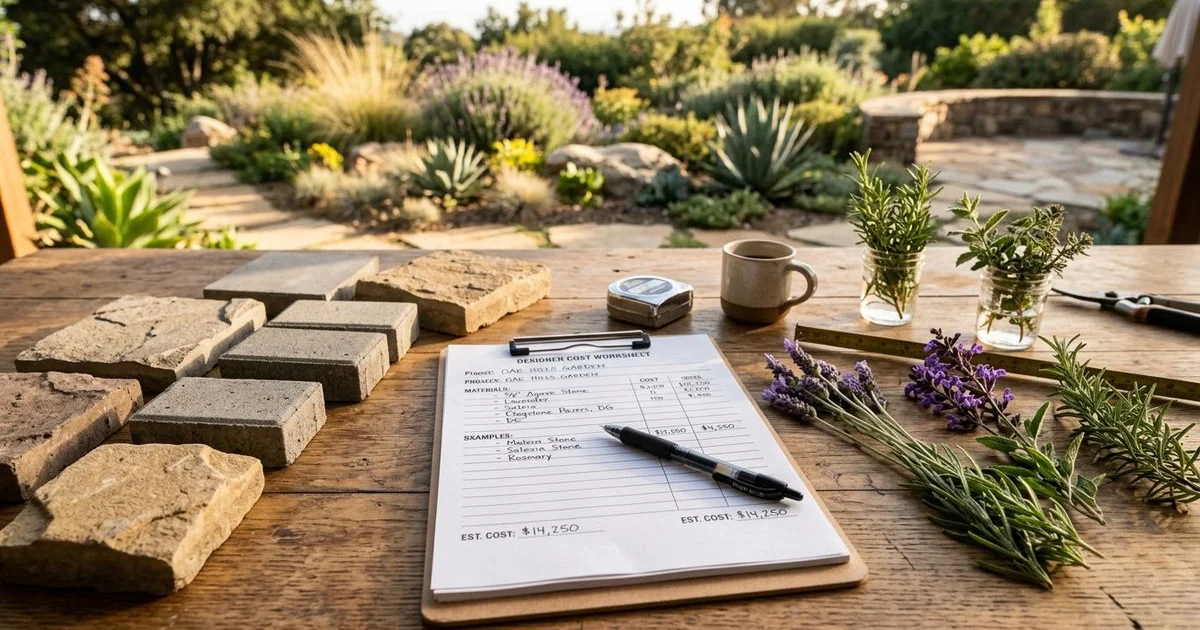
The same logic applies to climate-appropriate ornamentals. If a plant needs regular summer water, it should not be grouped with a low-water shrub that prefers dry feet. The more closely you match plant need to irrigation zone, the less time you spend compensating for a bad fit.
HOAs, water restrictions, and practical freedom
Homeowners’ associations sometimes create confusion around water-efficient landscaping, especially during drought-related restrictions. California guidance makes clear that HOAs cannot prohibit certain water-efficient landscaping choices during those restrictions. That matters because homeowners should not feel forced into maintaining a water-heavy landscape just to satisfy outdated aesthetic preferences.
Still, the best results come from thoughtful planning rather than relying on rules alone. If a homeowner wants to replace turf, use drought tolerant landscaping, or redesign a slope with native plants, the irrigation plan should support that decision from day one. A good system can satisfy both the practical need to conserve water and the visual expectations of a neighborhood.
This is where landscape design earns its keep. Water-efficient landscapes do not have to look sparse or improvised. They can be layered, attractive, and specific to the site. Irrigation just has to respect the design instead of fighting it.
A sensible path for most properties
For most San Gabriel Valley properties, the strongest approach is not the most complicated one. It is a sequence of good decisions made in the right order. Study the soil and slope. Learn how much sun different areas receive. Group plants by water need. Use drip where it fits. Keep spray only where it genuinely serves the planting. Pay special attention to hillside drainage, erosion control, and hardscaping transitions. Then adjust the system over time as the landscape establishes.
That kind of irrigation planning rarely looks dramatic from the curb, but it performs well. It saves water without leaving the garden parched. It supports native plants and climate-appropriate plantings. It complete outdoor renovation handles the realities of firewise landscaping and hillside conditions. And it gives the landscape a better chance of aging gracefully instead of becoming a maintenance burden after the first dry season.
Water-efficient landscapes are built on restraint, but also on precision. Choose the irrigation system that fits the place, not the other way around, and the rest of the design has a much better chance of succeeding.