
How to Design a Low-Water Yard with Monkeyflower and Penstemon
A low-water yard works best when it feels deliberate, not deprived. The strongest examples I have seen do more than save irrigation. They shape space, hold soil in place, soften hard edges, and fit the way a site actually behaves through heat, wind, slope, and runoff. Monkeyflower and penstemon are especially useful in that kind of design because they bring color, structure, and resilience without asking for the kind of constant attention that thirsty ornamentals need.
In the San Gabriel Valley, that matters even more. The region has a strong hillside character, a lot of sun exposure, and a long history of landscapes that need to do multiple jobs at once. A yard may need to look polished from the street, manage stormwater responsibly, protect a slope from erosion, and still meet water conservation expectations. That is where thoughtful landscape design comes in. The right plant palette, paired with hardscaping and irrigation that are sized correctly for the site, can turn a dry yard into something that feels regional rather than generic.
Monkeyflower and penstemon fit this work beautifully. They are both associated with California native and climate-appropriate planting, and they can be woven into drought resistant landscaping without making the yard feel sparse. They also pair well with other regional plants such as California buckwheat, California sagebrush, manzanita, ceanothus, bunchgrasses, and foothill species that suit foothill and hillside landscaping. Used well, they can create a garden that feels alive in spring, steady in summer, and structurally interesting even when bloom cycles ebb.
Start with the site, not the plant list
The most common mistake in water-wise yard design is starting with color. People fall in love with a plant photo and then try to force it into a slope, a hot sidewalk edge, or a shaded pocket with poor drainage. The better approach is to read the site first. California water guidance emphasizes assessing irrigation, soil, sun exposure, and plant selection before removing turf, and that advice holds up in real yards. If you skip that step, every other decision gets harder.
In practical terms, I like to walk a property at different times of day. Full afternoon sun often behaves very differently from morning light, especially near a south or west-facing wall. Drainage lines show up after irrigation or a decent rain. Some areas dry out quickly because they are exposed to wind or reflected heat from masonry. Others hold moisture longer than expected, especially in compacted soil or at the bottom of a slope. Monkeyflower and penstemon can thrive in the right spots, but each needs the right microclimate to avoid struggling later.
That is also the moment to think about water use in a broader sense. California’s Model Water Efficient Landscape Ordinance has pushed new and renovated landscapes toward more efficient irrigation and climate-appropriate planting. That is not just a bureaucratic concern. It is a useful design framework. The landscape should not rely on overwatering to stay attractive. If the only way a planting scheme works is with heavy irrigation, the design is already fighting the site.
Why monkeyflower and penstemon belong in a low-water palette
Monkeyflower brings a kind of relaxed, natural energy that many low-water yards need. It can help bridge the line between a more structured hardscape area and the looser texture of native planting. Penstemon adds upright form and a cleaner vertical note. Together, they create contrast without visual clutter. That balance matters in drought resistant landscaping, where too many plants can make a composition feel busy, while too few can make it look unfinished.
The other reason they work is that they help a yard read as intentional across seasons. In spring, both can carry color. Later, even when bloom slows, their foliage, habit, and spacing can still contribute to the design. That is particularly valuable in the San Gabriel Valley, where a yard may be seen from the street, from upper windows, or from a patio. A low-water landscape has to be legible from more than one angle.
They also cooperate well with hillside conditions. Penstemons and monkeyflowers can be tucked into pockets of better drainage, along terraces, or near boulders and stepping stone paths where the soil does not stay wet. On a slope, that matters because water tends to move fast and unevenly. Planting species that tolerate that movement, while also helping anchor the surface, supports both appearance and function. CNPS guidance for hot sunny slopes points directly toward drought tolerance, erosion control, and firewise planting, which makes these plants especially relevant in hillside landscaping.
Build the bones first with hardscaping
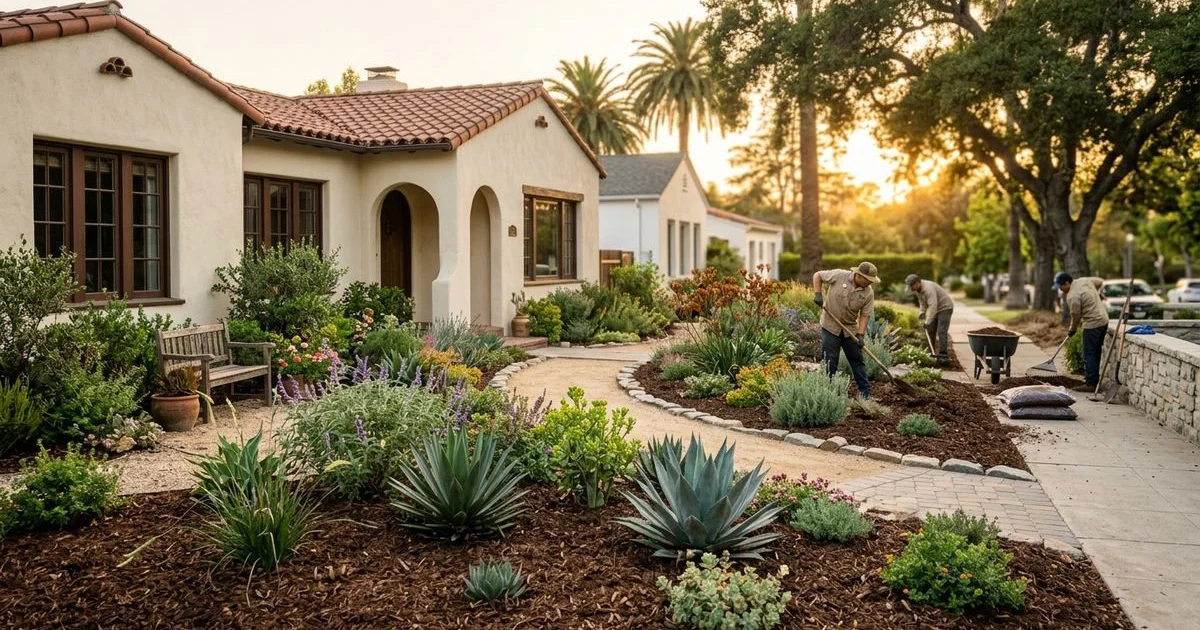
A low-water yard succeeds when the nonliving parts do serious work. Hardscaping is not just decoration. It controls movement, frames planting areas, and helps manage runoff. In a dry climate, that usually means using paths, retaining edges, steps, boulders, or low walls to create usable spaces and break up slope. It also means giving water a place to go rather than letting it race across bare ground.
This is one of the areas where design discipline pays off. If a yard has a steep grade, you usually get a better result by creating small, distinct planting terraces than by spreading a thin layer of plants across the whole hillside. Monkeyflower can spill nicely over an edge. Penstemon can punctuate a terrace with vertical rhythm. But they work best when the hardscape already solves the structural problem. The plants should reinforce the grade, not be expected to fix it alone.
Hardscaping can also help with firewise goals. In parts of the San Gabriel Mountains and nearby foothill areas, defensible-space planning and ember-resistant zone thinking are part of the landscape conversation. That does not mean turning a yard into a barren zone. It means placing plants thoughtfully, keeping maintenance realistic, and using noncombustible materials where appropriate. A clean stone edge, gravel band, or well-planned path can provide separation and still look refined.
Match each plant to the microclimate
Monkeyflower and penstemon are not one-size-fits-all plants, and that is part of their usefulness. The best results come from placing them where they are most likely to succeed, rather than scattering them evenly across a yard. California’s plant selection resources consistently point toward choosing plants according to local water needs and site conditions. That approach is even more important in a yard with slopes, reflected heat, or varied exposures.
A few practical rules make the design easier to live with:
Those distinctions sound small, but they change how a landscape ages. A plant placed in the wrong microclimate may survive for a while and still look tired, sparse, or constantly stressed. Put in the right spot, it can establish into a sturdy, lower-maintenance part of the composition.
I have seen yards where a single penstemon planted near a walkway looked crisp and upright, while the same plant a few feet away, tucked against a hot wall with poor drainage, thinned out and never really recovered. The difference was not the plant. It was the setting. That is the part many homeowners underestimate when they start planning drought resistant landscaping.
Use native companions to give the garden shape
Monkeyflower and penstemon are strong on their own, but they are even better when they are not carrying the whole design. A low-water yard usually needs a supporting cast that adds mass, texture, and year-round structure. California buckwheat can bring a light, airy effect. California sagebrush adds a silvery backdrop. Manzanita contributes evergreen presence. Ceanothus can supply a more substantial shrub layer. Bunchgrasses help soften transitions and hold the visual line between planting groups.
That kind of layered planting is especially useful in the San Gabriel Valley, where the visual character of the hillside landscape is a real part of the setting. New construction and renovated yards often look best when they echo the broader native landscape rather than fighting it. A yard does not need to mimic wild habitat exactly, but it should feel like it belongs to the place.
The trick is spacing. Low-water planting often fails when people overfill the bed in the first year. The plants seem too small, so the instinct is landscapers Pasadena CA to crowd them. A year later, the patch is congested, airflow suffers, and the design loses its clarity. Leaving room for growth makes monkeyflower and penstemon read more cleanly and reduces maintenance pressure later.
Irrigation retrofits make the design work
A lot of low-water yards fail for one simple reason, the irrigation was never updated. If the system still behaves like a turf system, the plants will suffer. California guidance on water-wise landscaping emphasizes efficient irrigation, and that matters whether you are removing turf or redesigning smaller portions of a yard. A landscape built around monkeyflower and penstemon should not receive the same schedule that once kept cool-season grass alive.
Retrofits usually mean separating hydrozones, checking coverage, and reducing overspray. It also means understanding that a slope is not just a flat area turned sideways. Water moves differently there. Too much at once can run off before roots absorb it. Too little, and the upper parts of the slope dry out while the lower parts get the benefit. The goal is to apply water slowly enough that it infiltrates.
This is one of the moments where a good design and good irrigation are inseparable. If a planting bed is shaped around terraces, a path, or a boulder arrangement, the irrigation should reflect those breaks. If monkeyflower sits in one zone and penstemon in another, they may need different schedules during establishment. The point is not to irrigate constantly. It is to irrigate intentionally.
Turf removal works best when it is planned, not rushed
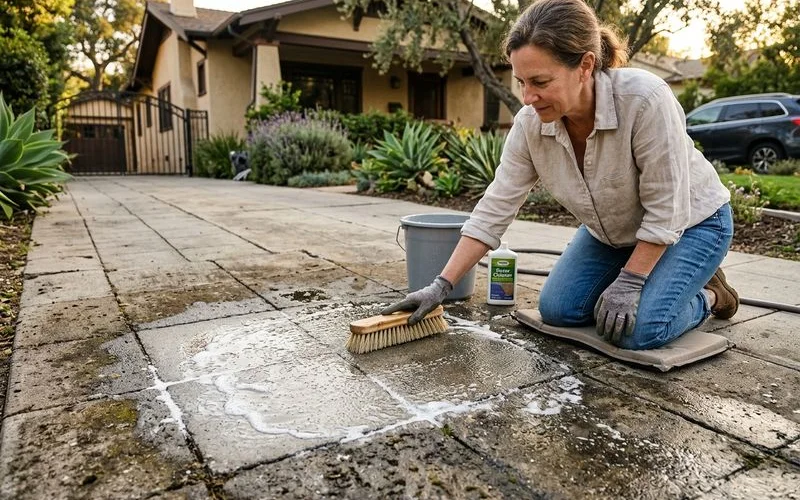
Many low-water yard projects begin with turf removal. That can be a smart move, but it is more successful when the replacement is already designed. California water guidance recommends thinking through irrigation, soil, sun exposure, and plant selection before removing lawn, and that sequence matters. Bare ground without a plan can become erosion-prone, hard to irrigate, and visually unfinished.
If you are converting a lawn area, think about what replaces the function of the turf. Will the space become a sitting area, a native garden, a path, or a mix of all three? Hardscaping may take on some of the lost utility. Plantings can fill in the rest. Monkeyflower can edge a walkway or soften a low retaining wall. Penstemon can be used in repeating clusters to establish rhythm across the new bed. When the replacement has a job, the yard feels coherent rather than just reduced.
This also affects maintenance. A turf lawn hides a lot of design uncertainty because mowing creates uniformity. A low-water garden shows every decision. That is not a flaw. It is just a different kind of discipline. The reward is lower water demand and a landscape that is more site-responsive.
Firewise concerns should shape the layout
In areas near the San Gabriel Mountains and throughout the foothill region, firewise planting is not an abstract concern. Planting choices, spacing, and maintenance affect how a yard performs under stress. Native plants are often a good fit, but they still need to be arranged with care. The point is not to fill every square foot with dense shrubs. It is to create a landscape that can be maintained, irrigated appropriately, and kept clear around structures.
Monkeyflower and penstemon can be part of that strategy because they do not need to dominate the entire yard. They work in repeated drifts, pockets, and transition zones. That makes it easier to maintain clear circulation paths and noncombustible surfaces where needed. It also helps the yard feel open enough to inspect and manage. In fire-prone settings, beauty and practicality should reinforce each other.
HOA rules can complicate that picture, but water-restriction guidance in California has made clear that homeowners’ associations cannot prohibit certain water-efficient landscaping choices during drought-related restrictions. That does not remove every design constraint, but it does make room for compliant, low-water planting when the design is done well.
A yard that reads as part of the place
The strongest low-water yards do not shout that they are low-water. They simply feel appropriate. The planting palette mirrors the climate. The hardscaping handles the grade. The irrigation matches the plant needs. The result is quieter than a thirsty ornamental yard, but more convincing, more stable, and usually easier to care for.
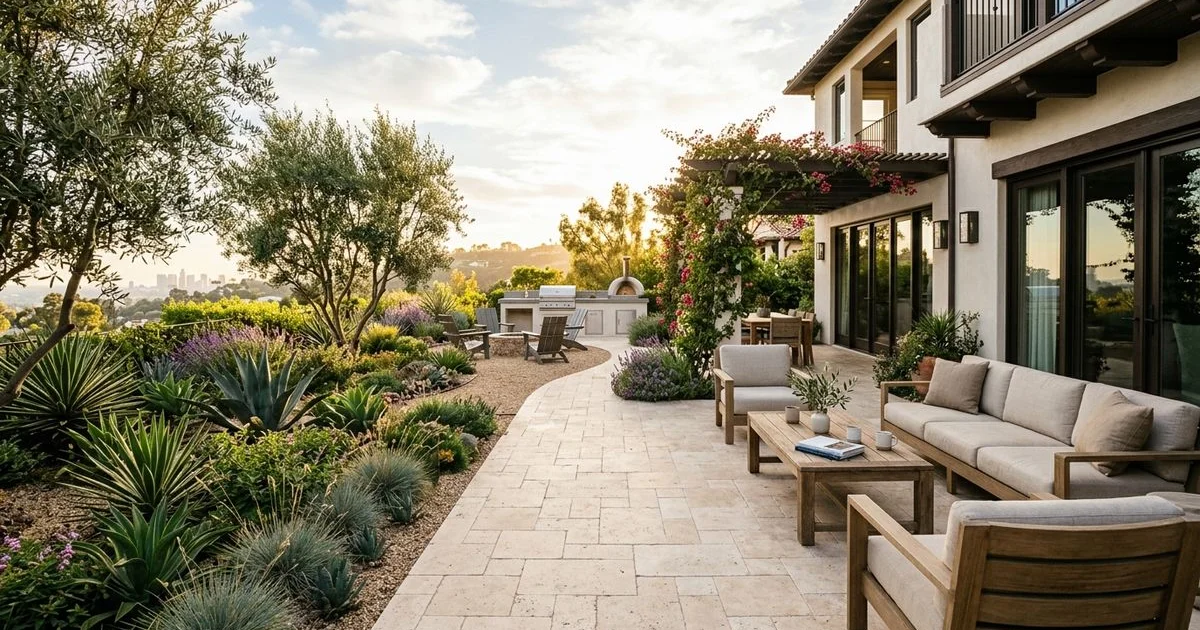
Monkeyflower and penstemon are especially good at that kind of restraint. They offer enough movement and bloom to keep the eye engaged, but they do not depend on constant water or heavy grooming to stay relevant. On a slope, they help the yard feel connected to the terrain. Near a patio, they soften the hardscape. Along a driveway or street-facing edge, they can give the landscape a regional identity without sacrificing efficiency.
For homeowners in the San Gabriel Valley, that identity matters. The area’s hillside visual character, water conservation demands, and firewise realities all point in the same direction. A successful yard should conserve water, respect the slope, and still feel composed. Monkeyflower and penstemon help make that possible when they are placed with attention, supported by the right hardscaping, and backed by irrigation that is honest about what the site actually needs.
The best low-water landscapes do not ask the site to be something else. They read the sun, the slope, the runoff, and the soil, then build from there. That is the kind of design that holds up through heat, saves water without looking sparse, and gives a yard a steady, local character that gets better with time.