
How to Reduce Irrigation Needs with Smart Plant Selection
Reducing irrigation needs starts long before the first sprinkler head goes in the ground. It begins with a more careful question: what kind of planting can thrive here with less water, less fuss, and less risk when the weather turns hot and dry? In places like the San Gabriel Valley, that question is not academic. It shapes how a landscape performs on a slope, how much maintenance it needs in summer, and how well it fits the realities of California water use rules and drought conditions.
After years of looking at landscapes that were installed with good intentions but poor plant choices, one pattern stands out. The irrigation system is often blamed first, when the real problem is that the plant palette was wrong for the site. Turf gets placed where it will struggle. Thirstier ornamentals are tucked into hot, exposed corners. A hillside is planted as if it were flat ground. Then the owner spends years chasing the problem with more water, more repairs, and more resentment.
Smart plant selection changes that equation. It does not eliminate irrigation, and it does not mean every low-water garden looks the same. It means the landscape is designed around the site instead of against it. When that happens, water demand drops in a way that feels practical rather than theoretical.
Start with the site, not the plant list
California’s water guidance points in the right direction: before removing turf or changing a landscape, assess irrigation, soil, sun exposure, and plant selection. That order matters. Too many projects begin with a shopping list of attractive plants and only later discover that the soil stays wet in some areas, bakes in others, or drains poorly on a slope.
Sun exposure is one of the easiest factors to underestimate. A plant that looks modest in a nursery container can behave very differently in a west-facing bed that takes direct afternoon heat. Soil also changes how often irrigation is needed. A planting bed with heavier soil will hold moisture longer than a fast-draining one, which means two areas on the same property can need very different watering schedules.
In landscape design, this is where microclimate thinking pays off. A shaded entry court, an open front slope, and a narrow side yard can all demand different plant selections even if they sit only yards apart. Matching plants to those conditions reduces stress on the plants and cuts the impulse to overwater.
Choose plants by water need, not just by appearance
The easiest way to reduce irrigation is to choose plants that naturally fit the local water budget. In California, the WUCOLS framework is useful because it organizes plants by water needs in ways that are more practical than vague labels like “drought tolerant.” A plant may survive on little water once established, but if it needs regular supplemental irrigation to look good in a particular exposure, it is not the right choice for a low-water landscape in that spot.
That distinction matters. “Drought tolerant” is often used loosely, but real-world performance depends on place and context. A plant that does well in coastal air may struggle inland. A shrub that handles dry weather once mature may still need a more attentive establishment period. Smart selection is less about finding plants that never need water and more about avoiding plants whose needs will always outpace the site.
For Southern California landscapes, native and climate-appropriate plants tend to reduce irrigation needs most reliably because they are already adapted to local conditions. They also tend to blend well into drought resistant landscaping without looking forced or overly stylized. California buckwheat, California sagebrush, manzanita, ceanothus, monkeyflower, foothill penstemon, and bunchgrasses are all strong examples of plants that can fit water-wise design when matched to the right exposure and drainage. San Gabriel oak is another locally rooted native that belongs in the conversation when the site and space allow it.
The benefit is not only lower water use. These plants often create a more stable landscape over time because they are better suited to the seasonal patterns that define the region.
Turf is usually the largest water question
If a property uses a lot of irrigation, turf is often the first place to look. That does not mean turf must disappear entirely, but it should have a purpose. A small area that is actually used is easier to justify than a broad lawn that exists mostly because it was there before.
In practical terms, turf removal can be one of the most effective ways to reduce water demand, especially when it is paired with a redesigned planting strategy rather than simple replacement with another thirsty plant mix. California water guidance supports looking at the whole system before removing turf, because a thoughtful replacement bed can do much more than save water. It can improve drainage, support habitat, and reduce maintenance.
That said, replacement is not automatically simpler. If turf comes out and the area is replanted with the wrong species, water use can stay higher than expected. Dense ornamental plantings in hot exposures may need just as much irrigation as the lawn they replaced. The smarter move is to use turf removal as a reset button for the design.
Hillsides demand extra discipline
Hillside landscaping changes the rules. Slopes need erosion control, drought tolerance, and Pasadena hardscaping plant choices that hold soil without creating a maintenance headache. In the San Gabriel Valley, that is a common condition, not a rare one, and it affects both visual character and performance.
A hillside planted with thirsty species can become a constant management problem. Water tends to move downslope instead of soaking in evenly, which can leave upper areas dry and lower areas wet. That unevenness leads to stress, runoff, and in some cases erosion. Good plant selection helps because it encourages root systems and ground coverage that stabilize the soil while using less water.
This is also where drought resistant landscaping and hillside landscaping overlap with common sense. Low-water shrubs, native groundcovers, and bunchgrasses usually make more sense on slopes than high-input plants that need frequent watering to stay full. On a steep or exposed grade, a plant that looks tidy in a flat nursery lot may perform poorly once gravity and heat get involved.
A useful rule of thumb on slopes is to think in layers. The plant palette should not only look good from the street, it should also slow water movement, cover exposed soil, and reduce the need for frequent hand watering. That is one reason many hillside landscapes in foothill communities lean toward native shrubs and grasses instead of broad sweeps of lawn or high-demand ornamentals.
Water-wise planting and firewise planting often align
In this region, low-water landscaping is not just about conservation. It also intersects with firewise planting and defensible-space planning. The San Gabriel Mountains and surrounding foothill areas have a long history of fire awareness, and local native plant communities can support a landscape that feels connected to the place while still respecting ember-resistant zone thinking.
This is where plant selection becomes more nuanced. A plant can be drought adapted and still not belong in every location near a structure. Spacing, height, placement, and maintenance all matter. Fire-resistant planting is not a matter of one magic species. It is a matter of choosing plants that fit the site, reducing unnecessary fuel near the house, and keeping the design open enough to manage risk.
For many homeowners, the best path is a balanced composition. Near the house, use lower, less dense planting and keep the layout disciplined. Farther out, native shrubs and grasses can create the character and habitat value that make a landscape feel rooted in the region. The point is not to strip away all plant life. It is to arrange it intelligently.
Hardscaping can support lower irrigation demand
Hardscaping is often discussed as if it were separate from planting, but the two work together. A well-placed path, terrace, or small retaining element can reduce the amount of irrigated area and make a planting plan more efficient. On a slope, hardscaping can also help manage access and water movement, which is especially useful when the goal is to reduce runoff and avoid overwatering.
The best hardscaping is not decorative filler. It creates usable space where plants would otherwise be difficult to maintain. A narrow side yard can become a dry pathway instead of a struggling planting strip. A slope can gain a terrace where a few carefully selected shrubs and groundcovers are easier to irrigate and maintain than a broad, unstable face. In that sense, hardscaping is part of water strategy, not just a visual choice.
The same idea applies to the whole property. If a landscape is overbuilt with irrigated beds simply because the design never paused to ask what should actually be planted there, irrigation demand climbs needlessly. A tighter, more deliberate relationship between hardscape and planting usually performs better over time.
A practical plant-selection filter
When I look at a planting plan for water use, I usually test it against a simple set of questions. Not every landscape needs the same answer, but every landscape benefits from the same kind of scrutiny.
If a plant fails two or three of those questions, it usually belongs somewhere else.
This is where experience matters more than labels. A plant can be beautiful and still be a poor decision for a specific bed. It can also be suitable in one part of the property and wrong in another. Good landscape design uses restraint. It respects the limits of the site instead of trying to force every favorite plant into every corner.
Native plants are useful, but only when used well
There is a tendency to treat native plants as an automatic solution. They are not automatic, but they are often the best starting point. California native plants are valuable because they tend to align better with climate, water conservation goals, and local habitat. They also connect a garden to the surrounding region in a way that feels more authentic than generic “drought tolerant” planting palettes.
Still, native does not mean no planning. California sagebrush can be a great fit in the right open, dry setting, but it still needs room and the correct exposure. Ceanothus can be a strong choice, yet it should be placed with an understanding of size and water needs. Manzanita often performs beautifully where drainage is good and the plant is not crowded. Bunchgrasses can soften edges and reduce irrigated lawn, but they should be installed with the same care as shrubs, not treated as an afterthought.
The most successful native habitat gardening plans I have seen are selective, not maximalist. They use a few species well rather than many species badly.
Irrigation retrofits should follow planting decisions
It is tempting to install irrigation first and figure out plants later. That usually creates waste. The better sequence is to decide what the landscape should be, then retrofit irrigation to match the plant zones. Some plants may need emitters grouped closely at establishment. Others may need less frequent watering or no dedicated irrigation after they settle in. If the system is designed before the plant palette is clear, it is easy to overbuild demand into the infrastructure.
California’s landscape guidance encourages that broader view. Irrigation, plant selection, soil, and sun exposure work together. A water-efficient landscape is not only a matter of technology. It is a design outcome.
This is especially important in renovated landscapes where turf is removed and the new planting pattern changes the way water moves through the site. If the irrigation stays arranged for lawn coverage, it will never serve a mixed drought-tolerant planting as efficiently as it should.
HOA rules and water-wise choices
Homeowners’ associations can complicate landscape decisions, but California water-restriction guidance has been clear that HOAs cannot prohibit certain water-efficient landscaping choices during drought-related restrictions. That matters for homeowners who want to shift toward lower-water plantings without running into unnecessary resistance.
Even so, the practical challenge is not always policy, it is appearance. Some associations expect a landscape to look highly manicured, which can make drought-tolerant landscaping seem risky to residents who worry about approval or complaints. The answer is usually in the design quality. A well-composed low-water landscape looks intentional. It has structure, repetition, and enough variation to feel finished rather than sparse.
That is another reason smart plant selection matters. When plants are chosen for performance and placed with discipline, the landscape looks like a designed environment, not a compromise.
The real savings come from fewer mismatches
Reducing irrigation needs is rarely about one dramatic move. It is about removing mismatches between plant and place. A landscape that matches the site needs less correction, less replacement, and less water. On flat ground, that may mean shifting from lawn to native shrubs and groundcovers. On a slope, it may mean better erosion control and more careful spacing. Near the house, it may mean selecting plants that work within firewise planting expectations without constant irrigation.
The most durable landscapes I have seen in the San Gabriel Valley share a few qualities. They use native or climate-appropriate plants where possible. They respect sun exposure and drainage. They make room for hardscaping where planting would be inefficient. They avoid trying to irrigate every square foot equally. Most of all, they accept that landscape design is not just about filling space. It is about solving the site’s real conditions with the least waste.
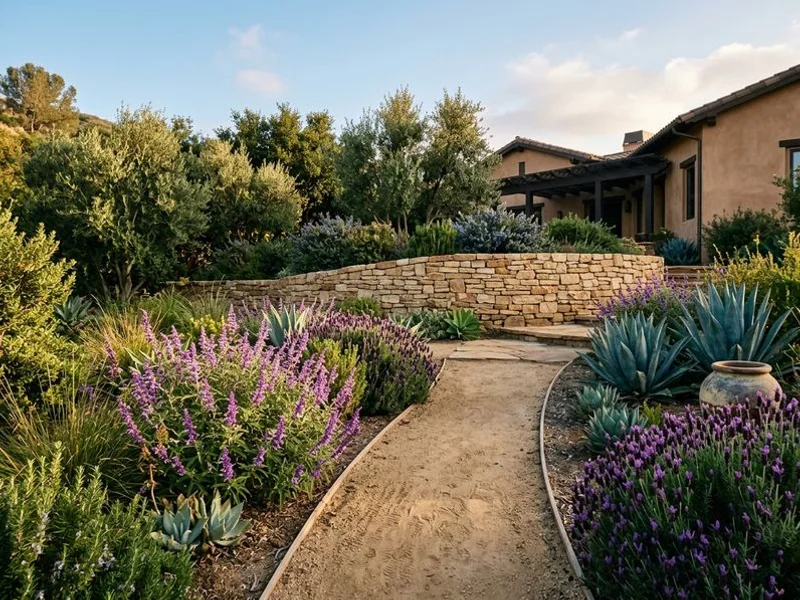
A landscape built this way does not feel austere. It feels coherent. It handles summer better. It asks less of the irrigation system. And it gives back more in stability, character, and long-term reliability than a water-hungry design ever will.