
How to Use Manzanita in a Water-Wise Landscape Design
Manzanita has a way of changing the feel of a garden without asking for much in return. In a dry climate, that matters. A well-placed manzanita can do more than fill space. It can anchor a slope, soften hard edges, create year-round structure, and carry a landscape through hot, low-rainfall months with a fraction of the water many ornamental shrubs demand.
That is why manzanita shows up so often in drought resistant landscaping and hillside landscaping conversations, especially in places like the San Gabriel Valley and other foothill communities where the visual character of the land matters almost as much as water use. These are landscapes shaped by sun, runoff, lean soils, and the occasional brutal summer stretch. They need plants that do real work, not just plants that look good for a few weeks in spring.
Manzanita fits that assignment beautifully, but only when it is used with respect for its habits. It is not a shrub to tuck into a random corner and hope for the best. It asks for drainage, room, and the right companions. Get those pieces right, and it becomes one of the most useful plants in water-wise landscape design.
Why manzanita belongs in a water-wise plan
The strongest argument for manzanita is simple: it is adapted to conditions that punish thirsty landscapes. Its evergreen foliage gives a design year-round presence, and its natural form brings texture that reads as intentional rather than fussy. In a region where water efficiency matters, that combination is valuable. You are not just reducing irrigation. You are building a landscape that still looks composed when other plants are resting, stressed, or cut back.
That is especially relevant in California, where landscape planning increasingly starts with the basics: irrigation, soil, sun exposure, and plant selection. Those decisions matter before turf is removed, not after. I have seen projects go sideways because the lawn came out first and the replacement plan came later. The result is usually a patchwork of plants that all have different water needs, or a stripped site that looks bare because the structure was never thought through. Manzanita helps avoid that problem because it gives you a backbone plant, something that can hold the space while lower layers settle in.
There is also a practical design reason to use it. Manzanita creates visual calm. In a hardscaping-heavy yard, it softens stone, decomposed granite, retaining walls, and dry creek details. In a more planted setting, it adds the sculptural quality that prevents a drought-tolerant garden from feeling flat. One healthy manzanita can make a corner feel finished. Several planted thoughtfully can shape an entire rhythm across a site.
Start with the site, not the plant
The biggest mistake I see with manzanita is placing it like a generic shrub. It is not generic. It has strong preferences, and water-wise design works best when those preferences are matched to the site instead of forced against it.
So before anything else, look at the slope, drainage, exposure, and soil character. Manzanita generally performs best where water moves away rather than pools. In heavy soil or a low pocket that stays wet, root issues become a real concern. That matters even more in hillside landscaping, where water should be controlled rather than allowed to race downhill or linger around planting crowns.
Sun exposure matters too. Many water-wise gardens in Southern California live in full sun for much of the day, but not every part of a property is identical. A south-facing slope can be far harsher than a morning-sun courtyard. A manzanita that thrives on an open bank may struggle if it is crowded, shaded, or overwatered in a tighter backyard bed. This is where microclimate thinking pays off. The same property can contain several different growing conditions, and good landscape design respects those differences instead of flattening them.
Soil texture is part of the equation as well. A manzanita that sits in poor-draining soil is not being challenged in a healthy way. It is being stressed. In water-wise landscaping, the goal is not to prove how tough a plant is. The goal is to place it where toughness becomes an asset rather than a survival strategy.
What manzanita does well in the design
Manzanita earns its place because it can solve several design problems at once. It can act as a focal point, especially when selected for a strong natural shape. It can also serve as a massing plant on slopes, where repeated shrubs help tie the terrain together visually and physically.
Used near hardscaping, it eases transitions. A stone path can feel abrupt without planting to break the line. A low retaining wall can look severe until a manzanita arches over it or sits just off the edge with enough breathing room. Even a gravel courtyard gains depth when a shrub with a clean evergreen silhouette enters the picture. That is one reason manzanita works so well in landscape design that aims to be water-efficient without becoming visually sparse.
It is also useful in firewise planting conversations. In the San Gabriel Mountains region and other foothill areas, defensible-space planning and ember-resistant zone rules are not theoretical concerns. Plant selection needs to support both water conservation and fire-conscious design. Manzanita can fit into that framework when it is properly spaced, maintained, and paired with the right materials and plants. No plant is a substitute for responsible site planning, but the wrong plant mix can make a defensible-space strategy harder to manage. Manzanita, used with discipline, can contribute to a cleaner, more coherent layout.
Where manzanita tends to shine
A practical way to think about manzanita is to ask where it solves a problem that other shrubs do not solve as elegantly. In many cases, the answer is where the site is dry, exposed, and visually important.
It can be effective on slopes where erosion control matters, because its branching structure and planting pattern can help stabilize the visual field and reduce the sense of a raw, unfinished bank. That does not mean it replaces proper slope planning, but it does mean it belongs in the plant palette for hillside landscaping. On a steep or awkward grade, a manzanita can make the slope read as deliberate rather than neglected.
It is also a strong choice in a native habitat garden. The San Gabriel Valley sits close to landscapes where native plant communities matter deeply, and local references often include California buckwheat, California sagebrush, ceanothus, monkeyflower, foothill penstemon, bunchgrasses, and manzanita. Put together thoughtfully, those plants create a landscape that feels regionally grounded rather than imported from somewhere wetter. The effect is subtle at first, then increasingly powerful as the garden matures.
In new construction, manzanita can be especially useful where the site needs immediate structure but the owner wants to avoid water-hungry planting. Many new landscapes start with a hard shell and a blank canvas. Manzanita can give that space a sense of maturity without requiring a lush, high-maintenance approach. For projects in the San Gabriel Valley, where drought-tolerant plantings and water-efficient landscapes are part of the visual and environmental conversation, that is no small advantage.
Pairing manzanita with other plants
Manzanita rarely works best alone. It is too structural for that. The strongest plantings around it usually borrow from the same water-wise vocabulary, but with enough variation to keep the composition alive.
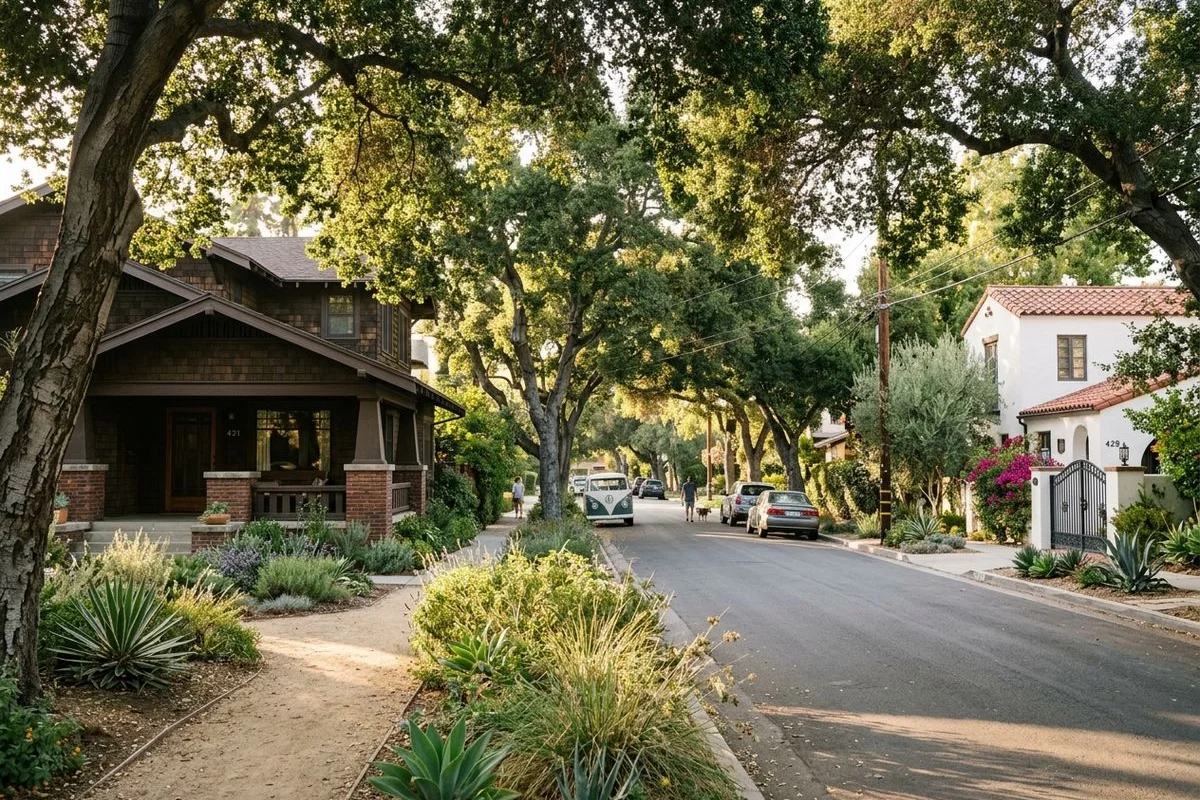
California buckwheat can bring seasonal softness and a lighter texture. California sagebrush adds a more open, airy feel and reinforces the native character of the planting. Ceanothus can extend the shrub layer with a different massing habit, while monkeyflower and foothill penstemon bring color and lower-height contrast. Bunchgrasses add movement and a seasonal rhythm that manzanita cannot provide on its own.
The key is balance. Manzanita likes companions that do not bully it or demand constant irrigation. If you pair it with plants that need regular moisture, the whole bed becomes a management problem. This is where WUCOLS-style plant selection thinking is useful in practice, because it pushes designers to match water needs instead of guessing. On a water-wise site, the best-looking plant palette is often the one that shares a similar irrigation logic from the start.
You also want to think about scale. A compact manzanita can disappear if surrounded by oversized shrubs. A larger one can overwhelm a narrow path if planted too close. In dry garden design, room is part of the planting. Leave enough space for the plant to show its form as it matures. Crowding manzanita is one of the fastest ways to lose the graceful branching that makes it valuable in the first place.
Design choices that make manzanita look intentional
A manzanita can look like a centerpiece or like an afterthought, and the difference usually comes down to design detail. The plant itself is only part of the story. Placement, spacing, and the surrounding materials do the rest.
A few questions help before planting:
Those questions sound basic, but they prevent a lot of expensive mistakes. I have watched well-funded landscapes underperform because the plant palette was chosen for looks without asking how the site actually behaves. Manzanita rewards the opposite approach. If the drainage, exposure, and spacing are right, the plant does much of the aesthetic work for you.
Hardscaping can strengthen the design too. Gravel, stone, and other low-water materials create a backdrop that lets manzanita read as sculptural. The contrast between a crisp hardscape edge and the softer branching of the shrub is often what makes a drought-tolerant garden feel composed rather than sparse. On a hillside, hardscaping can also help organize circulation and control runoff, which matters when the terrain wants to move water faster than the planting can absorb it.
Irrigation, establishment, and the trap of too much water
Water-wise does not mean waterless. That distinction matters, especially during establishment. Even plants suited to dry conditions need help getting started. The trick is to water deeply enough to encourage roots to move downward, then reduce irrigation so the plant is not trained to live in constant moisture.
With manzanita, overwatering is usually a bigger risk than underwatering once the plant is established. That is why irrigation retrofits are such a practical part of the conversation. If a landscape is being converted from turf or from a high-water mix, the irrigation should be rethought at the same time. A zone designed for lawn habits is usually wrong for a manzanita bed. Sprays, overspray, and frequent shallow watering create conditions the shrub does not appreciate.
This is also why turf removal needs a plan, not a rush. California guidance emphasizes looking at the whole system before removing grass, including the irrigation, soil, sun exposure, and plant selection. That approach protects the project from the familiar pattern of doing the right thing in the wrong order. Remove the turf first, and the site becomes exposed. Remove it with a water-wise planting strategy in hand, and manzanita can immediately become part of the long-term structure.
Manzanita on slopes and in fire-conscious landscapes
Slope work is where manzanita often proves its worth most clearly. On a bank, every planting decision is magnified. Water runs faster, soil can shift, and maintenance becomes harder. A shrub that can tolerate leaner conditions and still hold form is valuable.
In hillside landscaping, erosion control and drought tolerance need to work together. Firewise planting adds another layer. The San Gabriel Valley and the foothill landscapes around it are not places where you want cluttered planting, dry debris buildup, or a confusing mix of thirsty and fire-prone materials. A good plant palette supports clearance, access, and routine maintenance. Manzanita can fit that approach when it is not jammed against structures or crowded by dense, poorly maintained vegetation.
This is where judgment matters more than enthusiasm. A native plant does not automatically make a landscape safe, and a drought-tolerant plant does not automatically make a landscape firewise. Design still has to account for spacing, maintenance, and the relationship between plants and built features. Manzanita can contribute to a responsible hillside landscape, but it should do so within a broader plan that respects defensible space and local conditions.
The HOA and neighborhood reality
In many neighborhoods, especially in California, the landscape is not just a personal choice. It is shaped by HOA rules, municipal standards, and regional water policy. Homeowners associations cannot prohibit certain water-efficient landscaping choices during drought-related restrictions, which matters when a property owner is trying to move toward a more sustainable design. That does not remove the need for communication, but it does change the starting point.
Manzanita can be a useful plant in these settings because it offers a refined, intentional look without requiring a thirsty lawn substitute. It signals that the space has been designed, not simply stripped. For communities that care about appearance as well as compliance, that can ease some of the tension around turf removal and landscape changes.
The broader planning picture also matters. The San Gabriel Valley has a distinctive hillside visual character, and new construction increasingly needs to address drought-tolerant plantings and water-efficient landscapes from the start. Manzanita is well suited to that conversation because it bridges the gap between native habitat gardening and clean, modern composition. It is not trendy in a disposable way. It is durable in a way that tends to age well.
A plant that rewards restraint
Manzanita is not trying to be the loudest plant in the yard. That is part of its appeal. It works best when the design gives it room, light, and a landscape framework that makes sense for a dry climate. In residential hardscaping Pasadena that setting, it becomes one of the most dependable tools in water-wise landscape design.
It can shape a slope, soften hardscaping, support drought resistant landscaping goals, and reinforce a native plant palette that belongs in the San Gabriel Valley and similar foothill regions. It asks for thoughtful irrigation, sensible spacing, and a site that drains the way dry-adapted plants need it to. In return, it offers structure, texture, and a sense of permanence that many landscapes lack.
When a manzanita is placed well, the whole garden often improves around it. The path feels calmer. The slope reads more settled. The plant palette feels more intentional. That is what good water-wise design should do, not just reduce demand, but make the landscape stronger, clearer, and more believable in the climate it lives in.