

Landscaping Ideas That Add Instant Curb Appeal and Value
Curb appeal has a short window to do its job. A home gets only a few seconds to make a first impression from the street, and the landscape does most of that work. Paint color matters. So does the front door. But the yard, walkway, trees, and planting beds are what make a property feel cared for, settled, and worth a second look.
The best landscaping ideas do two things at once. They sharpen appearance immediately, and they make the property easier to live with over time. That second part matters more than many homeowners expect. A front yard that looks lush for three weeks after installation but turns into a high-maintenance headache by midsummer does not add value in a meaningful way. Buyers notice when a landscape is beautiful, but they also notice when it looks expensive to keep alive.
The strongest results usually come from a few coordinated improvements rather than a total tear-out. A refreshed bed line, better hardscaping, thoughtful tree care, and a water-wise irrigation plan can change the whole character of a home without forcing a complete redesign. In practice, the most successful curb appeal projects are rarely flashy. They are clean, balanced, and durable.
Start with the bones of the yard
When people think about landscaping, they often jump straight to flowers. Experienced designers usually start somewhere else. They look at the structure first. That means the walkway, driveway edges, porch approach, lawn shape, tree placement, and the outline of planting beds. If those bones are awkward, even healthy plants struggle to make the property look polished.

A front path is a good example. If it is too narrow, cracked, or visually disconnected from the driveway and porch, the house feels less inviting no matter how nice the shrubs are. Widening a walkway by even a foot can improve both appearance and function. Replacing a patchwork concrete path with clean pavers or natural stone often gives an immediate lift because it signals permanence and care. This is where hardscaping earns its keep. Unlike seasonal color, it works every day of the year.
The same principle applies to bed lines. Curves can be beautiful, but random curves often read as indecision. Straight lines can look crisp, but only when they fit the architecture. A colonial or craftsman home tends to benefit from restrained geometry. A cottage-style home can handle softer transitions. What matters is that the shapes feel intentional from the street.
One practical rule that holds up well is this: if a landscape looks scattered, simplify it before adding anything new. Fewer bed shapes, fewer plant varieties, and clearer circulation almost always improve curb appeal faster than another trip to the garden center.
Hardscaping that makes the front yard look finished
Hardscaping is one of the most reliable ways to add visible value because it creates the sense that the landscape is complete. Plants mature over time, but stone, brick, gravel, edging, and retaining features give a yard definition right away.
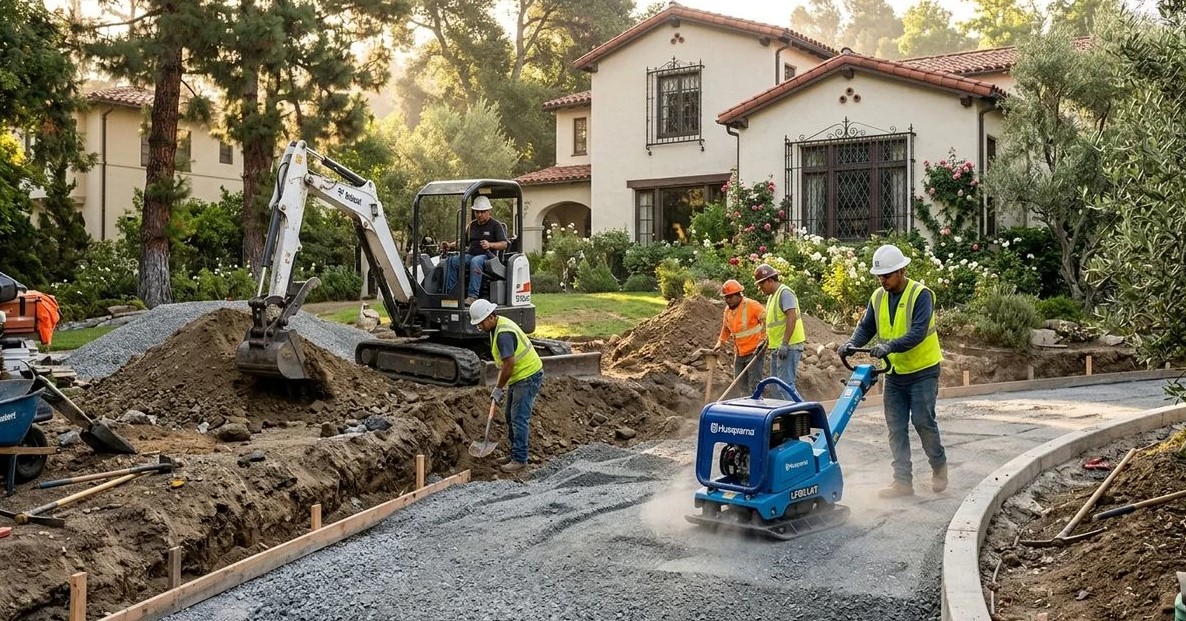
A well-built walkway is usually the highest-impact upgrade. Materials should suit the home and the climate. Brick feels classic and works well with traditional architecture. Concrete pavers offer versatility and are easier to repair in sections. Natural stone has texture and richness, but the installation quality matters more than the material itself. Poorly set stone can look worse than plain poured concrete.
Retaining walls deserve careful thought. In sloped front yards, a low wall can turn an awkward grade into a layered landscape that frames the home. It can also protect against erosion and make maintenance easier. The mistake I see most often is oversizing the wall or choosing a block style that competes with the house. Front-yard hardscaping should support the architecture, not dominate it.
Gravel and decomposed granite can also work, especially in water-conscious regions. They pair naturally with xeriscaping and low-maintenance gardens, and they can reduce the amount of thirsty lawn that needs irrigation. But they are not universally low effort. In leafy neighborhoods, gravel catches debris. In freeze-thaw climates, edging details become critical. In homes with young children, loose materials can migrate quickly. These are not deal-breakers, just trade-offs worth understanding before installation.
Outdoor lighting belongs in this conversation too, even though it is often treated separately. Path lights, uplights on specimen trees, and subtle porch-adjacent fixtures can make modest landscaping look significantly more expensive after dark. The effect should be quiet, not theatrical.
Planting for curb appeal, not just color
A lot of front yards fail because they rely on color without enough form. Flowers are welcome, but shape is what reads from the street. Evergreens, shrubs with strong silhouettes, ornamental grasses, and small accent trees provide the framework that gives the yard presence in every season.
That is why professional planting plans often feel calmer than homeowner impulse planting. There is repetition. There is mass. There is enough empty space for each plant to read clearly. A bed stuffed with one of everything may look exciting up close, but from the curb it often feels busy and under-designed.
Foundation plantings should soften the base of the home without hiding it. Shrubs that eventually block windows or crowd entry steps are a common mistake. It is much easier to choose a plant that fits the mature space than to keep shearing an oversized plant into submission year after year. This is where native plants often outperform the usual landscape staples. They tend to adapt better to local soils and weather patterns, and many offer strong seasonal character without constant intervention.
A good front-yard planting mix usually includes evergreen structure, a handful of reliable perennials, one or two focal elements, and a seasonal layer that can change if desired. The balance shifts by region. In a cold climate, winter structure matters more. In a hot, dry region, foliage texture and heat tolerance may carry the design more than bloom cycles.
For homeowners searching for landsaping ideas that feel current without becoming trendy, the answer is usually not exotic plants. It is cleaner composition and tougher plant choices.
The value of native plants and climate-fit design
Native plants have moved well beyond the “naturalized meadow only” stereotype. Used well, they can look refined, intentional, and highly attractive in front-yard settings. More important, they often solve the exact problems that drag down curb appeal: underperforming lawns, thirsty annual beds, and shrubs that decline after a few difficult seasons.
There is a direct connection between curb appeal and plant resilience. A front yard looks expensive when it remains tidy in August, not just in April. Native plants and regionally adapted species tend to hold up better under local pest pressure, rainfall patterns, and temperature swings. That reduces replacement costs and keeps the landscape from sliding into patchy decline.
This does not mean every plant must be native. A mixed palette is often the most practical route. But when at least part of the design is built around species that belong in the local environment, the whole landscape usually becomes easier to maintain. Pollinator-friendly selections can also add movement and life near the entry, especially when grouped in controlled drifts rather than left looking wild.
Homeowners sometimes worry that native planting reads as loose or informal. That concern disappears when the layout is disciplined. Crisp bed edges, intentional repetition, and a clear path to the front door make even a relaxed plant palette look sophisticated.
Garden mulching does more than tidy the beds
If I had to choose one low-cost improvement that reliably lifts curb appeal in a single day, it would be mulching. Fresh garden mulching sharpens bed lines, suppresses weeds, conserves moisture, and makes every plant look more intentional. It is one of the simplest ways to create that finished, cared-for appearance buyers notice immediately.
But mulch can hurt the look of a yard when it is applied poorly. The goal is a consistent layer, usually a couple of inches deep, not a thick blanket piled against stems and trunks. Volcano mulching around trees is still common, and it is one of the quickest ways to create future problems. Excess mulch against bark traps moisture and encourages decline. Proper mulching should resemble a broad, even ring, not a cone.
Color matters too. Dark brown mulch is a safe choice for many homes because it creates contrast and recedes visually. Red mulch can overpower the façade and draw attention away from the architecture. Dyed black mulch can look dramatic, but on some properties it reads harsh, especially in bright sun. Natural shredded bark often looks the most timeless.
Mulching is also a maintenance strategy, not just a cosmetic one. In beds with young shrubs, perennials, or native plants, it reduces evaporation and buffers soil temperature. That supports healthier growth with less watering. On many properties, especially those in hotter regions, better mulching is part of a larger shift toward water-wise irrigation and smarter landscape management.
Lawn alternatives that still look upscale
A perfect lawn still signals care in many neighborhoods, but it is no longer the only path to strong curb appeal. In some climates, a traditional turf front yard is simply not the smartest long-term choice. Water restrictions, rising maintenance costs, and heat stress have pushed more homeowners toward alternatives.
Xeriscaping has gained attention for good reason, though the term is sometimes misunderstood. Proper xeriscaping does not mean Expert landscapers in Arcadia California a yard full of gravel and cactus unless that suits the region and the house. At its best, it means designing for efficient water use through plant selection, soil management, mulching, and irrigation planning. A xeriscaped front yard can be soft, layered, and elegant.
Artificial turf is another option that gets mixed reactions, and fairly so. It offers instant visual neatness and can work well in small front strips, difficult side yards, or spaces where natural grass never truly thrives. In high-end installations, the look has improved considerably. But artificial turf is not maintenance-free, and it is not right for every site. It can get hot in direct sun, it needs periodic cleaning, and poor-quality products look obviously synthetic from the curb. On larger front yards, it can flatten the visual character of a property unless balanced with rich planting and hardscaping.
For many homes, the best answer sits between extremes. Keep a smaller, healthier area of real lawn where it performs well. Replace weak turf zones with planting beds, groundcovers, decorative gravel, or expanded entry hardscaping. This tends to produce a more custom, valuable look than forcing wall-to-wall grass.
Water-wise irrigation that protects the investment
Nothing erodes curb appeal faster than stressed plants and uneven lawn color. Irrigation is often invisible when it works well and painfully obvious when it does not. A property with overspray on the sidewalk, soggy foundation beds, and dry corners in full sun is wasting water and weakening the landscape at the same time.
Water-wise irrigation starts with zoning. Turf, shrubs, trees, and perennial beds do not need the same amount of water or the same delivery method. Drip irrigation is usually the smart choice for planting beds because it targets the root zone and reduces evaporation. Rotor or spray heads belong only where they make sense, and they should be adjusted carefully to avoid pavement and siding.
Smart controllers can help, especially in climates with erratic rainfall, but they are not magic. If the system layout is poor, a smart timer only automates poor performance. The most effective irrigation upgrades are often modest: fixing coverage gaps, replacing mismatched heads, adding drip to foundation beds, and adjusting schedules seasonally.
A mature tree presents a different need than annual color by the front walk. That is one reason irrigation should be reviewed as the landscape evolves. What worked when the yard was newly planted may be wrong five years later, once shade patterns shift and root systems deepen.
Here are the signs that an irrigation setup probably needs attention:
A water-wise irrigation plan does not just reduce bills. It protects the value of every other landscape improvement.
Tree care is one of the highest-return upgrades
Mature trees can add stature to a property in a way nothing else can. They frame the roofline, cast useful shade, and make a home feel established. Yet tree care is one of the most overlooked parts of curb appeal. People either ignore trees entirely or trim them too aggressively for a quick tidy-up.
Well-maintained trees add value because they make the whole site look healthier and more substantial. That starts with basic tree care: proper watering during establishment, mulch kept away from the trunk, and structural pruning when the tree is young. For mature trees, the priorities shift toward hazard reduction, canopy balance, deadwood removal, and root-zone protection.
One of the most common mistakes is lifting every lower branch just because it seems cleaner. Sometimes canopy raising is appropriate for sightlines or walkway clearance, but over-pruning can ruin the natural form and expose the trunk to stress. Another mistake is planting ornamental trees too close to the house. In the first few years, they look charming. By year ten, they scrape gutters, crowd windows, and feel misplaced.
If the front yard already has large established trees, work with them rather than against them. Shade changes what will thrive underneath, but that does not limit curb appeal. It simply shifts the planting strategy toward layered shrubs, woodland perennials, finer mulch textures, and calmer color schemes.
Small upgrades that change perception fast
Some curb appeal improvements are more about perception than square footage. They help the landscape read as intentional, even if the footprint stays the same. These are especially useful when a full redesign is not in the budget.
A crisp bed edge is one of them. Clean separation between lawn and planting bed makes the entire front yard look maintained. The same is true of pruning shrubs to reveal windows and entry features rather than letting everything blur into a green mass. Replacing a mismatched mailbox post, updating planters near the porch, or adding symmetrical containers can also create a stronger focal point around the entrance.
If the goal is to improve value before listing a home, prioritize visibility from the street and from the front door looking out. Buyers form opinions on approach, and they also notice the property while standing at the threshold. That is why the sequence matters: driveway edge, walkway, steps, porch, framing plants, and sightline to the entry.
These five changes often produce the quickest visual return:
None of these needs to be extravagant. They need to be coherent.
Designing for low maintenance without looking bare
Low-maintenance gardens are often requested and badly interpreted. Low maintenance does not mean empty, and it does not mean installing the toughest plants in random spots and hoping for the best. It means reducing ongoing labor through smart design choices.
The first choice is right-sizing the landscape. Beds that are too narrow become fussy. Lawns with many tight curves are harder to mow cleanly. Plants jammed too closely require more pruning later. A landscape with repeated plant groupings and fewer material transitions is easier to care for and usually looks more expensive.
The second choice is selecting plants for mature size and local conditions. That sounds obvious, but it is still where many yards go wrong. A low hedge should not be built from a shrub that wants to become eight feet tall. A sunny corner should not be planted with shade lovers because they looked nice in a nursery. Low-maintenance gardens come from reducing conflict between plant and place.
The third choice is limiting seasonal fuss. Annual flowers have their place, especially near the entry where small splashes of color can feel welcoming. But if every bed depends on replanting four times a year to stay attractive, the system is too labor-heavy for most homeowners. Better to invest in evergreen structure, reliable perennials, and one or two seasonal accents that are easy to refresh.
A property can absolutely be refined, green, and inviting without constant trimming, reseeding, and replacement. In fact, many of the most attractive front yards are the ones that seem calm because they are not overworked.
Where curb appeal and resale value meet
Not every landscape dollar returns the same value. Highly personalized features, difficult specialty plants, and oversized decorative elements may appeal to one owner but not the broader market. The front yard improvements that tend to support resale are the ones that make the home easier to approach, easier to maintain, and easier to imagine living in.
That usually means quality over quantity. A handsome walkway matters more than an elaborate annual display. Healthy trees matter more than novelty topiary. Native plants, mulching, and efficient irrigation matter because they keep the yard looking stable over time. Hardscaping matters because it gives structure and reduces the sense of unfinished space.
The best curb appeal is not loud. It makes the house look settled and the upkeep feel manageable. When a front yard is balanced, watered intelligently, and planted with restraint, it sends a message before anyone steps inside. This home has been cared for. This property will age well. That is where visual appeal turns into real value.