
Stormwater and Drainage Solutions for Residential Landscapes
Stormwater is one of those landscape issues that stays invisible until it becomes expensive. A yard can look finished, even polished, and still send water toward a foundation, pool runoff in a side yard, or carve channels down a slope after the first hard rain. In residential landscapes, drainage is not a separate problem from design, it is part of design. The shape of the site, the soil, the plant palette, the irrigation layout, and the hardscaping all influence where water goes and how long it stays.
That is especially true in places like the San Gabriel Valley, where hillside properties, foothill lots, and water-conscious landscape planning often meet on the same project. A residential landscape here is rarely just lawn and shrubs. It may include sloped front yards, retaining walls, driveways, side yards with limited clearance, and planting areas that need to look good while working hard. When water moves quickly off a roof or across a compacted slope, the landscape has to slow it down, guide it, and make use of it without creating erosion or soggy pockets.
A thoughtful drainage plan does more than protect a home. It supports healthier plants, reduces erosion, protects hardscaping, and helps irrigation do its job instead of fighting against the site. In a region where drought-tolerant landscaping, native plants, and efficient irrigation are already central to good landscape design, stormwater management is not a separate discipline. It is part of building a landscape that can actually hold up over time.
Why drainage and landscape design need to be planned together
A lot of drainage problems start with good intentions. A homeowner removes turf, adds new hardscaping, and plants a few attractive beds, but the site no longer behaves the way it used to. Water that once spread through lawn now runs over compacted soil or paved areas. Downspouts dump onto a slope. A new patio changes the grade just enough to send water toward a side gate or garage. Even a small change in surface cover can alter how stormwater moves.
That is why landscape design should begin with a basic site assessment. The California water agency guidance points to several practical questions before turf removal or major landscape renovation: how irrigation is working, what the soil is like, how much sun different areas receive, and which plants suit the local conditions. Those questions matter because drainage and plant selection are connected. A plant that tolerates dry, fast-draining soil may fail in a low spot that stays wet after storms. A plant that likes more water may invite overwatering if it is placed in the wrong exposure. The same goes for hardscaping. A beautiful path or retaining wall can solve one problem and create another if it interrupts natural flow without providing a controlled outlet.
In practice, the best drainage improvements are rarely dramatic. They are often modest adjustments made at the right place. Regrading a low spot by a few inches, redirecting roof runoff, breaking up compacted soil, or choosing the right plant material can make a site far more resilient than adding more structure after problems show up. Those are the kinds of decisions that separate a landscape that merely looks finished from one that functions well.
What stormwater is doing on a residential site
Stormwater on a residential property usually comes from three places: roof runoff, irrigation, and rainfall that lands directly on the site. Each source behaves differently. Roof runoff arrives quickly and with force, especially when gutters and downspouts concentrate it into a single point. Irrigation creates a slower, more persistent moisture pattern, which can be helpful or harmful depending on how it is distributed. Rainfall is the most unpredictable, because a landscape has to absorb or move water during the same event that may also be saturating neighboring properties or city drainage systems.
The challenge is not simply getting rid of water. It is guiding water so it does not cause erosion, undermine hardscaping, or pool where it should not. On a gentle site, that may mean broad, shallow flow paths that move water toward a safe outlet. On a hillside lot, it may mean more deliberate control with terraces, planting zones, and erosion-resistant surfaces. In both cases, the goal is to slow water enough that the soil and plants can benefit from it when possible, while still preventing damage during heavier events.
This is where hardscaping has a real role beyond aesthetics. Pavers, decomposed granite paths, retaining walls, edging, and other built elements can shape runoff if they are integrated carefully. Hardscaping is not a drainage solution by default. In fact, badly placed hardscape can speed water up or trap it. But with the right grading and detailing, it can define flow patterns, protect vulnerable areas, and create places where water is absorbed or safely released.
The value of water-wise planning before the first shovel hits the ground
Water-wise design is not just a drought response. It is a practical way to create landscapes that work with climate, not against it. California’s water guidance emphasizes evaluating irrigation, soil, sun exposure, and plant choice before removing turf. That advice is useful because it keeps the project grounded in site reality instead of wishful thinking. A lawn replacement project, for example, should not begin with a plant list alone. It should begin with a clear sense of where water moves, where the soil holds moisture, and which parts of the property are hot, shaded, exposed, or sheltered.
The state’s Model Water Efficient Landscape Ordinance reinforces that logic by encouraging efficient irrigation, climate-appropriate plants, native plants, and alternative water sources in new and renovated landscapes. For residential projects, that means drainage and water use cannot be separated. A landscape that wastes irrigation water is already stressed before a rainstorm even arrives. A landscape that ignores the natural slope or sun exposure will need more intervention later. A well-planned drought resistant landscaping approach, by contrast, tends to be more adaptable because the plant community and irrigation strategy fit the site from the beginning.
This is especially relevant in neighborhoods with strong hillside visual character. In the San Gabriel Valley, landscape design often has to balance appearance, slope stability, and water efficiency all at once. That can be a difficult balance, but it also creates opportunities. A site that is already being reworked for water-wise planting can be graded more intelligently, planted with erosion-conscious materials, and organized around real drainage needs instead of cosmetic ones.
Hillsides, erosion, and the plants that hold a slope together
Hillside landscaping deserves special attention because slopes do not forgive lazy design. Water moves faster on a slope, and when it picks up speed, it pulls soil with it. The result can be rills, exposed roots, washed-out mulch, and damaged hardscaping. On properties with grade changes, drainage is inseparable from erosion control. The landscape has to interrupt flow, anchor the soil, and prevent concentrated runoff from cutting channels through the yard.
California Native Plant Society guidance on hot, sunny slopes points to the same basic principles that experienced landscape designers use on hillside sites: drought tolerance, erosion control, and firewise planting. Those priorities fit foothill and hillside properties well because the plant palette can serve several purposes at once. Deep-rooted native and climate-adapted plants can stabilize soil better than a sparse, high-maintenance planting that depends on frequent watering. A layered planting structure can slow water, reduce bare soil, and create a more natural transition between hardscape and slope.
In the San Gabriel Mountains and surrounding foothill areas, native habitat gardening also carries ecological value. The region supports many rare, threatened, and endangered species, so a residential landscape that uses appropriate native plants can do more than save water. It can also contribute to a more resilient local plant community. That does not mean every yard should look like a wild hillside. It means the planting scheme can be both practical and locally rooted.
Plants commonly associated with this kind of landscape include California buckwheat, California sagebrush, manzanita, ceanothus, monkeyflower, foothill penstemon, bunchgrasses, and San Gabriel oak. Each of these has different habits and water needs, but together they reflect a landscape strategy that is better suited to dry conditions and slope stability than a thirsty, high-input planting.
Firewise planting and drainage can work together
Fire-resistant planting and drainage planning are often discussed separately, but they overlap in meaningful ways. Firewise landscaping is not just about plant selection, it is also about reducing clutter, managing irrigation, and making sure the landscape does not create conditions that invite stress or excess fuel near the home. In the San Gabriel area, fire features, defensible-space planning, and ember-resistant zone rules are locally relevant concerns. That means residential landscapes need to consider both what happens when water is scarce and what happens when conditions are dry, windy, and potentially hazardous.
A well-designed stormwater strategy can support firewise goals by reducing overly dense, stressed vegetation and by keeping irrigation targeted rather than scattered. When water is delivered efficiently, plants are less likely to become weak from either chronic drought or chronic overwatering. That matters because stressed plants are harder to maintain and less reliable as part of a slope-stabilizing, low-water landscape. It also matters near hardscaping edges, where debris and dry plant material can accumulate if the site is not maintained carefully.
There is a common misconception that a firewise yard has to feel bare or sterile. That is not the case. A landscape can be attractive, layered, and ecologically useful while still respecting defensible-space principles. The key is choosing plants with appropriate spacing, grouping them by water needs, and avoiding the kind of dense, thirsty planting that creates more maintenance than most homeowners can realistically sustain.
Irrigation retrofits, turf removal, and the role of microclimate
One of the most effective ways to improve stormwater performance is to correct irrigation problems. Overwatering is one of the quietest causes of drainage trouble, especially in renovated landscapes where the old irrigation system was designed for turf and has never been rebalanced for shrubs, natives, or mixed planting beds. When sprinklers still run like a lawn system after the lawn is gone, excess water ends up where it does the least good. It can saturate slopes, cause runoff onto sidewalks, or keep roots too wet for the plant palette that was installed.
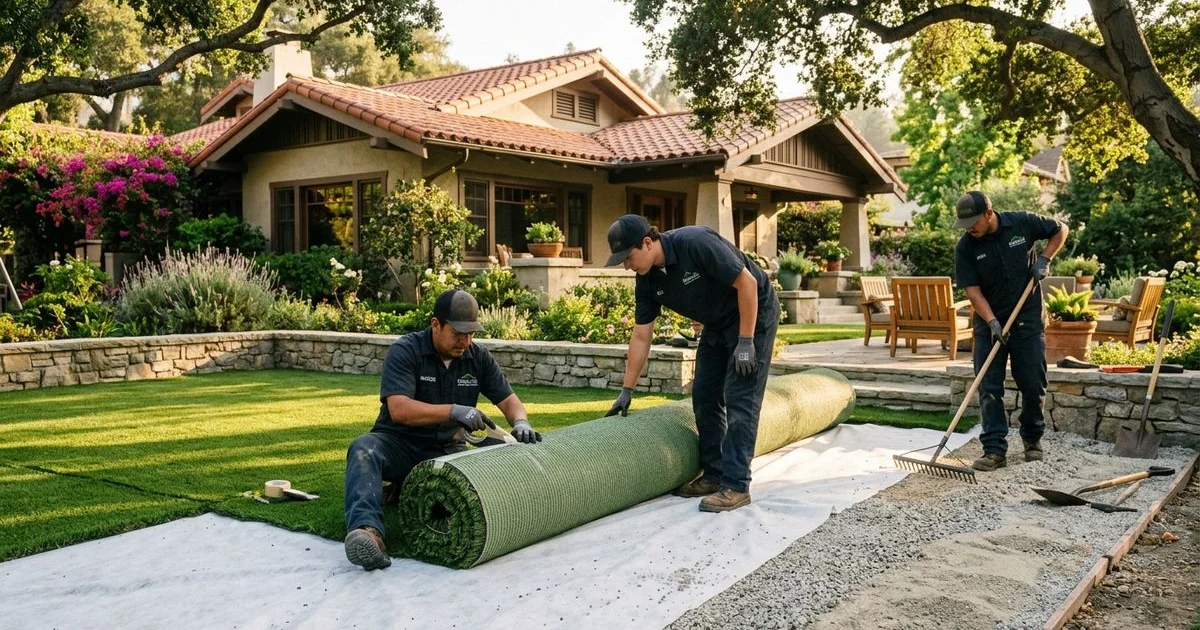
Turf removal can be a smart move, but it works best when it is paired with a real irrigation retrofit. That means matching water delivery to plant needs, adjusting for exposure, and understanding microclimate. A full-sun, west-facing slope has very different water behavior from a shaded side yard or a protected planting pocket near a wall. California’s landscape guidance points homeowners toward considering sun exposure and plant selection before removing turf, and that is sound advice. Water needs are not uniform across a property. The best landscape design reflects that variation instead of flattening it.
A practical rule of thumb in retrofit projects is to think in zones, not in blanket treatments. Plants with similar water needs should be grouped together. Areas with more sun or wind may need different irrigation timing or different mulch strategy. Low spots should be planted or graded in a way that tolerates occasional wetness without turning into a swamp. Small, thoughtful adjustments can make a large site easier to maintain and less likely to shed water where it should stay.
A workable drainage strategy usually combines several moves
Stormwater solutions rarely come from one feature alone. On residential landscapes, a successful plan is usually a combination of grading, hardscaping, planting, and irrigation adjustment. If those parts are not coordinated, the project may look complete but still perform badly during the first real storm. The most reliable projects tend to share a few qualities, even when the details differ from site to site.
A short checklist can help frame those decisions:
- Assess where water comes from and where it naturally wants to go.
- Match plants to soil, sun exposure, slope, and water need.
- Use hardscaping to guide runoff, not to trap it.
- Retrofit irrigation when turf is removed or plantings change.
- Protect slopes with erosion-conscious planting and grading.
None of these steps is flashy on its own, but together they shape how the whole property behaves. The order matters too. It is much easier to solve a drainage problem before a landscape is fully installed than after paths, walls, and mature plants are already in place.
Why maintenance is part of drainage design
A landscape that drains well in year one can fail in year three if maintenance is ignored. Mulch breaks down, soil compacts, irrigation settings drift, and small low spots become bigger ones. Gutter discharge points shift or clog. Groundcover thins. On hillsides, a few missed maintenance cycles can be enough to start visible erosion. Good drainage design anticipates this. It does not assume perfection, but it does make routine care easier and more effective.
Maintenance in water-wise landscapes is usually more about observation than labor. Homeowners should watch where water collects after rain, where mulch washes away, and which plants appear to be getting too much or too little irrigation. If a planting bed stays soggy longer than the surrounding area, that is a sign to check grade, irrigation, or soil conditions. If a slope starts to show channels, the issue should be addressed early, before it becomes a larger repair.
The same is true for hardscaping. A patio edge, retaining wall, or path that begins to hold water or allow sediment to build up is telling you something about the flow pattern. Those signs are not minor. They are the landscape’s way of showing where the design no longer matches the site.
HOA rules, water restrictions, and homeowner choices
For many homeowners, landscape decisions are also shaped by HOA rules. That can create confusion, especially during drought-related restrictions when people assume their options are narrower than they are. California water restriction guidance makes clear that homeowners’ associations cannot prohibit certain water-efficient landscaping choices during drought-related restrictions. That matters because it gives homeowners room to pursue drought tolerant landscaping, native plantings, and irrigation improvements without treating water-wise design as a temporary trend.
This is not just a legal point, it is a practical one. The more a landscape depends on constant irrigation or an outdated turf-first model, the more vulnerable it becomes to changing water rules and fluctuating conditions. A well-planned landscape, especially one based on climate-appropriate planting and efficient irrigation, is easier to live with over time. It also tends to be more compatible with the realities of hillside landscaping, where slope, exposure, and erosion are already active constraints.
Homeowners who work within these constraints often end up with better results than those who try to force a conventional garden into a difficult site. The best-looking landscapes in these settings usually reflect disciplined plant selection, careful grading, and a willingness to let the site’s conditions lead the design.
The real measure of success
A residential landscape with good stormwater and drainage solutions does not call attention to itself. It simply works. Water moves where it should. Soil stays where it belongs. Plants look settled rather than stressed. Hardscaping feels integrated instead of imposed. And when the first substantial rain arrives, there are no surprises that send everyone outside with a shovel.
That kind of stability is worth planning for, especially in areas where drought, slope, fire risk, and water conservation all influence how a yard should be built. For homeowners in the San Gabriel Valley and similar hillside communities, the smartest landscapes are often the ones that respect the site first. They account for irrigation, soil, sun exposure, plant selection, and runoff before they chase a finished look. They use native and climate-appropriate plants where they belong. They treat hardscaping as a structural tool, not just a decorative one. They understand that drainage is not a detail added at the end, but one of the foundations of a landscape that lasts.
When those pieces come together, the result is Los Angeles residential landscaping more than a dry yard after a storm. It is a residential landscape that supports water efficiency, holds slopes more securely, and feels grounded in the place where it sits.