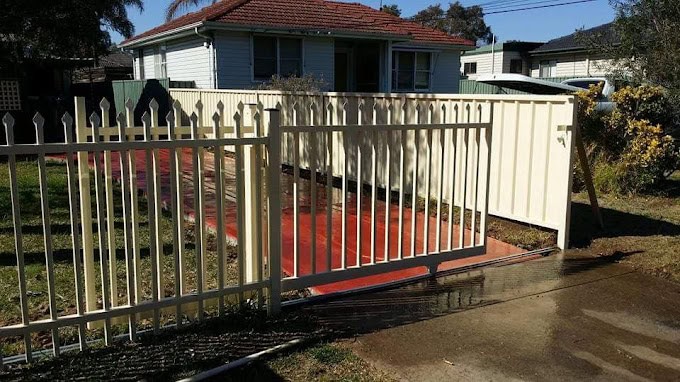
Fencing Incline and Irregular Ground: Solutions by Fencing Business
A fence doesn't stop working in one dramatic moment. It fails in small, regular ways that accumulate: a rail that winds up bowed, a post that wobbles since the base is undercut, an entrance that drags since the opening shifted with the incline. When the ground isn't level, installing "straight" fence becomes a geometry trouble, a drainage problem, and a workmanship issue all at once.
I have actually seen property owners invest excellent money two times. The first time on "conventional spacing" and "normal post depth," and the 2nd time when the fence begins sneaking far from degree assumptions. A trusted fencing company treats slope and uneven ground as the starting condition, not an afterthought. The best fencing contractors don't require one approach onto every backyard. They pick a design that matches just how the land in fact behaves and exactly how people actually relocate through the space.
Below are the real-world problems fencing builders deal with on sloped or irregular ground, plus the strategies that experienced fencing companies make use of to make fencings look straight, remain plumb, and benefit years.
The real trouble: ground degree is not fencing level
On a flat great deal, you can think of a fence as a set of vertical messages holding horizontal lines. On uneven ground, that psychological version breaks. If you maintain messages "uniformly spaced" and "uniformly set" in a slope scenario, you usually end up with one of these results:
- The base rail hangs in midair, then unexpectedly drops.
- The fencing boards "action" up also aggressively, producing gaps that yell irregular terrain.
- The top line looks wave-like, since the slope changes much faster than your format can compensate.
- An entrance opening loses square to the driveway or patio grade.
The difficult part is that "level" and "plumb" are various points. Articles need to be plumb. Fence elevation has to do with design and line-of-sight. Ground grade has to do with drainage, erosion, and how water moves after rain.
When a fencing contractor selects a method, they're stabilizing those contending top priorities. That's why asking a fencing contractor what they plan to do on an incline is much more revealing than requesting the most affordable bid.
What slope changes under your fence
Uneven ground isn't only regarding visible bumps. It impacts:
Post stability. Soil structure matters, yet so does how post openings engage with slope. A blog post established also shallow on one side can wind up sustained primarily by loose topsoil. Include moisture and freeze-thaw cycles, and the fencing starts to lean.
Drainage and water flow. If you bury the bottom edge of a fence in a manner in which blocks all-natural overflow, you can wind up with water trapped behind boards or in the article holes. That's when you see rust streaks and soft ground around bases.
Freeze-thaw. Even if you're not in a harsh environment, seasonal ground movement can still nudge posts. The steeper and a lot more uneven the grade, the even more stress and anxiety you develop along the fencing line.
Installation access. On a sloped yard, devices accessibility and hole depth uniformity come to be harder. A fencing company that shows up with the ideal crew and tools is typically the distinction in between a fencing that looks excellent on the first day and one that remains solid.
The most common approaches fence firms use
There isn't one global approach. The "best" remedy depends upon the fencing kind, the amount of incline, and just how sensitive the design is to aesthetic positioning. Here are one of the most typical approaches, and when they work best.
Step-aligned panels: when you want optimal board call with the grade
Many fencings on irregular ground wind up utilizing a step-down or stepped layout, where each area of panels complies with the ground contour with little elevation changes. Picture a series of short degree runs that step up or down as the incline changes.
This approach commonly creates one of the most constant seek pickets and stockade designs, especially when you desire the fencing to preserve a clean leading line by keeping each area degree individually. The compromise is exposure: if the slope is significant, the tipping comes to be recognizable. For some homeowners, that's the authentic "natural" look. For others, it really feels jagged.
Fence companies handle this by managing step increments. They do not simply "make it fit." They plan where the changes take place so the actions land near rational points like residential property line edges, gateway openings, or all-natural breaks in landscaping.
Racked placement: one continuous top line across slope
Racking is the strategy where the fencing panels are adjusted diagonally so the top rail preserves a consistent line while the bottom rail adheres to the terrain. The visual intent is different. Rather than a tipped appearance, the fence shows up to "track" the slope smoothly.
Racking can be really attractive on modest inclines, particularly for designs with solid rails. It can likewise minimize the overstated tipping that occurs with a completely stepped approach.
The compromise is structural and worldly level of sensitivity. Not every system racks cleanly. For some fence layouts, forcing angled alignment can place unusual stress and anxiety on rails and fasteners. A knowledgeable fencing professional accounts for panel actions, not simply appearance.
Cantilever or "pivoted" area preparation: when inclines are severe or irregular
Some yards do not transform slope evenly. You get soft places, old landscape design piles, locations where soil was included years ago, and places that resolve unevenly. In those cases, a fence company might utilize an extra developed approach, planning section boundaries so the fencing can transition without overwhelming a solitary panel.
This usually shows up as shorter spans, more frequent messages, or purposeful breaks in railway. It can look much better than forcing a constant technique across a disorderly quality, and it normally performs much better as well. Much shorter spans reduce the lever impact when the ground moves.
Excavation and re-grading: when you desire a conventional fencing line
Sometimes the most effective long-lasting remedy is to reshape the land. That may suggest cutting down a high area so fence post bases can be regular, or including fill and compacting where the backyard dips.
This method is extra invasive, and it can include permits depending upon your location and just how close you are to drainage functions. However if a slope is serious and you care about a standard, near-level fence line, excavation and re-grading can be one of the most resilient way to avoid article instability.
An excellent fencing contractor will tell you upfront when re-grading deserves it and when it's chasing the wrong trouble. If the backyard is mainly stable and the slope is convenient, stepping or racking is frequently much more cost-efficient than moving tons of soil.
The article setting details that divide "great" from "solid"
You can choose the ideal design and still obtain a failing fencing if the foundations are wrong. Fencing companies that do this job day after day focus on the small decisions.
Depth and uniformity, not simply "the appropriate deepness number"
Many people fixate on "X inches deep." Actually, the ideal depth has to do with reaching steady dirt and managing frost problems. On a slope, the dirt stability can change even over brief ranges. An article opening that strikes solid ground on one side might still be mainly loosened topsoil on the other.
Experienced fencing contractors assess the ground profile as they dig and change hole depth as necessary. They also try to stay clear of developing thin "wedges" of dirt under one side of the blog post. That can take place when openings are cut shallow on one face of the slope.
Concrete, crushed rock, and drain management
Concrete can be part of a trustworthy installment, yet the goal is regulated assistance, not a trapped-water environment. Some installers use crushed rock or adjust their concrete method to maintain water from pooling at the base. The precise method depends upon local dirt conditions and climate behavior.
If you see a contractor blending concrete too wet, or stuffing dirt randomly around posts without tamping, that's a red flag. Uneven ground penalizes careless backfill quicker, due to the fact that loads are currently uneven.
Bracing and placement throughout install
On a sloped line, you require short-term supporting to keep posts placed while concrete remedies and rails align. Without supporting, blog posts can drift somewhat while the staff functions, and those tiny changes compound.
Fence business teams that appreciate the last line commonly set string lines, look for plumb at each article, and verify that panel positioning matches the chosen approach. That's how you stay clear of the "it looked straight the other day" moment.
Planning the fencing line: layout is half the job
The ideal fence setup starts with the layout, not with the initial blog post opening. A fencing contractor who hurries previous format is more likely to end up with unequal panel dimensions, uncomfortable board spacing, or gateways that don't open correctly.
Common planning information include:
Deciding where height transitions happen. If you step panels, you desire shift factors at visually rational areas. Putting every action in the middle of a viewpoint is what develops the "stairs wall surface" look that numerous homeowners do not want.
Maintaining consistent fence elevation where it matters. If the fencing borders a driveway or a patio area, home owners usually want a regular sightline. That might imply readjusting the fencing strategy in your area around those features.
Accounting for entrance geometry. Gates behave like a lever when the grade adjustments. The joint side and latch side have to line up with just how the opening structures the fence line. If the ground slope modifications right at eviction, a fence company might call for extra bracing or added equipment to avoid sagging.
Choosing the right approach for your fence type
A fence's products and design affect what work with a slope.
For example, board fences with several pickets typically look best with either managed tipping or racked panel positioning where the rails can handle angled adjustment. Privacy fences with solid rails can rack more cleanly than flimsy single-board layouts.
Metal fences can likewise handle slope attentively, but you should beware with exactly how brackets are mounted to maintain structural integrity and constant spacing. Some styles are better fit for spaced-post systems, while others benefit from shorter spans.
The key point is that a good fence professional treats the style as a system. They don't simply "level the articles" and hope the rest sorts itself out.
A sensible choice guide for homeowners
If you're working with fencing contractors, you can quicken the high quality of the discussion by concentrating on the choices that matter. Here's what I suggest asking, because the answers expose experience fast.
- How do you handle post placement on sloped ground, and what method do you utilize for the panels (stepping or racking)?
- Will the fencing have a consistent top line, and exactly how will you manage the visual transitions?
- What do you do concerning drain near the blog post openings so water does not pool versus the fence base?
- How do you brace and confirm plumb alignment as you install?
- Can you stroll me via exactly how the gate location will be taken care of provided the grade?
The tone of their action issues. A fence company that with confidence discusses the compromises, rather than just assuring "it will be degree," is normally the best bet.
Trade-offs you need to expect (and prepare for)
Even with the right method, incline presents unavoidable concessions. When you recognize the compromises, you can avoid the disappointment of "nearly ideal" outcomes.
Visual level of smoothness vs. Structural simplicity
A single continuous "smooth" line throughout a slope can look wonderful, specifically with racking. However it might call for careful change and a system created to accommodate it. Stepping is frequently structurally simple, since each panel area can remain degree and repeat a foreseeable pattern.
Maximum coverage vs. Tidy drainage
You could like a fencing that minimizes spaces at the bottom for personal privacy. On uneven ground, that can compel bigger panel adjustments. Some gap is typical. If you push for zero gap in a steep yard, the fence could end up with more tension on rails and fasteners, or with bases that hold water.
Cost predictability vs. Site-specific engineering
A straight fencing on flat ground is simpler to estimate. Incline includes unknowns like dirt problems and the demand for extra preparation, shorter spans, or even more mindful design. That's not a reason to avoid it. It's a factor to obtain a comprehensive website review so the fencing contractor isn't guessing.
Two real-world circumstances I have actually seen play out
Scenario 1: the "small incline" that turned into a wavy fence
A home owner defined it as a modest incline, something you would barely discover walking the backyard. The professional set posts, kept spacing constant, and made use of a standard rail configuration. After the fencing was installed, the top rail looked discreetly bumpy from certain angles. From various other angles it looked penalty, which made it more challenging to accept immediately.
The fix included changing panel placement at particular points, however the bigger issue was that the installation approach didn't expect how the ground quality would transform over the size of the run. This is why "how much slope" isn't the only factor. It's also just how the slope changes along the fencing line.
A fence company with even more experience would have prepared change factors or picked a racking versus stepping technique to maintain the visual leading consistent.

Scenario 2: irregular mounds that needed section breaks
In one more lawn, the ground was not uniformly sloped. There were older landscape design mounds, a reduced drain pocket, and an area where dirt had actually been added years back. The first effort utilized one constant design method, and within a season the fence showed much more splitting up than expected around the uneven zone.
The later on improvement was not just an aesthetic adjustment. The fencing professional revamped the run with added messages and intentional section breaks so each portion of fencing reacted to local quality rather than fighting it. This is one of those "you pay now to stay clear of paying once more" moments.
How to make sure your fence looks directly from the places you really stand
A fencing doesn't exist in a vacuum. It's checked out from driveways, porches, and side yards where people actually spend time. That seeing angle adjustments what "straight" implies to you.
A fencing contractor that comprehends this will certainly ask, directly or indirectly, how you intend to experience the fencing. They could recommend where to place one of the most noticeable shift factors, or whether a tipped or racked technique will certainly look better from your street-side sightline.
Sometimes the "best" option for the entire residential property is still not the best service for the front view. A fence company can typically change methods in your area without compromising total stability.
Materials and build selections that aid on slope
On irregular ground, the develop details issue as high as the layout.
Using quality equipment, keeping constant spacing, and choosing parts created for adjustment all help. If a service provider counts on excessively limited resistances for a sloped site, tiny inconsistencies can cause visible misalignment.
The great news is that lots of modern-day fence systems are developed to suit unequal quality. The catch is that they just carry out well when mounted with focus to line, plumb, and blog post behavior throughout treating and settling.
If you're dealing with a fence company, don't be reluctant about asking for specifics regarding what hardware is utilized at articles, how rails connect, and exactly how the professional prepares to keep the last look consistent.
Final ideas, the means experienced fencing firms mount it
Slope and uneven ground don't destroy a fence. They simply subject whether the installer prepared intelligently. A fencing company makes trust fund by dealing with the surface as a design input. The result is a fencing that stays plumb, loses water without trapping it, and maintains a clean, willful visual line.
If you take something from every one of this, let it be this: the very best fencing contractor will not promise a one-size-fits-all "degree" service. They will certainly explain the method, the compromises, and how they'll regulate the details that incline makes unforgiving.
And when your lawn adjustments height under your feet, that distinction shows up each day, not just during the walk-through.