
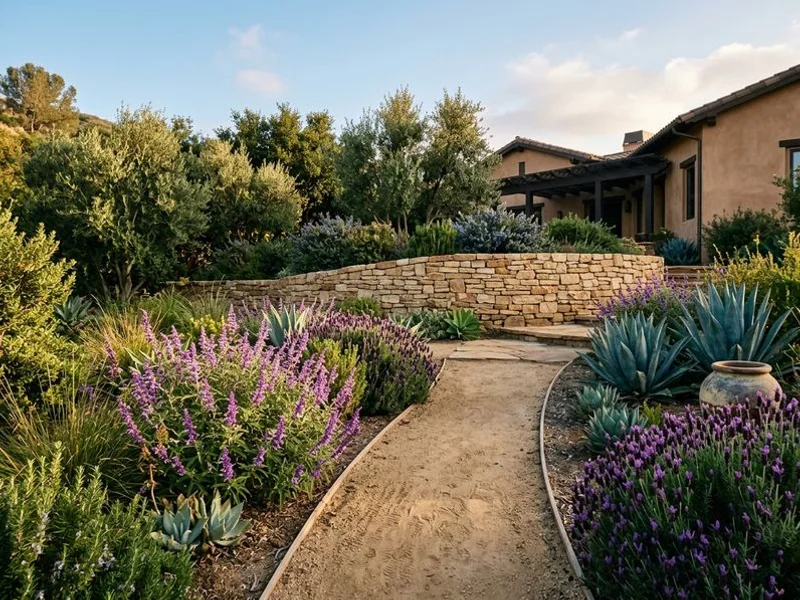
A Guide to Water-Efficient Landscaping in the San Gabriel Valley
The San Gabriel Valley asks a lot of a landscape. Summer heat arrives early, slopes can be unforgiving, and many yards sit somewhere between fully exposed and partly sheltered by foothills, walls, or neighboring homes. A good design has to do more than look polished on move-in day. It has to hold soil, handle runoff, respect local water limits, and still feel like it belongs to the character of the valley.
That is why water-efficient landscaping here is not just a matter of replacing thirsty plants with a few succulents and calling it done. It starts with landscape design that fits the site, then builds in the right irrigation, plant selection, and hardscaping so the yard works with the climate instead of fighting it. When done well, the result is lower water use, less maintenance, and a landscape that reads as intentional rather than sparse.
Start with the site, not the shopping list
A lot of expensive landscape mistakes begin with plant selection before anyone has looked closely at the site. In the San Gabriel Valley, that usually means skipping the basic questions that determine whether a landscape succeeds or fails. How much sun does the yard really get during the hottest months? Where does water collect after a storm? Which areas bake in reflected heat from walls or pavement? Is the soil draining quickly or holding moisture too long?
Those details matter because water-efficient landscaping is not one-size-fits-all. California’s water conservation guidance points people to assess irrigation, soil, sun exposure, and plant needs before removing turf or redesigning a yard. That sequence is important. A homeowner may assume the front lawn is the main problem, when the real issue is an irrigation system that oversprays, compacted soil, or a slope that sheds water too quickly for roots to use it. If those problems stay in place, even drought resistant landscaping can struggle.
Microclimate is especially relevant across the San Gabriel Valley. A north-facing side yard near a shaded wall behaves very differently from a full-sun front exposure. The same plant that settles in nicely under filtered light may scorch in reflected heat a few feet away. In practice, good landscape design starts by mapping those differences instead of treating the property as one uniform zone.
Why turf removal works best when it is planned
Turf removal gets a lot of attention in Southern California, and for good reason. Large lawn areas often consume more water than the rest of the yard combined, especially when they are maintained as conventional turf rather than as a smaller, functional patch. But removing grass without a plan can create other problems. Bare soil warms quickly, erosion can pick up on slopes, and runoff may become harder to control during rain.
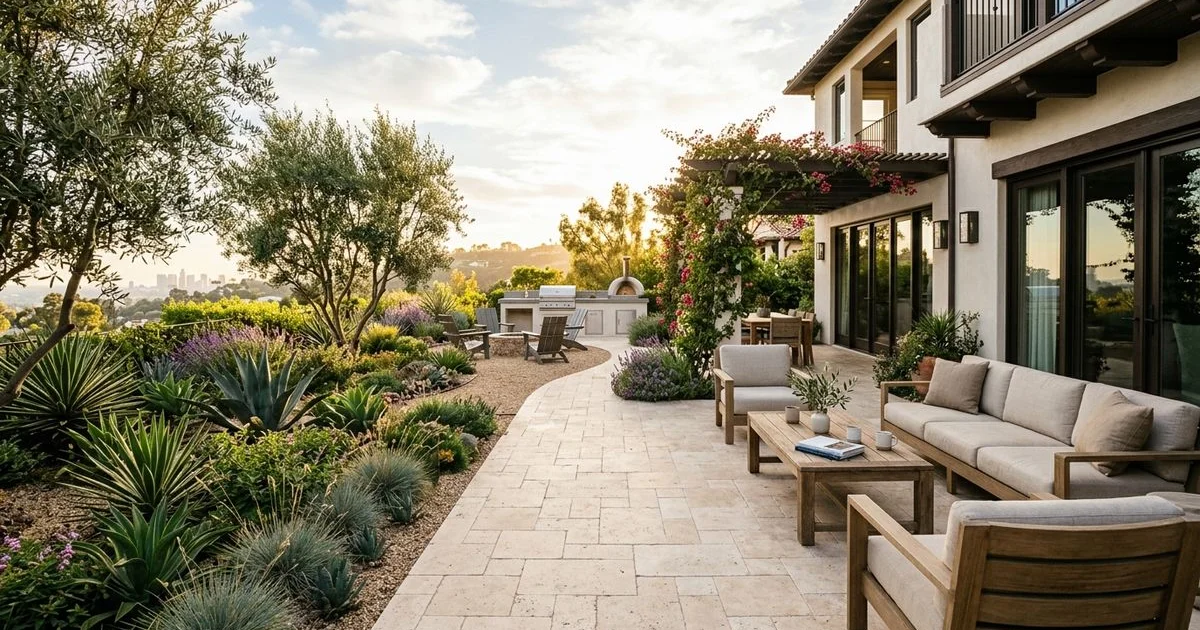
The most reliable approach is to decide what the former lawn is supposed to do before it comes out. If the area is purely decorative, it might become a mixed planting bed with mulch and drought-tolerant shrubs. If children or pets need a usable surface, a smaller lawn or a hardscaped gathering area may make more sense. If the space is long and narrow, it may become a passage with stepping stones, gravel, and planting along the edges. Turf removal is most successful when it serves a clear function in the overall design, not just a water-saving impulse.
There is also a timing issue. Removing turf and replanting in the wrong season can make establishment harder. New plantings need irrigation attention while roots settle. In a region where water efficiency matters, the goal is not to starve the landscape. It is to move from high-demand turf to a design that uses water more intelligently once the plants are established.
Plant selection: natives, climate fit, and real water needs
Plant choice is where a lot of San Gabriel Valley yards either come alive or quietly fail. Water-wise planting does not mean only one kind of look, and it certainly does not mean a yard filled with plants chosen only because they are labeled drought tolerant. The better standard is whether a plant fits local conditions and the level of water the site can realistically provide.
California native plants are often a strong fit because they are adapted to local climate patterns and can support native habitat gardening. In the San Gabriel Valley, plants such as California buckwheat, California sagebrush, manzanita, ceanothus, monkeyflower, foothill penstemon, and bunchgrasses are especially relevant. San Gabriel oak is another locally named native species that fits the region’s identity. These plants can give a yard texture and seasonal interest without relying on the regular water demands of traditional ornamental planting.
The useful thing about native and climate-appropriate plants is that they solve more than one problem at once. They can reduce irrigation demand, support habitat, and feel visually at home in the foothill setting. They also tend to make more sense in drought resistant landscaping because they are already suited to the broader conditions of the area. That said, even drought-adapted plants need establishment water. A common mistake is to install a drought-tolerant landscape and then under-irrigate it before roots have had time to develop.
The practical test is not whether a plant sounds resilient in a brochure. It is whether it matches the yard’s sun, slope, drainage, and maintenance expectations. California’s water agency points landscape owners toward WUCOLS, which is useful because water needs vary by region and by plant type. That kind of guidance matters more than broad labels. A plant can be drought tolerant in one setting and struggle in another if the site is too shaded, too hot, or too wet.
The role of irrigation retrofits
A water-efficient yard is only as good as its irrigation system. Many residential landscapes in the San Gabriel Valley still rely on systems that were installed for lawns and never updated after the planting changed. That is where water gets wasted, often in ways that are easy to overlook. Spray heads hit pavement. Drip lines are set in the wrong place. Zones mix plants with different water needs. Controllers run on a schedule that ignores season, wind, or shade.
Irrigation retrofits are often one of the highest-value improvements a homeowner can make. In a converted landscape, drip irrigation can be a better fit for planting beds than spray systems because it puts water where roots can use it. Proper zoning matters too. If a sunny slope and a sheltered side yard are watered the same way, one of them is probably receiving too much or too little.
The best retrofit is not simply “less water.” It is targeted water. That may mean replacing outdated heads, adjusting pressure, correcting overspray, or rebuilding zones around plant groups with similar needs. In many cases, irrigation improvements are what make turf removal and plant replacement sustainable over the long term.
Here is the short version of what usually deserves attention first:
- look for overspray onto sidewalks, driveways, and walls
- separate plantings by similar water needs
- use drip where planting beds allow it
- check for runoff on slopes and at the edge of planting areas
- adjust schedules as seasons change
Those steps sound simple, but they often reveal why a landscape has been using more water than anyone expected.
Hardscaping as a water-saving tool
Hardscaping is often treated as a visual choice, but in water-efficient landscape design it does real work. A well-placed path, patio, retaining element, or decomposed area can reduce the amount of irrigated surface on a property while improving circulation and usability. In a compact yard, hardscaping can create breathing room. On a larger property, it can define rooms and limit the area that needs regular watering.
That does not mean replacing living landscape with a sea of paving. Too much hardscape can make a yard hotter, increase reflected heat, and reduce the sense of softness that people usually want from a home landscape. The better approach is balance. Hardscaping should support drainage, movement, and use, while planting still does the cooling, erosion control, and habitat work.
In the San Gabriel Valley, hardscape choices often have to respond to slope and runoff. A patio at the right grade, a path that channels foot traffic, or a retaining feature that stabilizes a grade change can make the whole yard more functional. On a hillside property, hardscaping can also help define safe, accessible areas where plants are easier to maintain. The key is restraint. Every paved area should earn its place.
Hillside landscaping needs a different mindset
Hillside landscaping is not just a stylistic variation. It is a different discipline. Slopes in the San Gabriel Valley need erosion control, drought tolerance, and firewise planting, all at the same time. That combination changes nearly every decision, from plant spacing to irrigation layout to how much exposed soil is acceptable during installation.
Bare slopes are vulnerable. Heavy watering can send soil downhill. Poorly placed runoff can carve channels through mulch. Plantings that are too sparse may not stabilize the surface soon enough, while plantings that are too dense can be difficult to maintain and may not support defensible-space goals in fire-prone areas. Good hillside landscape design has to strike a balance between coverage, root structure, and access.
This is where bunchgrasses, low shrubs, and well-spaced native plants are especially useful. They help anchor soil without demanding constant irrigation. They can also create layered structure on a slope, which is more visually stable than a flat blanket of the same plant repeated everywhere. If the hillside is visible from the street or neighboring homes, the visual character matters too. The San Gabriel Valley has a distinct hillside presence, and thoughtful drought-tolerant plantings can preserve that character while reducing water use.
One caution from experience: slopes often look best in the first few months when mulch is fresh and plants are small. They can look too open to nervous homeowners. The better response is usually patience and proper spacing, not crowding. A hillside that fills in with the right plants is far more durable than one that is overplanted to create an instant effect.
Firewise planting and defensible-space thinking
Water-efficient landscaping and firewise landscaping often overlap, especially in foothill areas. The aim is not to turn every yard into a sterile buffer. It is to use plant material thoughtfully so the landscape supports safety as well as beauty. The CNPS San Gabriel Mountains chapter highlights ember-resistant zone rules and native plants suitable for local gardens, which reflects a broader reality for this region: fire considerations are part of responsible landscape planning, not an afterthought.
That means looking carefully at where planting density increases, where mulch is appropriate, and how close combustible materials sit to structures. It also means recognizing that not every attractive plant is appropriate near a home in a fire-prone setting. Some plantings work well deeper in the yard or on a slope, while other areas near the structure need simpler, more controlled treatments.
Fire-resistant planting is not about eliminating character. In fact, some of the most appealing landscapes in the valley use native plants, clean hardscaping, and deliberate spacing to create a style that feels both regional and resilient. A yard can still have texture, color, and seasonal interest without depending on high-water ornamentals or dense plant masses near the house.
What HOA homeowners should know
HOAs can complicate landscape decisions, but they do not erase water-efficiency rules or common sense. California water-restriction guidance says homeowners’ associations cannot prohibit certain water-efficient landscaping choices during drought-related restrictions. That matters because residents sometimes assume an HOA preference overrides water-wise design options. It does not work that way.
For homeowners planning a renovation, it is still worth checking rules early, especially for visible front yards or hillside properties where the board may have aesthetic expectations. But if an HOA is pushing against a legitimate water-saving landscape approach, the conversation should stay anchored to water use, plant suitability, and local requirements. The goal is not to win a style argument. It is to arrive at a landscape that meets both practical and governing constraints without wasting water.
Design choices that age well
The best water-efficient landscapes in the San Gabriel Valley share a few traits. They look coherent from the street, they handle the site instead of flattening it, and they do not rely on constant intervention to stay acceptable. That usually means a mix of plant layers, thoughtful hardscaping, efficient irrigation, and enough open structure to make maintenance realistic.
The landscapes that age poorly usually reveal themselves in the second or third season. Plants were chosen for appearance rather than fit. Irrigation was never tuned after installation. Slopes eroded because no one planned for runoff. Or a yard was stripped too aggressively, leaving it hotter and more exposed than before.
A more durable approach keeps the long view in mind. If a design makes maintenance easier, protects the soil, and uses water in a way that matches the site, it is probably on the right track. If it only looks impressive the day after installation, it may https://ridgelineoutdoorliving.com/locations/pasadena/ not be.
A practical way to move forward
For homeowners and property managers weighing a landscape change, the smartest first step is usually a site assessment. Look at irrigation performance, soil behavior, sun exposure, and the areas where water and people actually move through the property. From there, decide whether turf should be reduced, where hardscaping can add function, and which planting areas need the most careful selection.
The San Gabriel Valley rewards landscapes that respect both climate and terrain. Native and climate-appropriate plants, efficient irrigation, erosion-aware hillside landscaping, and restrained hardscaping can produce a yard that is resilient without feeling stark. That is the real promise of water-efficient landscaping here. It is not only about using less water, though that matters. It is about creating outdoor space that matches the valley’s conditions, holds up under summer stress, and feels like it belongs there year after year.