
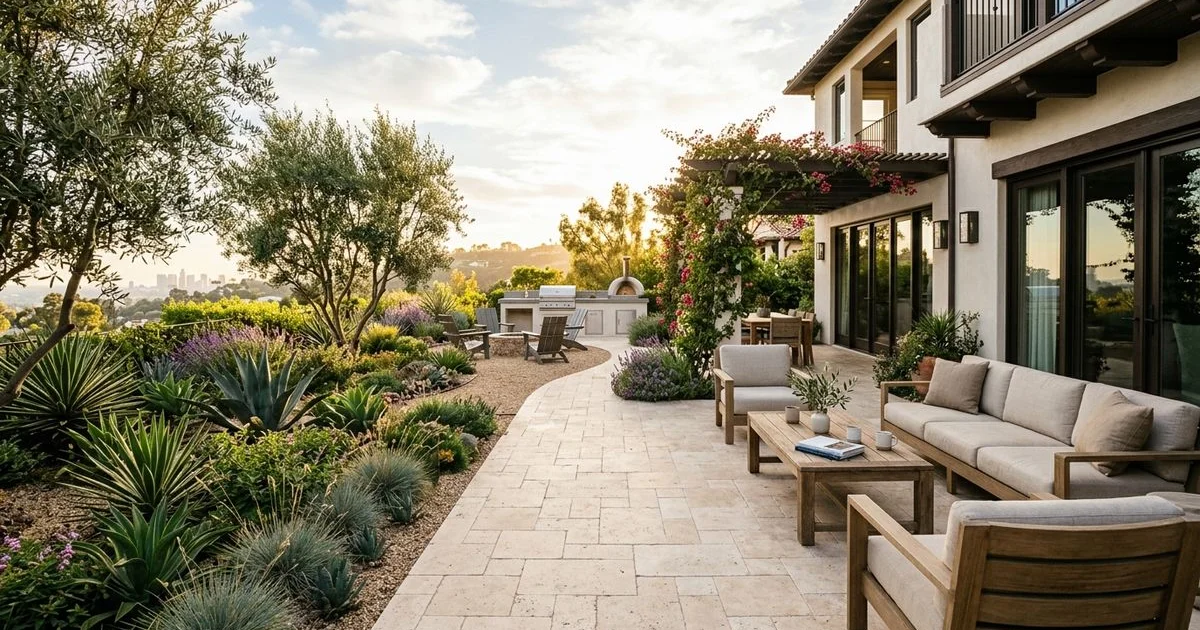
Firewise Landscaping with California Sagebrush and Ceanothus
A hillside in the San Gabriel Valley asks more of a landscape than a flat suburban lot ever will. The slope wants to shed water fast. The wind can push dryness and embers through plantings. The sun can be punishing in one part of the yard and surprisingly mild in another. Add California’s water restrictions, local hillside character, and the reality that many homeowners want a landscape that looks native without looking wild, and the job becomes less about decoration and more about careful design.
That is where California sagebrush and ceanothus earn their place. These plants fit the region’s ecology, they support drought resistant landscaping goals, and they can be part of a firewise landscape when they are used with the right spacing, maintenance, and hardscaping. They are not magic shields, and they are not the right answer for every zone on a property. But when they are placed with judgment, they help create a landscape that uses less water, handles slope conditions better, and feels at home in the foothill setting of the San Gabriel Valley.
Why these plants make sense here
California sagebrush has a light, airy presence that suits native and drought-tolerant gardens. Ceanothus, with its dense habit and seasonal flower display, is one of the more useful native shrubs for a landscape that needs structure without heavy water demand. Both plants are tied to the local language of the chaparral and foothill environment. In a neighborhood where the visual character often includes slope, sunlight, and open sky, they read as appropriate rather than forced.
What makes them especially relevant now is the overlap between water conservation and firewise design. California’s water guidance emphasizes looking at irrigation, soil, sun exposure, and plant selection before removing turf, and points homeowners toward region-appropriate water needs. That matters because a plant that survives on paper can still fail on a hot slope if it is placed in the wrong microclimate or given an irrigation system that dumps too much water in one spot and not enough in another. A good landscape design starts with site conditions, not with a plant list.
Ceanothus is often used for its spring bloom and evergreen structure, but its real strength in landscape design is how well it can define space without needing the constant grooming that high-water ornamentals demand. California sagebrush is less formal, more open, and more tolerant of lean conditions once established. Together, they create contrast. One gives form. The other gives texture and movement. On a hillside, that contrast is practical, because visual order helps with maintenance and with the sense that a slope has been intentionally planted rather than simply filled.
Firewise does not mean plantless
There is a common misunderstanding that firewise landscaping means replacing plants with gravel and calling it done. That approach may reduce the amount of living material in the yard, but it does not automatically create a smarter landscape. It can also make a property hotter, less welcoming, and more prone to runoff if the design ignores soil and drainage. Firewise landscaping is really about reducing ignition risk, arranging plants thoughtfully, and using hardscaping where it serves a clear purpose.
On properties near the San Gabriel Mountains, that distinction matters. The area includes habitat with many rare, threatened, and endangered species, so landscape choices are not only about safety and water use, but also about respecting the ecology that defines the region. A well-planned native garden can support that larger picture while still meeting practical needs around defensible space and ember exposure.
In actual projects, the best firewise gardens are rarely the ones with the least plant material. They are the ones with plants that are kept healthy, separated correctly, and matched to their exposure. A tired, overgrown shrub with dead interior wood is a bigger liability than a properly spaced native planting that is regularly maintained. Ceanothus needs room to breathe. California sagebrush performs best when it is not jammed against walls, eaves, or dense hedges. Their value depends on placement as much as species choice.
The slope changes everything
Hillside landscaping is where many well-intentioned plans go off track. Water runs downhill, and on a bare or poorly planted slope, that means soil movement, uneven moisture, and wasted irrigation. The California Native Plant Society has long emphasized that slopes need erosion control, drought tolerance, and firewise planting, which is exactly why hillside properties benefit from a more disciplined approach.
California sagebrush and ceanothus can both help stabilize a slope, but only when they are part of a broader landscape strategy. Their roots are not a substitute for drainage planning. They work best with other measures that slow water long enough for soil to absorb it. That is where hardscaping enters the conversation. Low retaining edges, stepping paths, decomposed granite in appropriate areas, and other forms of hardscaping can break up runoff, create access for maintenance, and define planting pockets that make irrigation more controllable.
For hillside landscaping, I have found that the most successful designs accept the slope instead of trying to flatten it into an inland lawn. Terracing may not always be necessary, but some kind of contouring usually is. Even a modest change in grade can determine whether a ceanothus thrives or struggles with root stress. If water moves too quickly off the surface, a plant may appear drought resistant but still decline because its roots never get a proper deep soak during establishment.
The practical lesson is simple. Treat the slope as a system. Plants, soil, drainage, and access all have to work together.
Water efficiency before turf removal
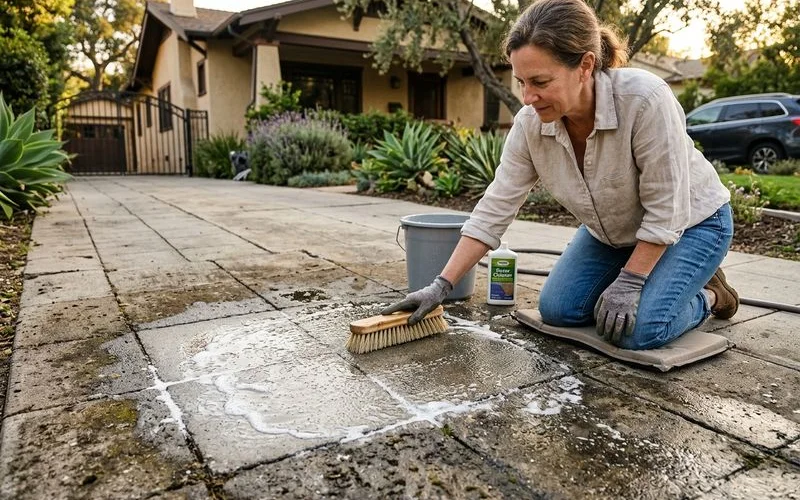
Turf removal gets a lot of attention, and with good reason. Lawns are often the least efficient use of water in a home landscape, especially when they sit in full sun or on irregular terrain. Still, the better question is not simply whether to remove turf. It is what should replace it and how the site will handle the transition.
California’s landscape guidance recommends assessing irrigation, soil, sun exposure, and plant selection before making changes. That sequence is important. If the irrigation system is not retrofitted, the new planting can inherit old habits, which usually means overwatering one zone and underwatering another. If the soil is compacted or thin, especially on a slope, then new plants may struggle no matter how appropriate they are on paper. If sun exposure is not considered, a ceanothus placed in deep reflected heat may need a different role than one in a slightly cooler exposure.
A smart drought resistant landscaping plan often starts with the removal of the most water-hungry turf and replaces it with a combination of native shrubs, ground layer planting, and hardscape that serves circulation and access. The transition can be staged. I have seen homeowners do better when they remove lawn in sections rather than all at once, because that gives them time to observe how the yard responds to irrigation changes and summer heat. It also allows for course correction, which is useful when microclimates within one property vary more than expected.
The point is not to eliminate every green surface. The point is to reduce waste, improve function, and choose plants that can thrive under the actual conditions of the site.
Ceanothus and California sagebrush in the same composition
Used together, these shrubs offer a strong native planting palette. Ceanothus generally reads as denser and more structured, while California sagebrush is looser and more open. That difference matters in landscape design because rhythm and contrast keep a planting from looking monotonous. It also helps with firewise goals, since varied structure can be arranged to avoid creating one continuous mass of fine fuel right up against the house.
Ceanothus often works well as a backbone shrub in the middle distance of a planting, where it can establish shape and seasonal presence. California sagebrush can soften edges, bridge transitions, and create a more naturalistic foreground. Around paths or in transition zones near hardscaping, sagebrush can be especially effective because it does not feel heavy or overbuilt. It gives the eye a break.
The trick is restraint. Both plants need enough room to reach their mature form without crowding. Crowding creates maintenance problems and can trap dry material where it should not be. It landscape consultation also makes irrigation less precise. When plants are jammed together, homeowners often respond by watering more broadly, which works against the entire premise of drought tolerant landscaping.
On the other hand, a composition with thoughtful spacing can look finished even in the first season. That is one reason these shrubs are so useful in professional landscape design. They provide immediate structure while still allowing space for understory planting, stepping stones, drainage channels, or other site-specific elements.
Firewise planting is also maintenance
A landscape does not become firewise because the plant palette is correct on the day of planting. It becomes firewise through maintenance. Dead interior growth, accumulated litter, and poor irrigation habits all matter. Embers do not care whether a shrub is native if the shrub has been neglected into a dry tangle.
For ceanothus, that means respecting its natural shape and avoiding unnecessary shearing. Heavy pruning can ruin form and create stress. For California sagebrush, it means preventing it from becoming woody and brittle through years of neglect. Neither plant should be treated like a clipped hedge unless that is absolutely the intended design, and even then the result may not suit the plant’s natural habits.
This is also where defensible-space thinking becomes practical. Keep vegetation layered and separated. Avoid parking dry plant material directly against structures. Make sure there is access for maintenance, because a landscape that cannot be reached easily is a landscape that is likely to be neglected. Homeowners’ associations cannot prohibit certain water-efficient landscaping choices during drought-related restrictions, so there is room to make informed decisions, even when neighborhood expectations are conservative. That flexibility can be valuable when replacing traditional turf with native or climate-appropriate planting.
A firewise garden is not a static design. It is a managed system.
Choosing companions, not just specimens
California sagebrush and ceanothus are strongest when the rest of the planting supports their needs. In the San Gabriel Valley, good companions often include other native or locally appropriate species such as California buckwheat, manzanita, monkeyflower, foothill penstemon, and bunchgrasses. These plants fit the region’s dry conditions and can reinforce the sense of place that native habitat gardening aims to achieve.
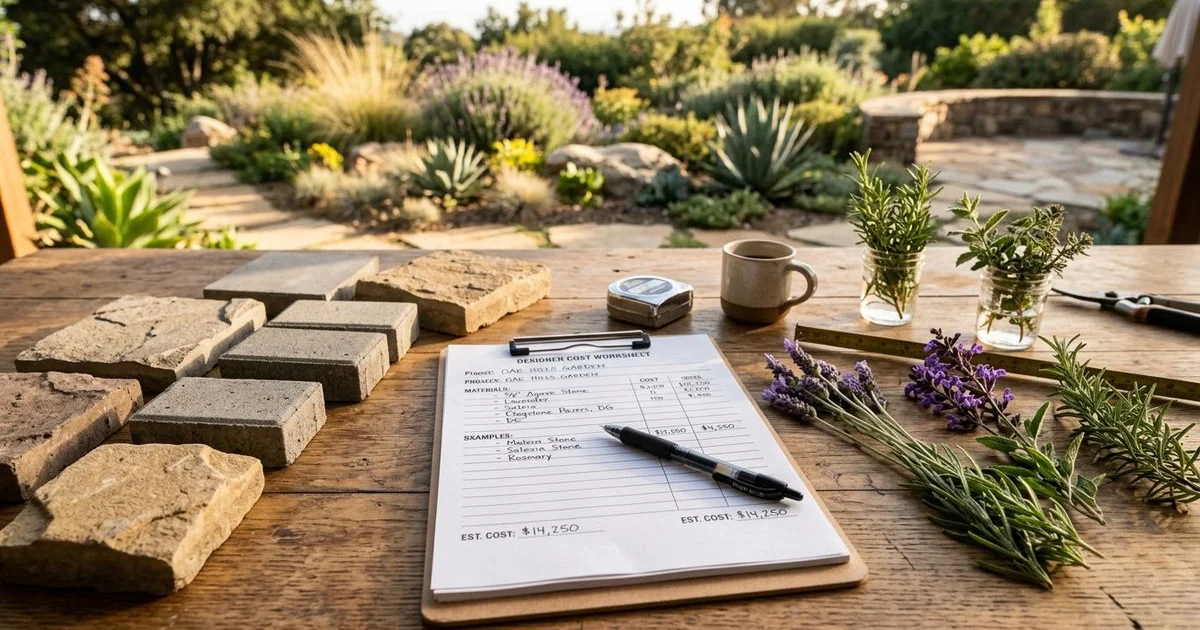
The habitat value matters, but so does visual balance. A planting with only one or two species can feel sparse or repetitive. Adding compatible plants helps stagger bloom times, vary texture, and create a more resilient composition. Bunchgrasses can soften the base of larger shrubs. Monkeyflower can brighten edges. Buckwheat can introduce a different kind of form and seasonal interest. In the right setting, these plants make a landscape feel intentional without becoming overdesigned.
That said, plant selection should always reflect the actual microclimate. A sunny west-facing slope is not the same as a protected front entry courtyard. What thrives in one place may struggle in another. The California water agency’s guidance about soil, sun exposure, and irrigation is useful because it pushes the process back toward observation. That is where good outcomes come from. Not from a universal recipe, but from matching plant behavior to site behavior.
When hardscaping earns its place
Hardscaping is often treated as the opposite of planting, but in a firewise hillside landscape it can be one of the most useful tools available. It creates access. It slows water. It breaks up fuel continuity. It gives the landscape structure where planting alone would be too fragile or too maintenance-heavy.
On a slope, a narrow path or a modest terrace can make the difference between a slope that can be maintained and one that slowly slips into disorder. In a drought-tolerant garden, a properly placed hardscape edge can help keep irrigation where it belongs. In firewise design, noncombustible surface materials near the house can reduce vulnerability at the most exposed point of the property.
The important thing is not to overdo it. Too much hardscaping can make a yard feel harsh and can intensify heat. But when it is used with purpose, it supports the planting plan rather than competing with it. A well-placed path through ceanothus and sagebrush, with enough clearance for maintenance, often does more for long-term function than another patch of lawn ever could.
A landscape that fits the place
The San Gabriel Valley has a hillside visual character that is hard to ignore. The land rises, the view opens, and the landscape has to do more than decorate. It has to hold soil, use water carefully, and respond to the realities of heat and fire risk. That is why firewise landscaping with California sagebrush and ceanothus makes sense here. These plants belong to the broader regional ecology, they support drought resistant landscaping goals, and they fit naturally into native habitat gardens that respect the local foothill setting.
The best projects rarely announce themselves with a single dramatic feature. They work because the irrigation was right, the soil was assessed before planting, the slope was treated with care, and the plant palette was chosen for the site rather than for a catalog photo. California sagebrush brings movement and looseness. Ceanothus brings form and seasonal structure. Hardscaping gives the composition bones. Thoughtful spacing keeps the landscape healthier and more defensible. When all of those elements are in conversation, the result feels less like a compromise and more like a mature response to the land.
That is what good landscape design should do in a place like this. It should make the property safer, more water-wise, and more closely attuned to the hillside it occupies.