
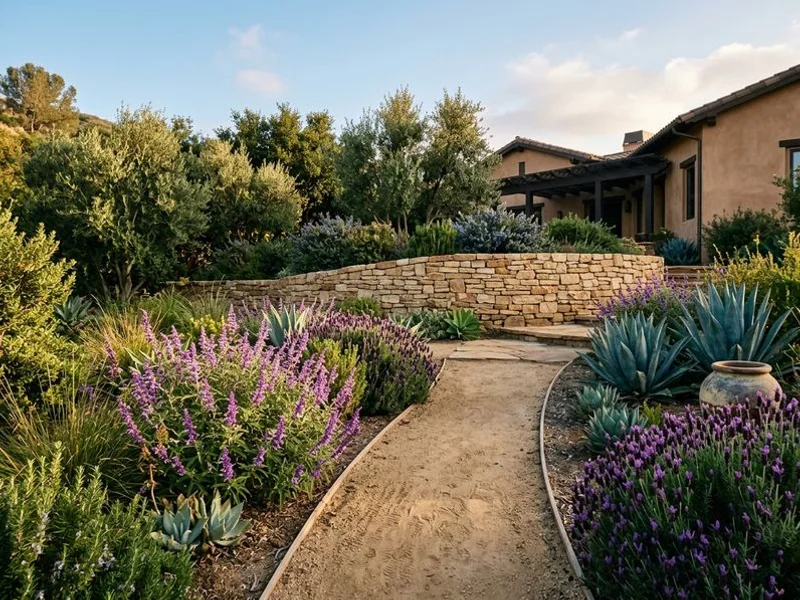
Water-Wise Planting Ideas for Small Front and Back Yards
Small yards ask a lot of a landscape. They need to look finished from the street, feel useful out back, and still make sense when water is scarce and every square foot has to earn its keep. That is especially true in places like the San Gabriel Valley, where the hillside character of the region, the heat, and the pressure to use water efficiently all shape what works and what does not. A small yard can become a surprisingly resilient garden, but only if the design respects the site instead of trying to force it into a generic suburban template.
The best water-wise planting plans do not start with a shopping trip. They start with observation. Before a single turf square is removed or a plant is put in the ground, it helps to look closely at irrigation coverage, soil behavior, sun exposure, slope, and the way water moves across the property. That sequence matters because the right plants can still struggle if the drainage is wrong or the irrigation is throwing water into a driveway instead of the root zone. California’s guidance on water-wise landscapes emphasizes exactly that kind of practical assessment, and in a small yard, those details show up fast.
Start with the yard you actually have
Small front and back yards often suffer from the same problem: they are treated as if they were larger than they are. Too many species get squeezed in, the layout becomes awkward, and maintenance becomes the default design principle. Water-wise landscape design works better when the space is simplified first.
That does not mean making the yard barren or overly minimal. It means understanding the site as a series of microclimates. A narrow side strip that gets reflected heat from a wall is not the same as a back corner that stays cool and shaded until midday. A front yard on a gentle incline is not the same as a flat lot. In hillside landscaping, those differences become even more important because plant roots, erosion control, and runoff management all intersect.
A small yard rewards restraint. Two or three strong planting zones usually outperform a crowded mix. One zone might be for low, dense groundcover and native bunchgrasses near the street. Another might hold an accent shrub and a path. A third might be reserved for a seating area with a few taller plants to frame the space. This kind of landscape design feels intentional, but it also gives each plant a fighting chance.
Turf removal is only half the job
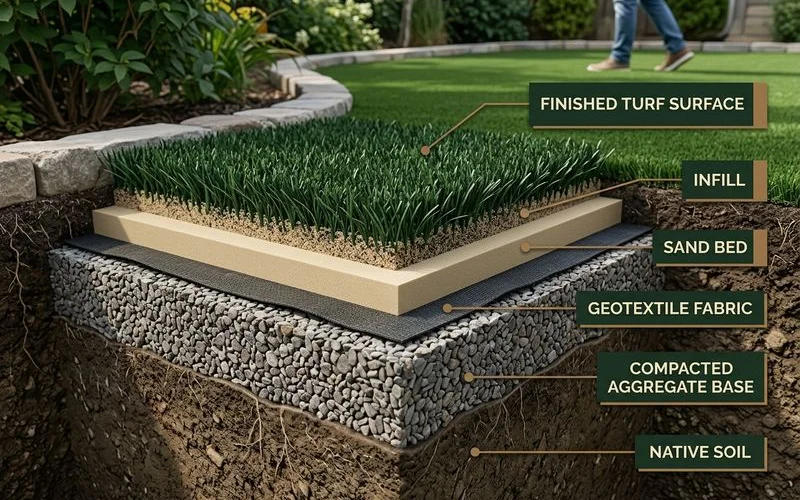
Turf removal gets attention because it is visible, but the real value comes from what replaces it. A former lawn area can become the most efficient part of the property if the new layout accounts for irrigation, soil, and runoff. If the old sprinkler system stays in place and keeps watering empty soil or hardscape edges, the project wastes water before the new plants even settle in.
That is why irrigation retrofits matter. In many small yards, the original system was designed to support a broad turf area. Once the turf is gone, the irrigation needs to change with it. Drip or low-volume irrigation can deliver water more precisely to the root zone, which is often what drought resistant landscaping needs. It also makes it easier to group plants by water demand instead of irrigating everything as though it needed the same schedule.
The planting area itself should be reshaped to hold water, not shed it. Small basins around shrubs, slight grading changes, and mulched planting beds all help water stay where roots can use it. In a flat front yard, that may mean subtle berms or basin edges. On a slope, it may mean terracing or small planting pockets that slow runoff and reduce erosion. The point is not to trap water aggressively. The point is to give it time to soak in.
Choose plants by function, not just appearance
Water-wise planting succeeds when each plant has a clear job. Some plants soften edges. Some stabilize slopes. Some provide seasonal color. Some help connect the front and back yard visually. Others simply need to be strong, dependable background structure.
California native plants are especially useful because they are naturally suited to the local climate patterns and align well with the state’s broader emphasis on water-efficient landscapes. In the San Gabriel Valley, that often means looking at species such as California buckwheat, California sagebrush, manzanita, ceanothus, monkeyflower, foothill penstemon, bunchgrasses, and, in the right setting, San Gabriel oak. These plants can create a landscape that feels tied to place rather than imported from somewhere else.
The trick is choosing the right plant for the right microclimate. California sagebrush wants openness and room to breathe. Manzanita can provide structure, but it needs proper drainage and should not be crowded by thirsty companions. Ceanothus can be an excellent choice where the soil and exposure fit, but it should not be planted in a spot that receives excessive irrigation from hardscaping services Pasadena nearby species. Bunchgrasses work well as movement and texture, especially in front yards where a full lawn would be a water burden.
For a small backyard, monkeyflower and foothill penstemon can bring color without demanding large areas. They do not need to dominate the garden to have an effect. In a compact space, three well-placed clumps can look more polished than a bed stuffed with too many species.
Make slope work for you, not against you
Hillside landscaping deserves special attention in the San Gabriel Valley because so many lots have grades or visual ties to the foothills. A slope is not just a challenge, it is a design condition. If it is handled well, it can be one of the most memorable parts of the landscape. If it is handled badly, it becomes a drainage problem, an erosion problem, and a maintenance problem all at once.
On sloped ground, the plant palette should do double duty. It should conserve water, but it should also help hold soil in place. Deep-rooted natives and drought-tolerant shrubs often perform better than shallow-rooted, high-maintenance ornamentals. Groundcovers and bunchgrasses can be valuable because they protect the soil surface and reduce bare patches where runoff starts.
Hardscaping plays an important role here too. A narrow retaining edge, a stepping path, or a terraced planting pocket can break up a slope and make the space usable. Hardscape should not dominate, but in hillside settings, a little structure goes a long way. It helps organize irrigation, creates safer circulation, and keeps the planting design from sliding downhill, literally and visually.
A common mistake is to think of slopes as places for a few isolated shrubs surrounded by mulch. That leaves too much exposed soil. Better results usually come from planting in layers, with shrubs, smaller perennials, and groundcovers working together. The visual effect is richer, and the slope is better protected.
Small front yards need curb appeal that can survive on less water
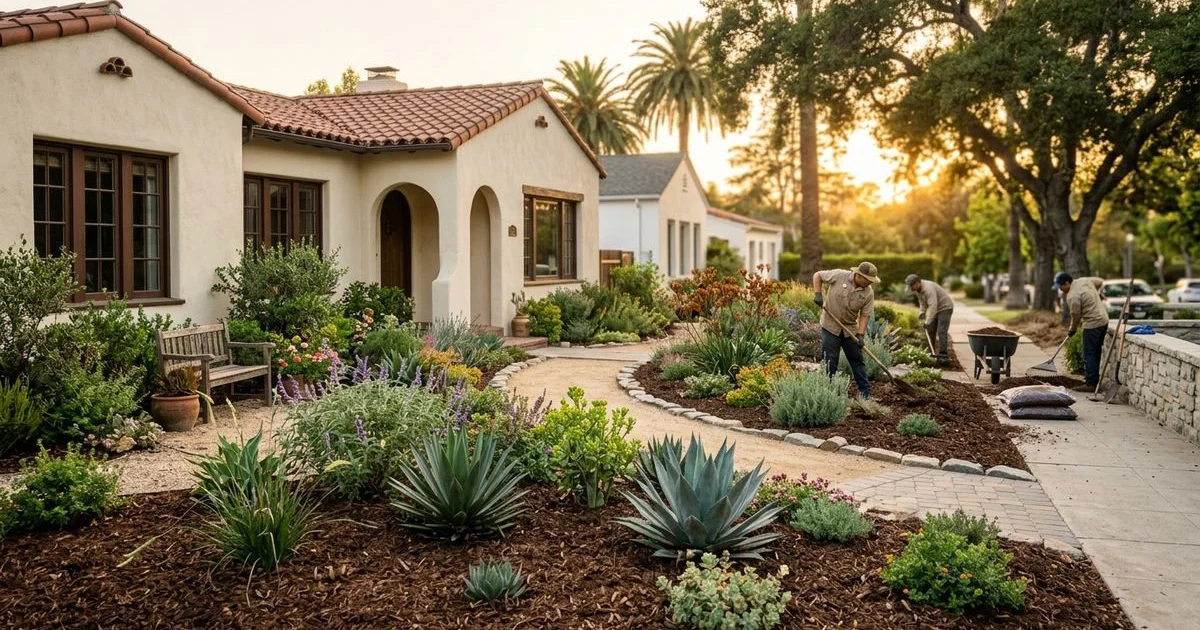
Front yards often carry the burden of first impressions. In a small lot, the front garden is usually seen from the street, the sidewalk, and the living room window, so it needs to feel intentional from multiple angles. Water-wise planting can do that beautifully, but the design has to avoid looking sparse or accidental.
A strong front yard composition usually includes a few anchors. One might be an evergreen shrub with good form, another a cluster of native grasses that move in the wind, and another a low flowering layer that changes with the season. The spaces between those anchors matter just as much as the plants themselves. Open ground covered with mulch, gravel, or other suitable materials can make the planting read as clean and deliberate.
This is where hardscaping can make a small space feel larger. A simple walkway, a defined entry pad, or a low seat wall can give the garden shape without adding unnecessary water demand. The key is moderation. Too much paving makes the front yard feel hot and hard. Too little structure makes the planting look unfinished. Landscape design in a small front yard is usually a matter of balance rather than abundance.
If the yard sits in an area where the visual character of the San Gabriel Valley matters, drought-tolerant planting can also help the property feel in step with its surroundings. New construction in the region increasingly has to answer both the climate and the local look of the foothills. A thoughtfully planted front yard can do both without trying to mimic a full traditional lawn.
Back yards need flexibility, not just plant coverage
Back yards are often treated as private lawns, but in a water-wise design they can become the most adaptable part of the property. Small back yards need places to sit, play, move, and garden without feeling crowded. That means the planting should support the use of the space rather than swallowing it.
One of the most useful moves is to keep the center open and use the perimeter more aggressively. Beds along fences or walls can hold shrubs, habitat plants, and screening species while leaving the middle of the yard usable. This is often the best layout for families who still want room for a table, a small gathering area, or circulation between house and side gate.
If a backyard includes a slope or a drainage swale, that area should be treated carefully. Water should be guided, not left to chance. Plants that tolerate periodic moisture and then dry conditions can work well in transitional areas, especially if the irrigation is dialed in to avoid overwatering. In compact yards, drainage problems can dominate the feel of the whole property, so it is worth getting those grades right before planting.
A backyard can also become a small native habitat garden. That does not mean it needs to look wild or unmanaged. It can be neat, layered, and residential while still supporting local ecology. The San Gabriel Mountains are habitat for many rare, threatened, and endangered species, and planting choices that echo regional native communities can give a home garden a sense of continuity with the landscape beyond the fence.
Water efficiency is as much about irrigation as it is about plants
It is easy to talk about drought resistant landscaping as though the plant list solves everything. It does not. The irrigation system often determines whether a landscape thrives or limps along. A plant that should stay relatively dry can decline quickly if it is constantly overwatered by a neighboring zone. A young shrub can dry out if a drip emitter is misplaced or clogged. Small yards reveal these mistakes because there is less room for error.
Efficient irrigation starts with grouping plants by water need. Native shrubs, low-water perennials, and more occasional-water species should not all be fed the same way if their requirements differ. That is where careful zoning pays off. It also helps to check the spray pattern or emitter placement after installation and again after the plants have grown. What looked fine at planting can become inefficient once branches spread or mulch settles.
Mulch still matters, especially in small beds. It moderates soil temperature and reduces surface evaporation. It also makes the bed look finished. But mulch should not be piled against stems or trunks, and it should not be treated as a substitute for irrigation planning. Good water-wise landscapes use both.
Firewise thinking belongs in the planting plan
In the San Gabriel Valley, water-wise design often overlaps with firewise planting. That is not an abstract concern. It affects what goes near the house, what gets placed under windows, and how much maintenance the garden will require over time. A landscape that is drought tolerant but hard to maintain can become a fire concern if dead material accumulates. So the best approach is one that pairs drought tolerance with regular cleanup and sensible spacing.
Fire-resistant planting does not mean a yard full of one type of plant. It means using species and arrangements that do not create unnecessary fuel near structures and that allow for ongoing maintenance. Near the house, the emphasis should be on clarity and control. Larger shrubs can be placed with enough room to mature, and lower plantings can keep the area visually open. Around edges, especially where embers could be a concern, choices should be made carefully.
The embers and defensible-space rules that matter in the foothill and mountain edges of the region are a reminder that form follows function. A beautiful garden that is impossible to maintain is a liability. A modest planting with clean lines, low fuel load, and the right irrigation can be both attractive and practical.
HOA rules do not erase water-wise choices
Homeowners’ associations can complicate plant selection, especially in neighborhoods where appearance standards have been fixed around older turf-heavy ideas. Still, California water restriction guidance recognizes that HOAs cannot simply prohibit certain water-efficient landscaping choices during drought-related restrictions. That matters for homeowners who want to replace turf, adjust irrigation, or move toward native and climate-appropriate planting.
The practical takeaway is to document decisions and design with clarity. A tidy plan is easier to approve and easier to defend. When a front yard replacement looks intentional, with defined edges, consistent mulch or hardscape materials, and a coherent palette, it tends to feel less like a deviation and more like a measured upgrade. In small yards, presentation matters almost as much as plant choice.
What tends to work best in compact spaces
A small yard does not need a lot of species to feel alive. In fact, too many plants can make a small property feel busier and more chaotic than it should. The strongest water-wise gardens usually keep the palette disciplined. Repeated forms create calm, and calm reads as quality.
In practice, the most successful compact landscapes often rely on a few dependable patterns. A low, water-wise ground layer can handle open sun. Shrubs with clean outlines can create structure. Native grasses can add movement and soften hard edges. A small tree or larger shrub, if the site allows it, can provide shade and scale without overwhelming the lot. The goal is not to fill every corner. It is to let each square foot have a purpose.
The same principle applies to maintenance. A water-wise yard should get easier to manage as it matures, not harder. Plants that fit the site, irrigation that matches the plant palette, and hardscaping placed with restraint all support that outcome. When those pieces work together, the yard stops feeling like a collection of compromises and starts functioning like a coherent outdoor room.
The most durable small-yard designs are simple, local, and honest
The strongest water-wise planting ideas are not flashy. They are grounded in site realities, supported by efficient irrigation, and built with plants that match the climate rather than fight it. In the San Gabriel Valley, that often means native and climate-appropriate species, careful handling of slopes, a realistic approach to turf removal, and enough hardscaping to give the landscape structure without turning it into pavement.
A small front or back yard can do a remarkable amount of work when the design is disciplined. It can conserve water, control erosion, support local habitat, and still look polished from the curb or comfortable from the patio. That is the real advantage of water-wise planting. It does not ask for more space. It asks for better decisions.